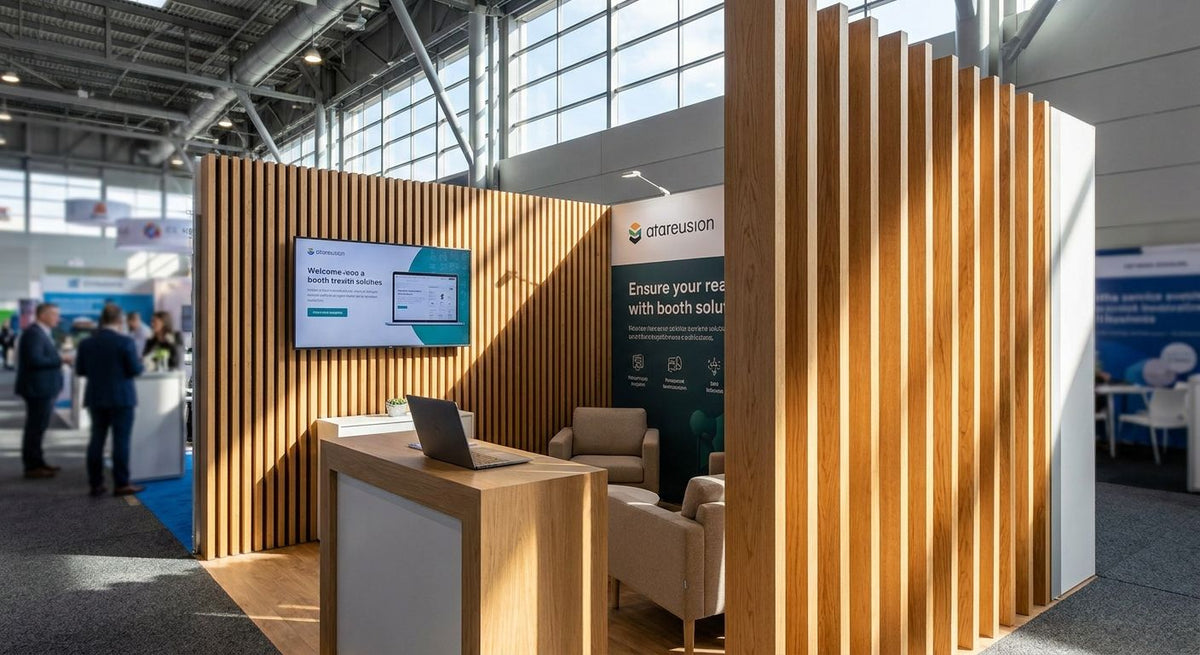
Convention hall walls are bare pipe-and-drape or raw concrete, and most exhibitors cover that with printed vinyl graphics that photograph flat and sound worse. Wood slat panels give a trade show booth a finished, premium look while cutting the echo that makes 10x10 booths sound like a food court.
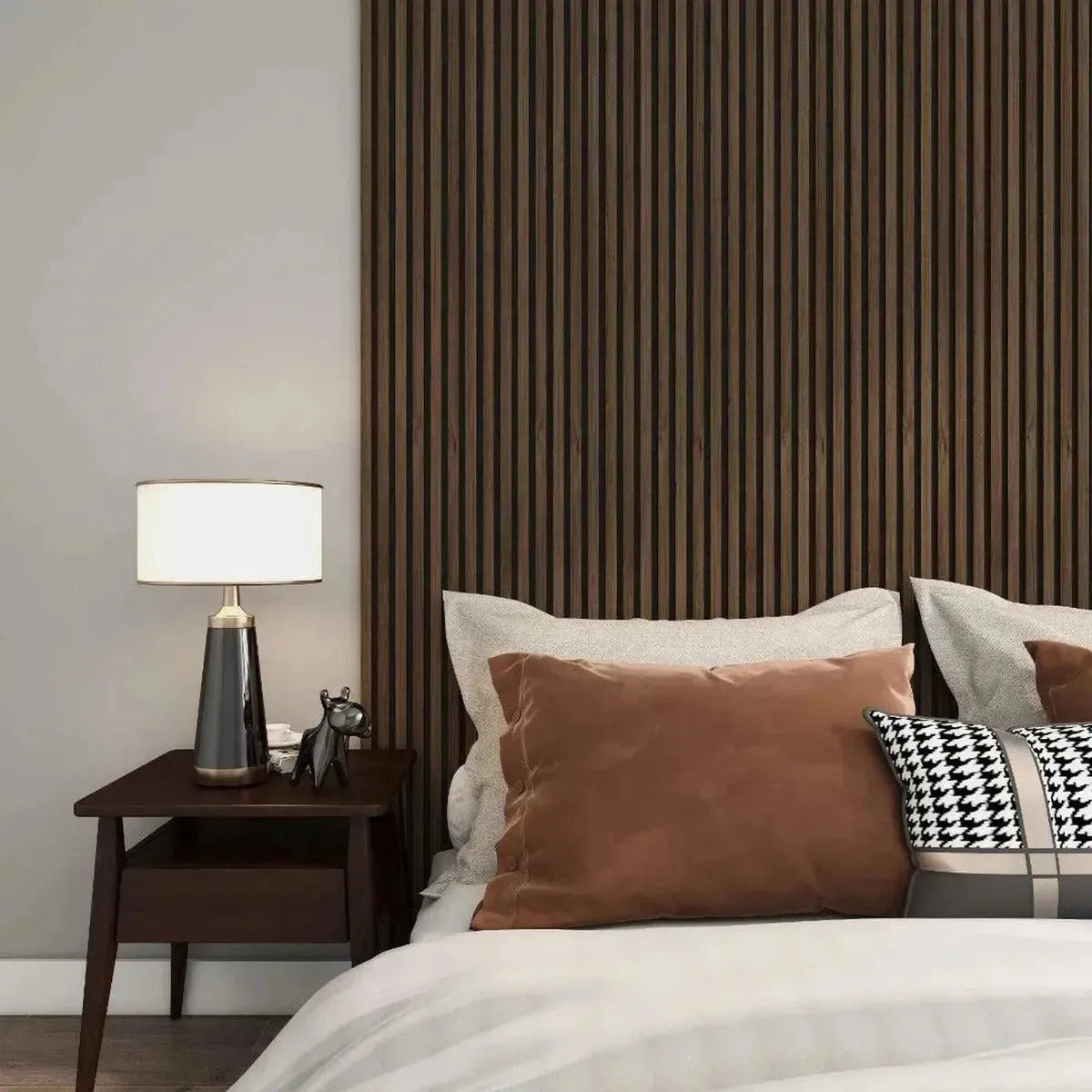
- Acoustic Slat Wall Panel Walnut is the safe buy for most 10x20 booths in 2026 — real veneer, modular install.
- Acoustic Slat Wall Panel Black Oak is the bold pick for tech and automotive exhibitors wanting a dark backdrop.
- Felt-backed hexagon panels carry an NRC of 0.75, the number that matters most in loud convention halls.
- Order the Full Sample Box before a five-figure booth build — veneer color shifts under hall lighting.
- Skip printed wood-grain vinyl over plywood: it looks fine in photos and flat in person under booth lighting.
Why this matters
A trade show floor with 200 booths running simultaneous demos is one of the loudest indoor environments a brand will ever present in. Hard surfaces — concrete floor, drywall dividers, glass partition walls — bounce sound instead of absorbing it, and that reverb is why attendees lean in three inches from your rep's face and still ask them to repeat the pitch.
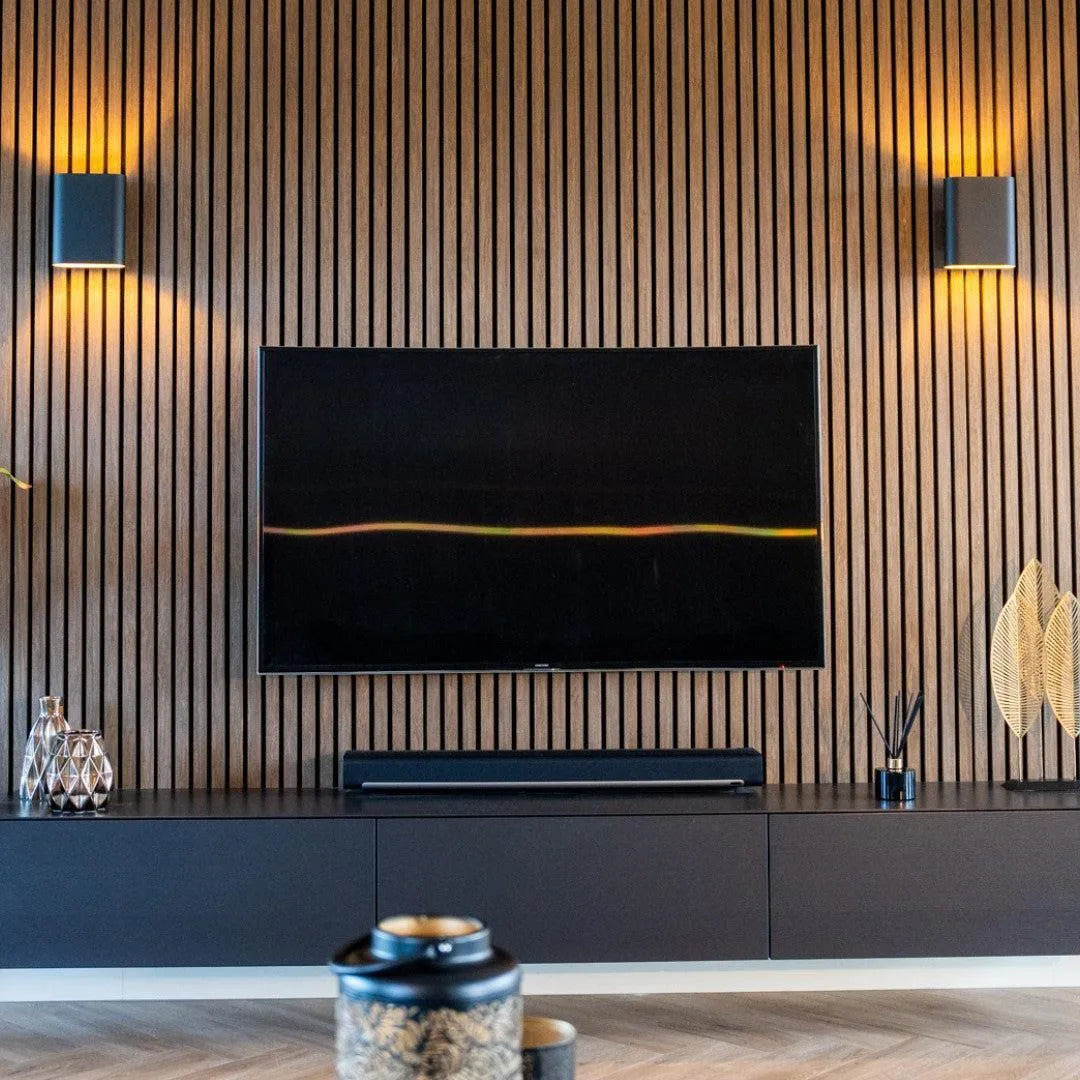
Wood slat panels solve two problems at once: they give the booth backdrop a material upgrade over foam-core graphics, and the slotted design with acoustic backing absorbs mid-range frequencies instead of reflecting them. That's the difference between a booth that reads "budget pop-up" and one that reads "we spent real money here" — without the cost of a custom millwork build.
Who this is for
This guide is for exhibit booth designers, trade show marketing managers, and booth-build contractors specifying finish materials for a reusable 10x10, 10x20, or island booth. If you're building for one show and throwing the structure away, a printed backdrop is cheaper. If your booth travels to four or five shows a year, the math changes — a panel system you install once and reuse outlasts vinyl graphics that crease, fade, and need reprinting every cycle.
What to look for in wood slat panels for trade show booths
Panel weight and modularity for teardown/rebuild
Booth crews break down and rebuild a display in under four hours between show days, sometimes twice in one week for back-to-back events. Panels that click into a modular grid instead of requiring full adhesive mounting save labor hours the booth-build invoice will otherwise eat. Look for a slat or hexagon format sized for standard 8-foot wall sections so cuts are minimal on-site.
Acoustic performance for loud convention floors
The Akuwood Panel felt-backed hexagon line carries an NRC rating of 0.75, meaning roughly three-quarters of mid-range sound hitting the panel gets absorbed instead of bounced back into the aisle. That rating matters more at a 40,000-attendee trade show than in a home office — it's the difference between a demo booth attendees can actually hear and one where your rep repeats every sentence twice.
Real wood veneer vs printed laminate
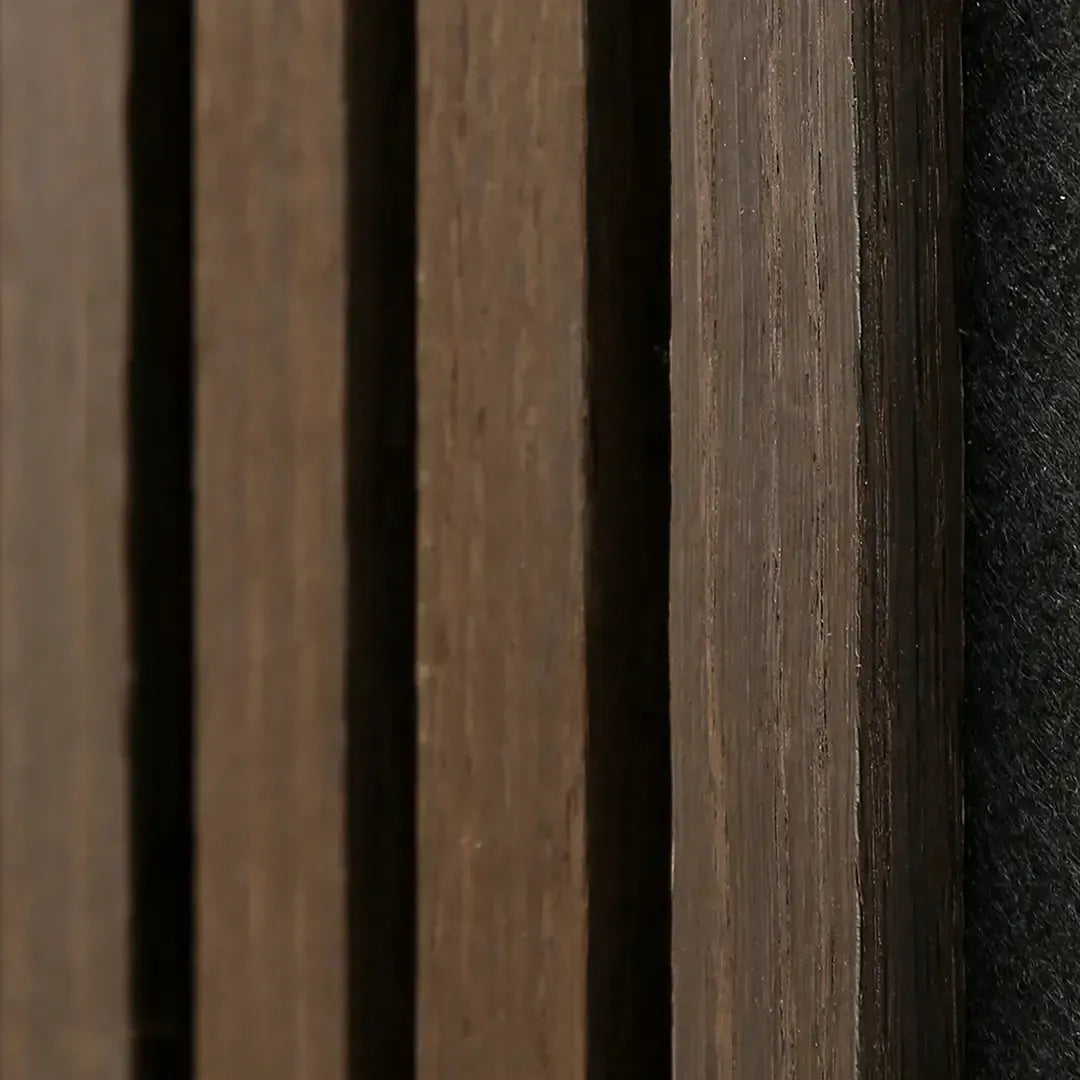
Real wood veneer over MDF or plywood catches light differently under booth spotlights than a printed photo of wood grain. Attendees touch booth walls more than you'd expect — leaning a laptop bag against a backdrop, resting a hand while reading a screen — and printed laminate scuffs and shows white edges where veneer just develops a slight sheen change.
Fire rating and venue compliance paperwork
Every major convention center — McCormick Place, Las Vegas Convention Center, Javits Center — requires fire-rating documentation for booth wall materials before move-in, and a booth build gets held at inspection without it. Confirm fire-retardant treatment before you commit to a panel line; the fire-retardant slat wall panel guide covers what documentation venues typically ask for on commercial installs.
Reusability across multiple show cycles
A panel system that survives one load-in, one teardown, and one repack into road cases is table stakes. A panel system that still looks new after a fifth show cycle is what actually pays for itself. Solid wood veneer with a sealed finish handles repeated assembly better than laminate that chips at the click-joint edges after two or three cycles.


Top picks for trade show booth walls in 2026
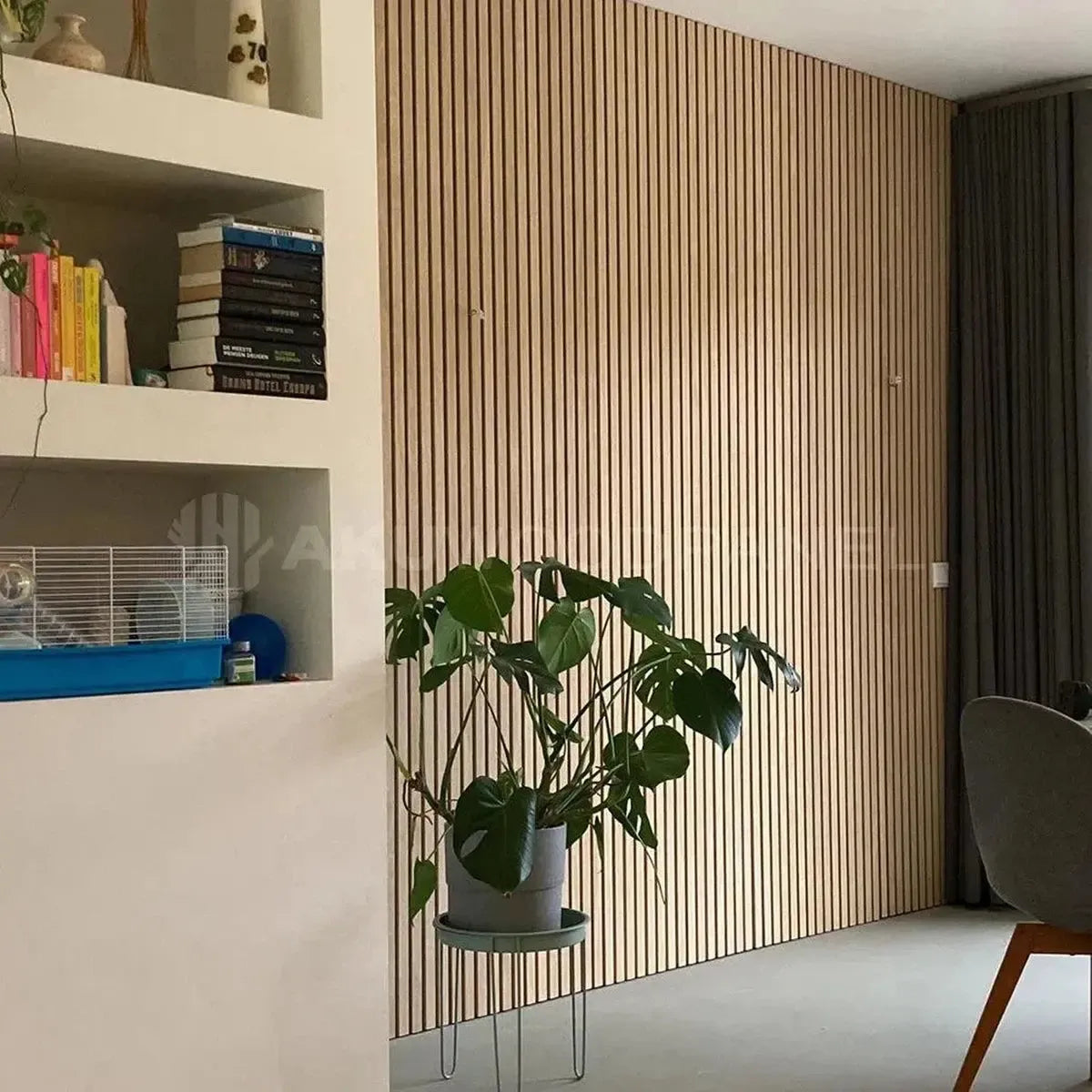
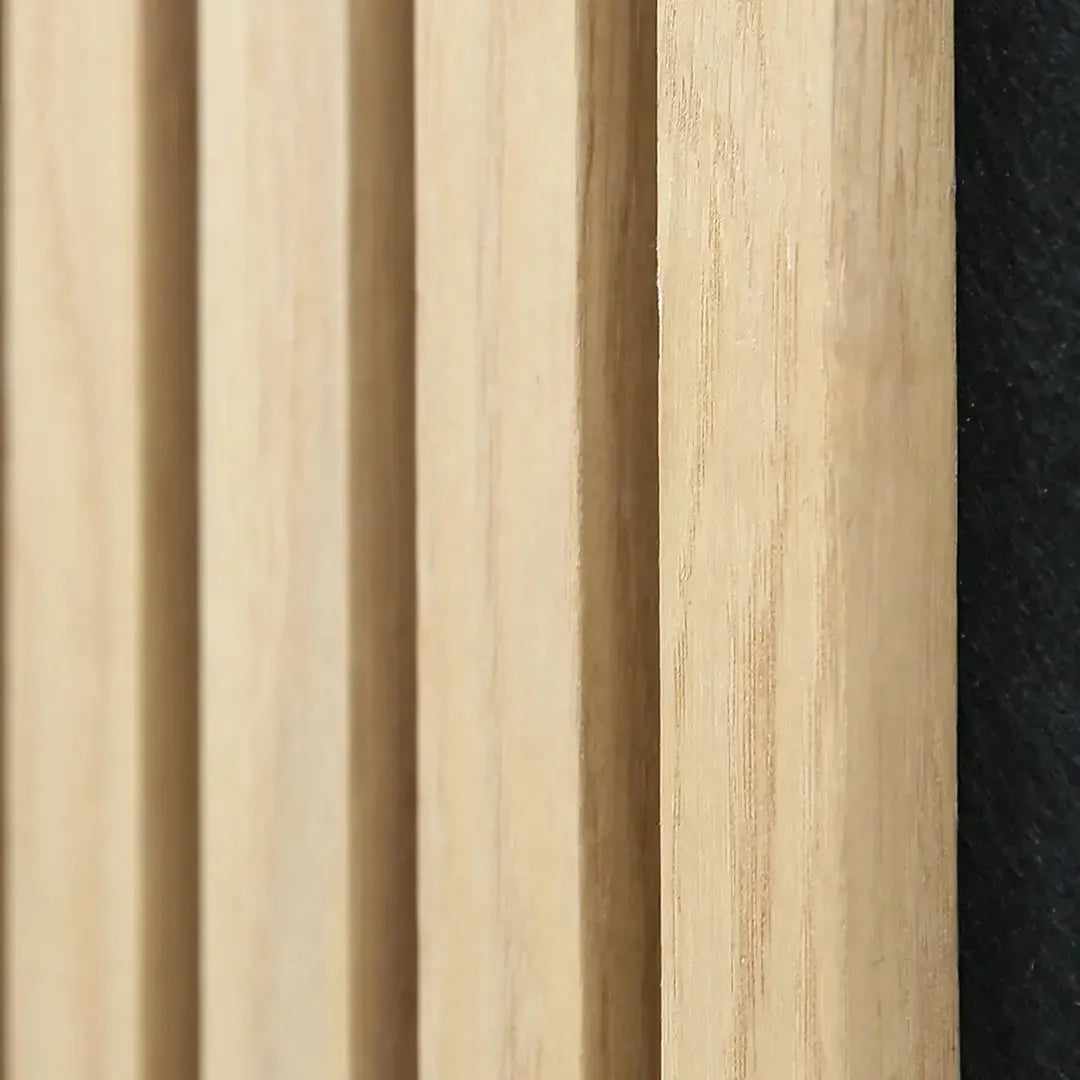
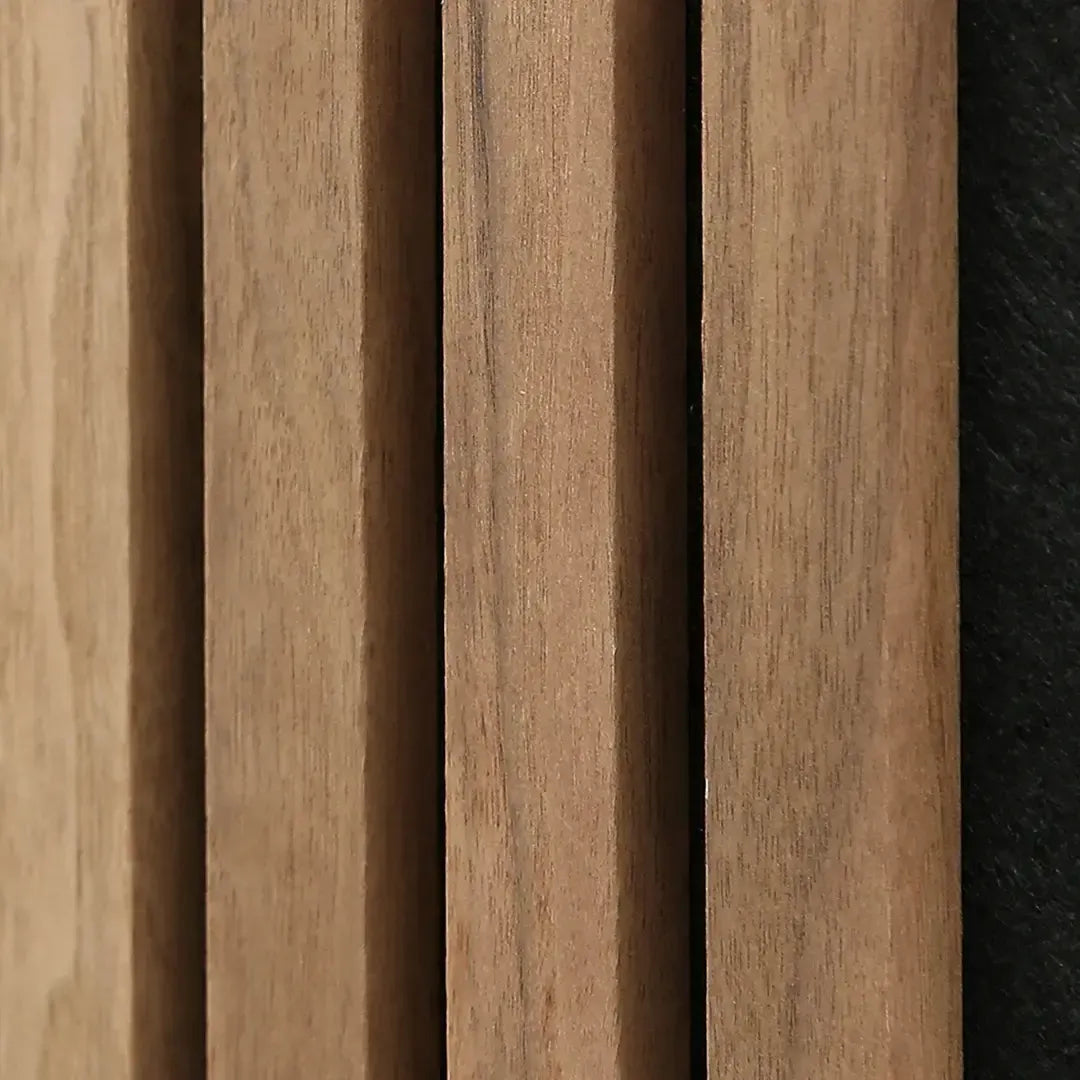
Acoustic Slat Wall Panel Walnut — the safe pick. Real walnut veneer over an acoustic-backed slat profile gives a warm, neutral backdrop that reads well against almost any brand palette, and it's the default recommendation for exhibitors who need one wall treatment across a 10x20 booth. Buy.
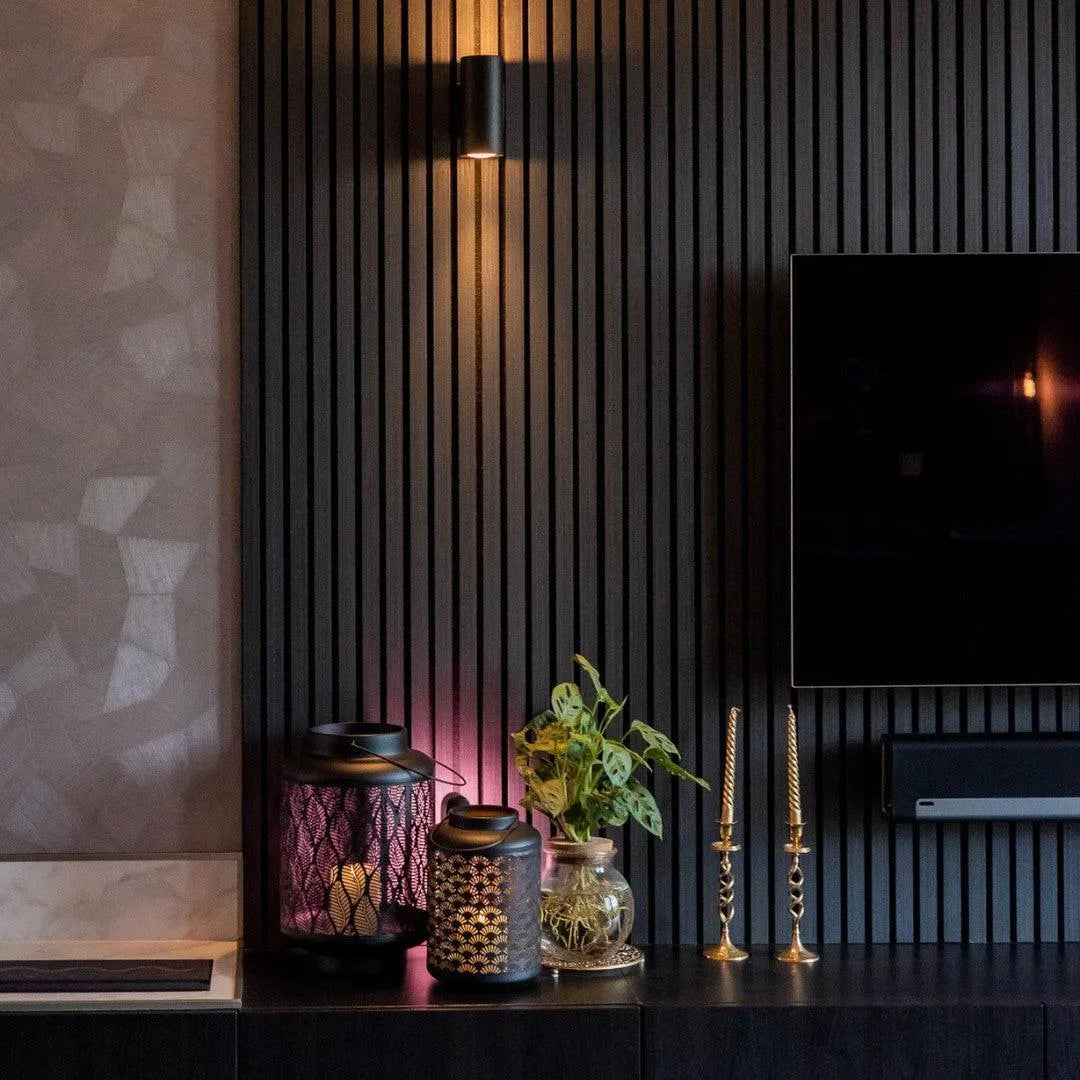
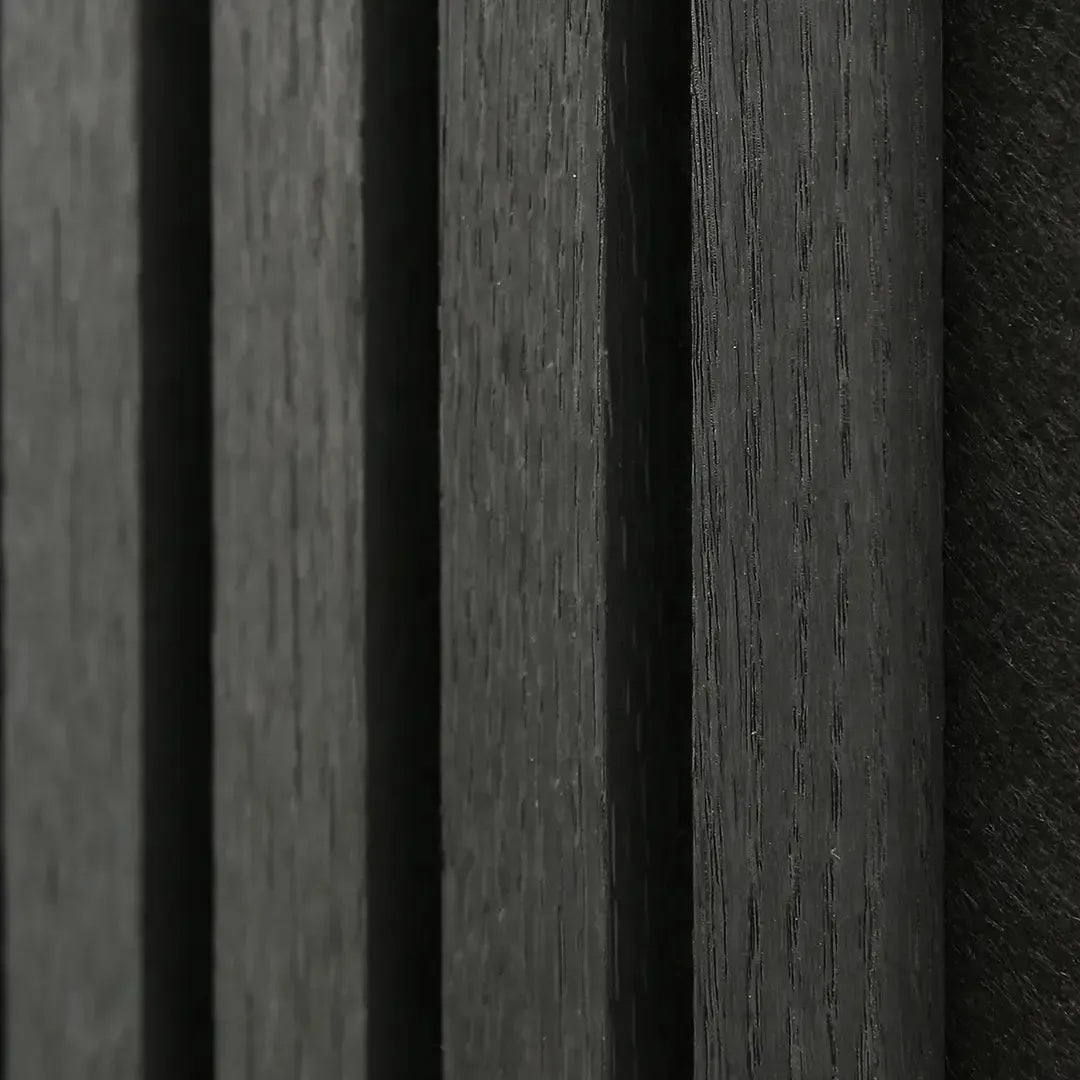
Acoustic Slat Wall Panel Black Oak — the bold statement. A dark, near-black finish for automotive, tech, and B2B SaaS booths where the backdrop needs to disappear behind bright product lighting rather than compete with it. Verdict: Buy for brands running LED product lighting or screens front-and-center; Skip if your booth already leans dark and you need contrast instead.
Hexagon Acoustic Panel, walnut with gray felt — the modular wildcard. The hexagon profile breaks up a flat backdrop wall into a textured feature that photographs better on the show floor than a straight slat run, and the felt backing carries that 0.75 NRC rating. Best suited to a single accent wall rather than the full booth perimeter. Consider if your booth design calls for one standout wall instead of uniform paneling.
Full Sample Box, slat wall panel — the pre-show test. Booth lighting rigs shift wood tone more than daylight does, and the full sample box is the cheap insurance against ordering a color that looks different under 5000K LED spotlights than it did on a monitor. Buy before any order over a few dozen panels.
What to avoid
- Printed wood-grain vinyl over foam-core or plywood. It photographs fine from ten feet but shows the print pattern up close, and attendees do get close at a booth.
- Non-fire-rated panel stock. Some suppliers sell interior decorative panels with no fire treatment; a venue inspection at move-in will flag this and you'll be reworking a wall the night before the show opens.
- Full-perimeter solid slab veneer with no acoustic backing. It looks premium in a showroom photo but does nothing for the reverb problem a convention hall creates, which defeats one of the two reasons to use wood panels over vinyl in the first place.
Verdict comparison
| Panel | Format | Acoustic backing | Fire compliance docs | Verdict |
|---|---|---|---|---|
| Acoustic Slat Wall Panel Walnut | Slat, modular | Yes | Available | Buy |
| Acoustic Slat Wall Panel Black Oak | Slat, modular | Yes | Available | Buy |
| Hexagon Acoustic Panel (walnut/gray felt) | Hexagon, accent wall | Yes, NRC 0.75 | Available | Consider |
| Printed vinyl over foam-core | Flat graphic | None | Varies by printer | Skip |
FAQ
What are the best wood slat panels for trade show booths in 2026?
Acoustic Slat Wall Panel Walnut and Acoustic Slat Wall Panel Black Oak are the top picks for 2026 booth builds because both combine real wood veneer with acoustic backing in a modular, reusable format. The walnut finish suits most brand palettes; the black oak works better behind bright product lighting.
Are wood slat panels better than printed vinyl backdrops for trade shows?
Wood slat panels beat printed vinyl on two counts: they absorb sound instead of reflecting it, and real veneer holds up to repeated handling across multiple show cycles better than printed laminate does. Vinyl is cheaper for a single-use booth but loses that advantage once you're reusing the same booth four or five times a year.
How much sound do acoustic wood panels actually absorb?
Akuwood's felt-backed hexagon panels carry an NRC rating of 0.75, meaning about 75% of mid-range sound striking the panel is absorbed rather than reflected. That's a meaningful reduction on a loud convention floor where hard surfaces otherwise bounce noise back into the booth aisle.
Do trade show wood panels need to be fire rated?
Most major convention centers require fire-rating documentation for any wall material used in a booth build, and inspectors check this at move-in. Confirm fire-retardant treatment and get the paperwork from your supplier before the booth ships to the venue.
How many times can a wood slat panel booth wall be reused?
A sealed real-wood veneer panel with a modular click-together install typically survives multiple show cycles a year without visible wear at the joints, which is the main reason exhibitors choose it over printed graphics that need reprinting each cycle. Storage and careful repacking between shows extend that lifespan further.
Should I order samples before buying panels for a booth build?
Yes — booth lighting rigs shift wood tone differently than daylight or a monitor screen, so a sample box lets you check the actual finish under comparable lighting before committing to a full order. This matters most on orders covering an entire booth perimeter.
What panel format works best for a single accent wall versus a full booth perimeter?
Hexagon panels create a textured, photo-friendly accent wall best used on one focal wall rather than the whole booth, while slat panels give a more uniform look suited to covering an entire 10x20 or island booth perimeter. Mixing both is common: slat for the base walls, hexagon for the feature wall behind the main demo station.
Do wood slat panels add real weight to a booth shipment?
Modular slat and hexagon panels are built for wall-mount installs rather than solid slab construction, which keeps shipment weight closer to standard booth-build crating than a full solid-wood millwork wall would. Confirm crate weights with your booth builder against your show's drayage rates before finalizing the design.
“A backdrop that looks premium in a booth render and does nothing for echo has only solved half the problem.”
One last thing
The acoustic backing is the part exhibitors skip past fastest and regret most — a booth wall that only looks good in the pre-show photo but does nothing for the noise floor once 40,000 people are walking the aisles has wasted half its budget. Spec the NRC number before the finish color, not after.

 Better performance and aesthetic appeal
 In Stock