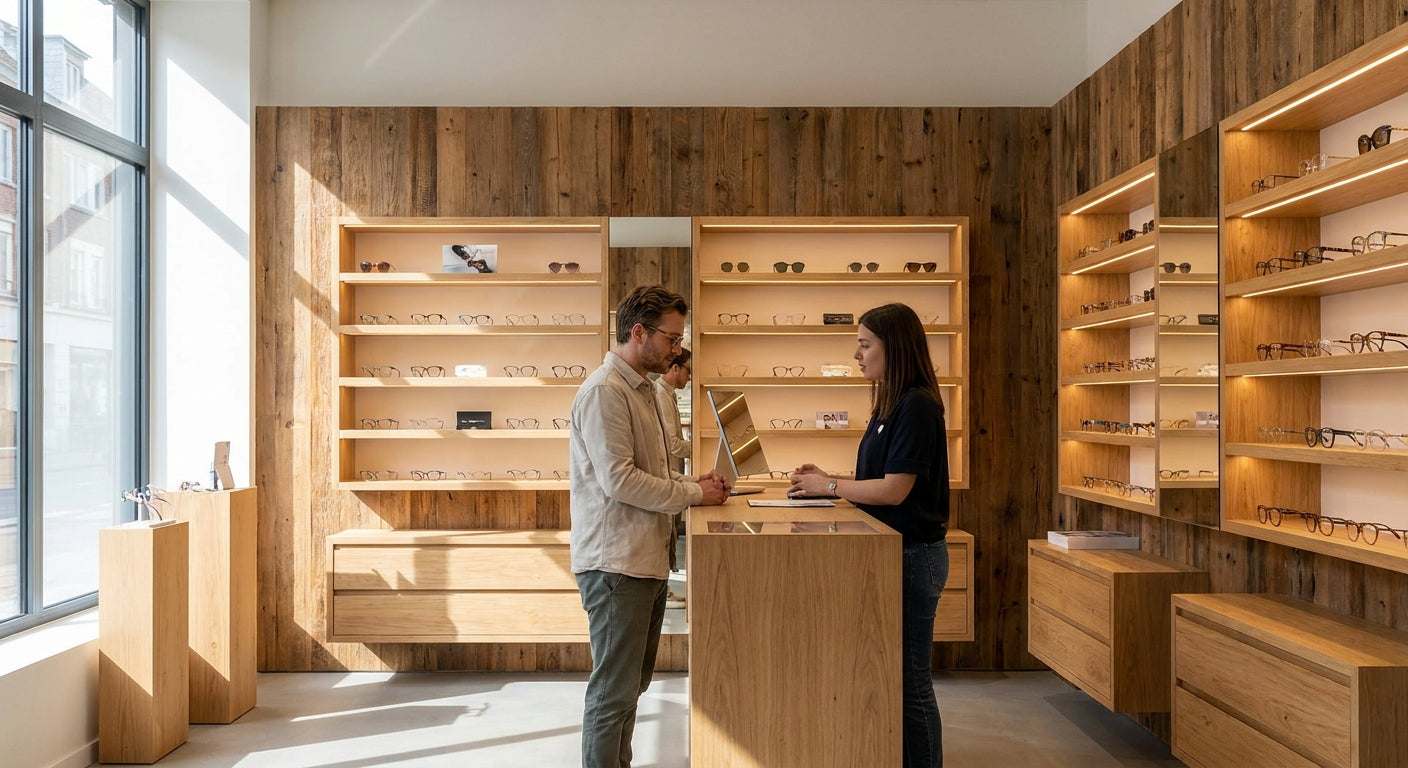
Eyewear boutiques and optometry practices share a problem most wall coverings ignore: the space has to look retail-polished at the frame wall and clinically calm at the exam chair, often ten feet apart. Acoustic wood slat and hexagon panels solve both jobs in one material if you choose the right tone and slat depth for 2026 fit-outs.
- Natural Oak acoustic slat panels at $169.95 fit exam-room walls without dulling light — the top buy for wood panels for optometry boutique projects in 2026.
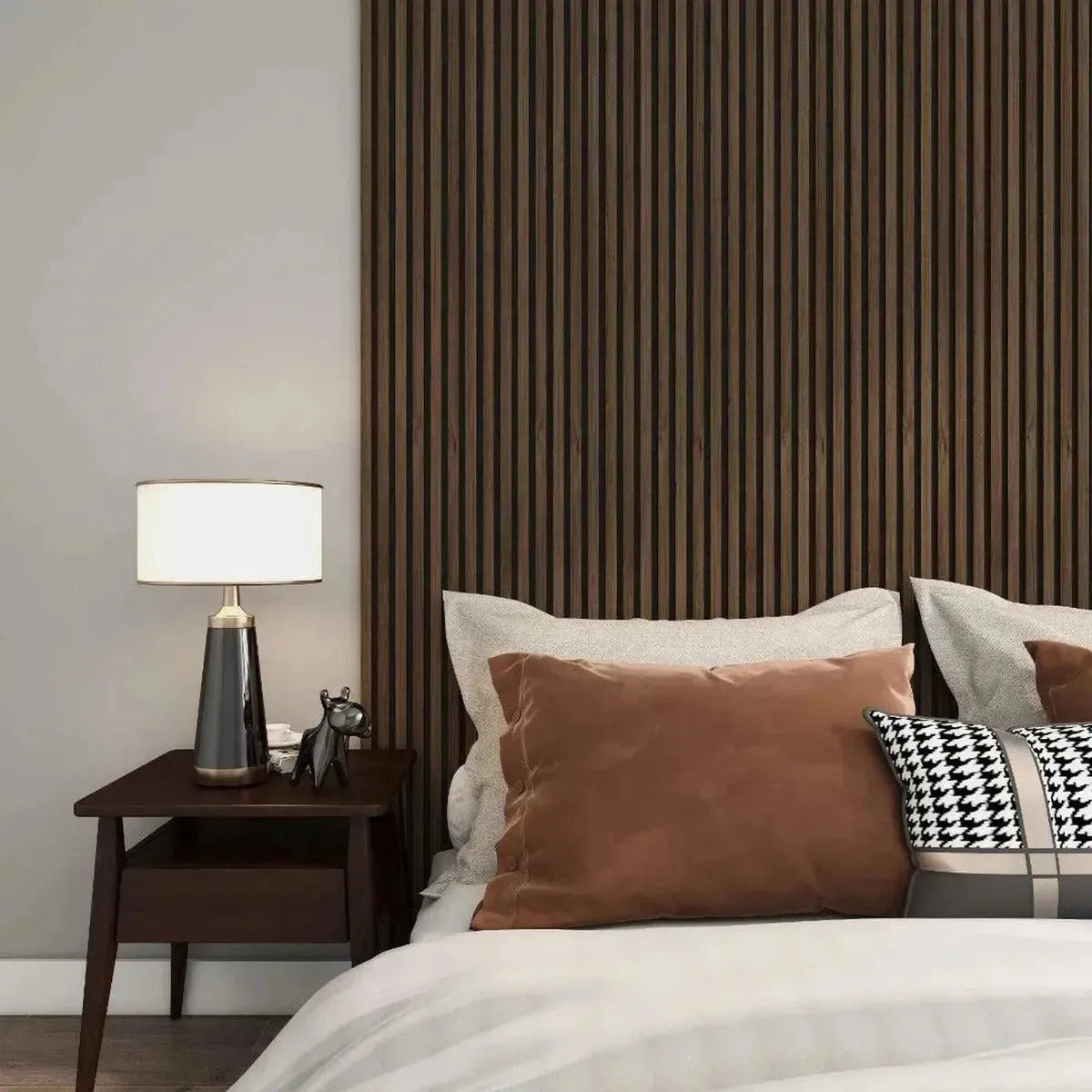
- Walnut slat panels at $182.95 read premium on eyewear boutique frame walls — buy for retail feature walls.
- Hexagon Acoustic Panel Walnut with Gray Felt ($165.95) adds NRC 0.75 sound absorption near consult rooms — consider, not mandatory.
- Skip Smoked Oak near vision-test walls in 2026 — dark veneer cuts the reflected light acuity charts need.
Why this matters
Optometry rooms run on light discipline — exam chairs, projector charts, and phoropters all depend on controlled, even reflectance. Retail floors run on the opposite logic: they want texture, warmth, and something a customer touches while trying on frames. A generic drywall-and-paint fit-out solves neither problem, and bare walls in a glass-and-metal frame display area turn into an echo chamber the moment more than two people are talking.
Acoustic wood wall panels close that gap. Real wood veneer over a slotted or felt-backed core cuts reverberation in the waiting area while keeping the finish light enough not to interfere with visual acuity testing next door. That's the core tension this guide is built around, and it's why tone and slat depth matter more here than in a typical retail buildout.
Who this is for
This guide is for independent optometry practices building or refreshing a reception-to-exam-room layout, and for eyewear boutiques — standalone or inside an optical chain — that need a frame display wall with some acoustic bite. It's also useful for interior designers specifying finishes for a multi-location optical group that wants a repeatable wall system across locations rather than a custom millwork job at every site.
What to look for in wood panels for an optometry boutique
Light reflectance near exam areas
Any wall within sightline of an acuity chart or phoropter station should stay in the mid-to-light tone range. Dark veneers like smoked oak absorb more ambient light, which can force brighter overhead fixtures and create glare on lens display cases nearby — not what you want when a patient is trying to read the bottom row of letters.
Acoustic performance in the waiting room
Waiting areas in optometry practices run louder than most retail floors because patients are seated for longer stretches and staff call names across the room. Felt-backed hexagon and slat panels rated around 0.75 NRC pull noticeably more sound out of a room than a plain veneer panel with no acoustic backing — that number comes directly from the felt-backed hexagon panel spec sheet, and it's the detail to ask about before you buy.
Durability on high-touch retail walls
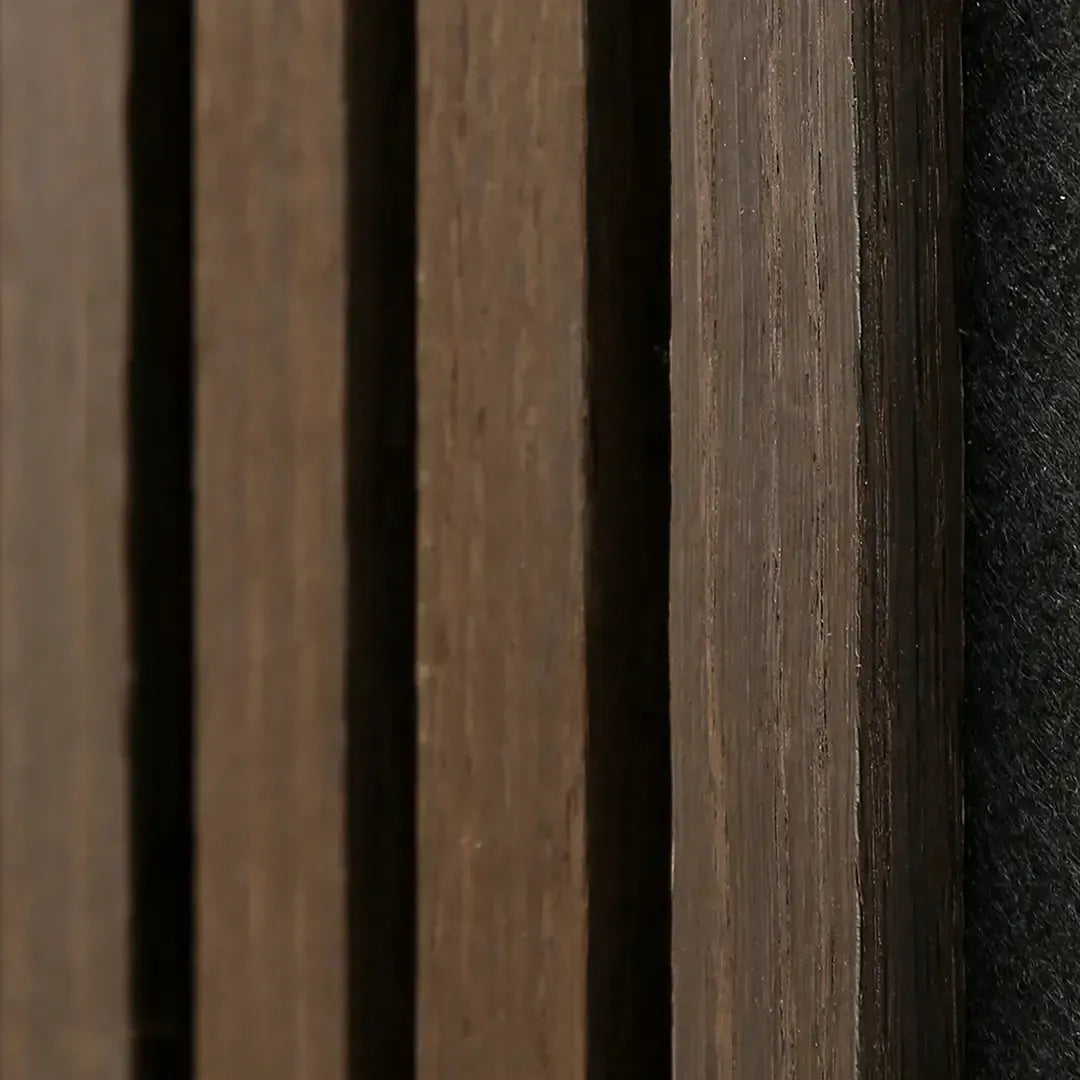
Frame display walls get bumped by shoulder bags, rolling carts, and kids. A three-sided wood veneer construction holds up to incidental contact better than a thin laminate skin, which chips at the edges within a year on a busy boutique floor.
Slat depth for hanging frame displays
If you're mounting frame racks or floating shelves directly into a slat wall, the slat's depth and spacing determine how much hardware you can hang without hitting a gap. Wider slats give more surface for bracket screws; narrower profiles look sleeker but limit what you can mount without added blocking.
Real wood veneer versus printed laminate
Eyewear is a visual-detail business — customers are staring at surfaces and reflections all day. A printed laminate reads flat and slightly plastic under boutique lighting; a genuine wood veneer shows grain variation that photographs and feels premium, which matters when the wall is behind your $300 frame display.
Install speed for a small footprint
Most optometry and eyewear retail spaces run under 1,500 square feet. Panel systems that click or interlock without full adhesive cure time let a contractor finish a feature wall in a day instead of tying up the space for a week during a slow season.
Top picks for optometry and eyewear boutique walls
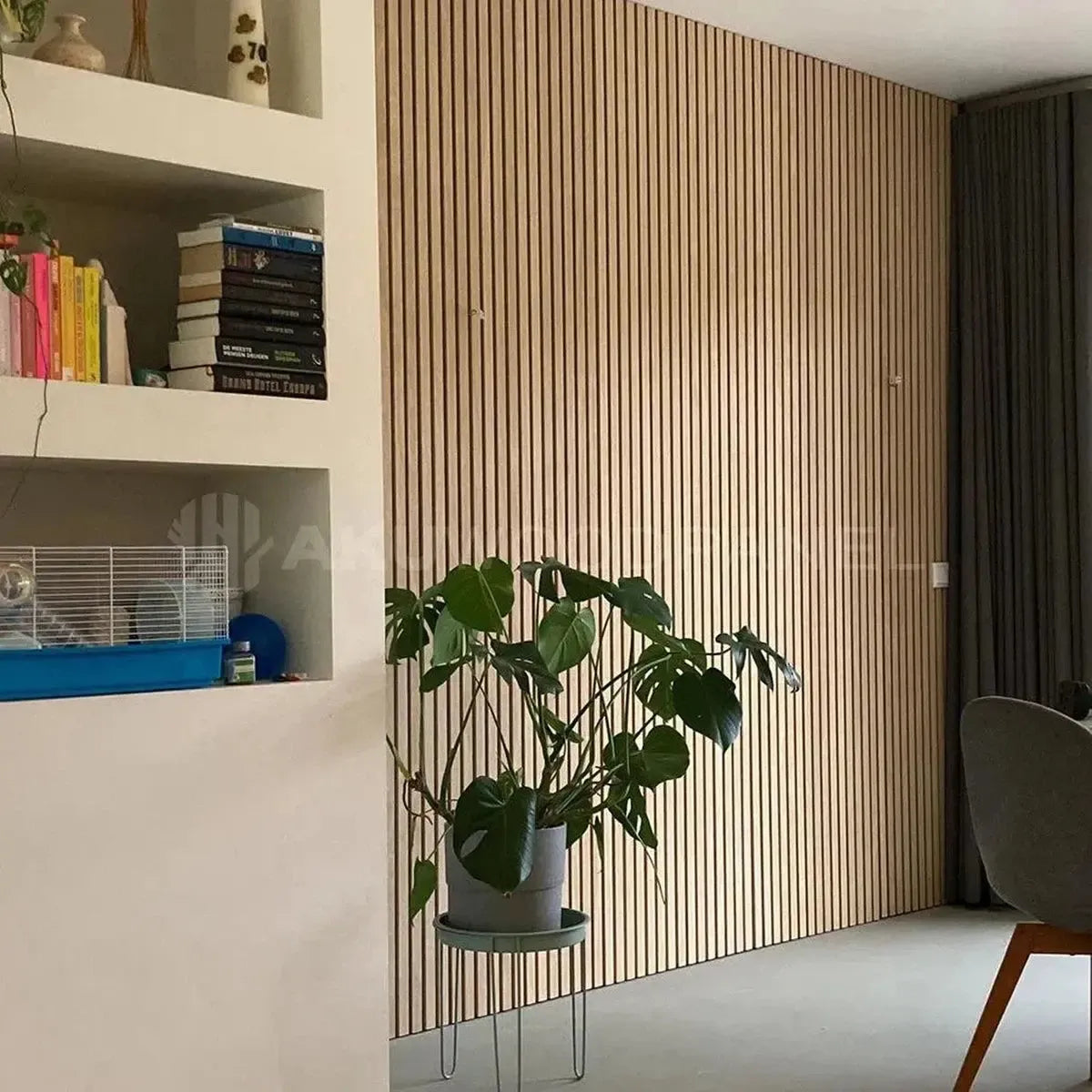
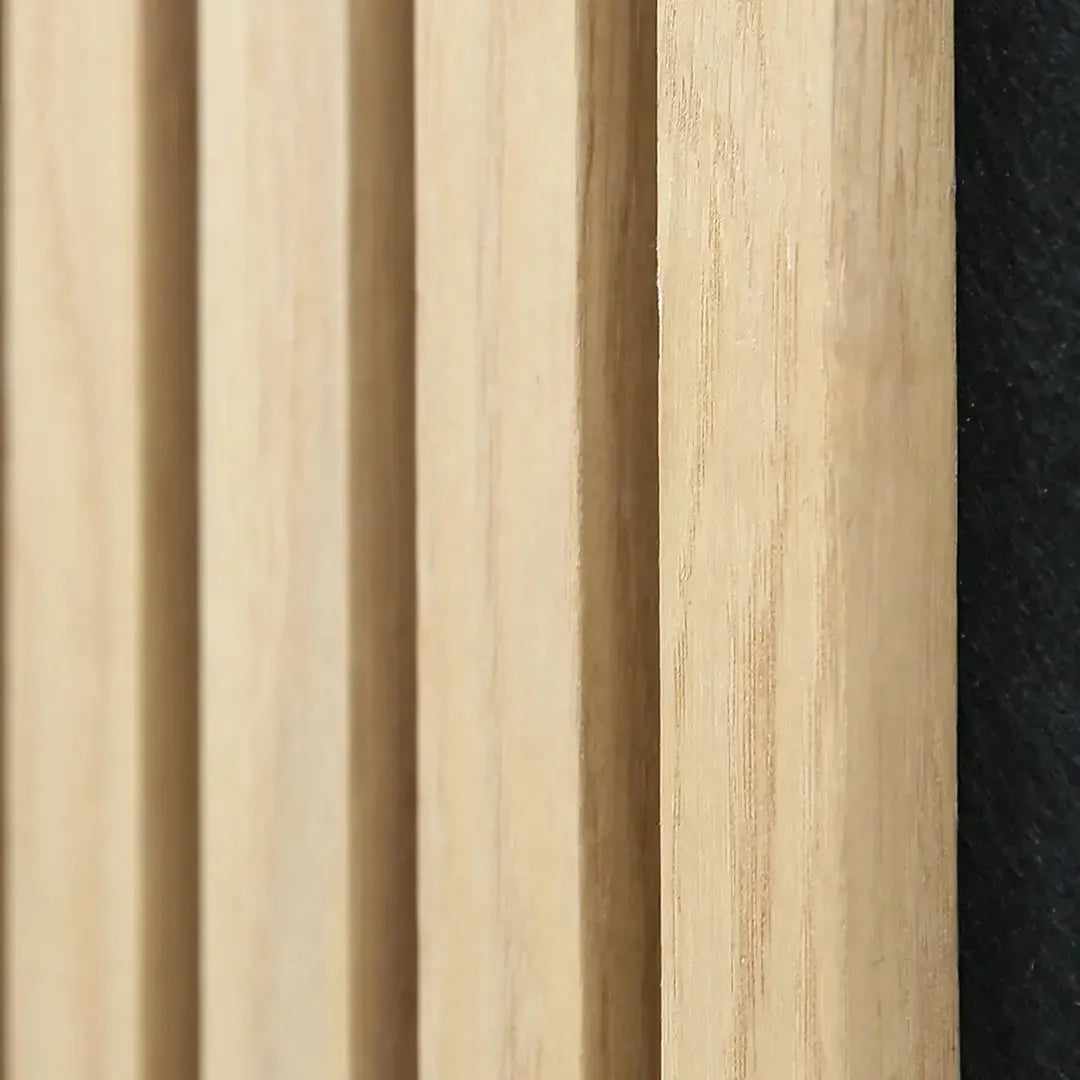
1. Acoustic Slat Wall Panel — Natural Oak — the safe pick. Priced at $169.95, this is light enough to sit within view of an exam chair without dragging down ambient light, and the three-sided veneer construction holds a consistent grain pattern across a full reception wall. Buy for reception and exam-adjacent walls in 2026 builds.
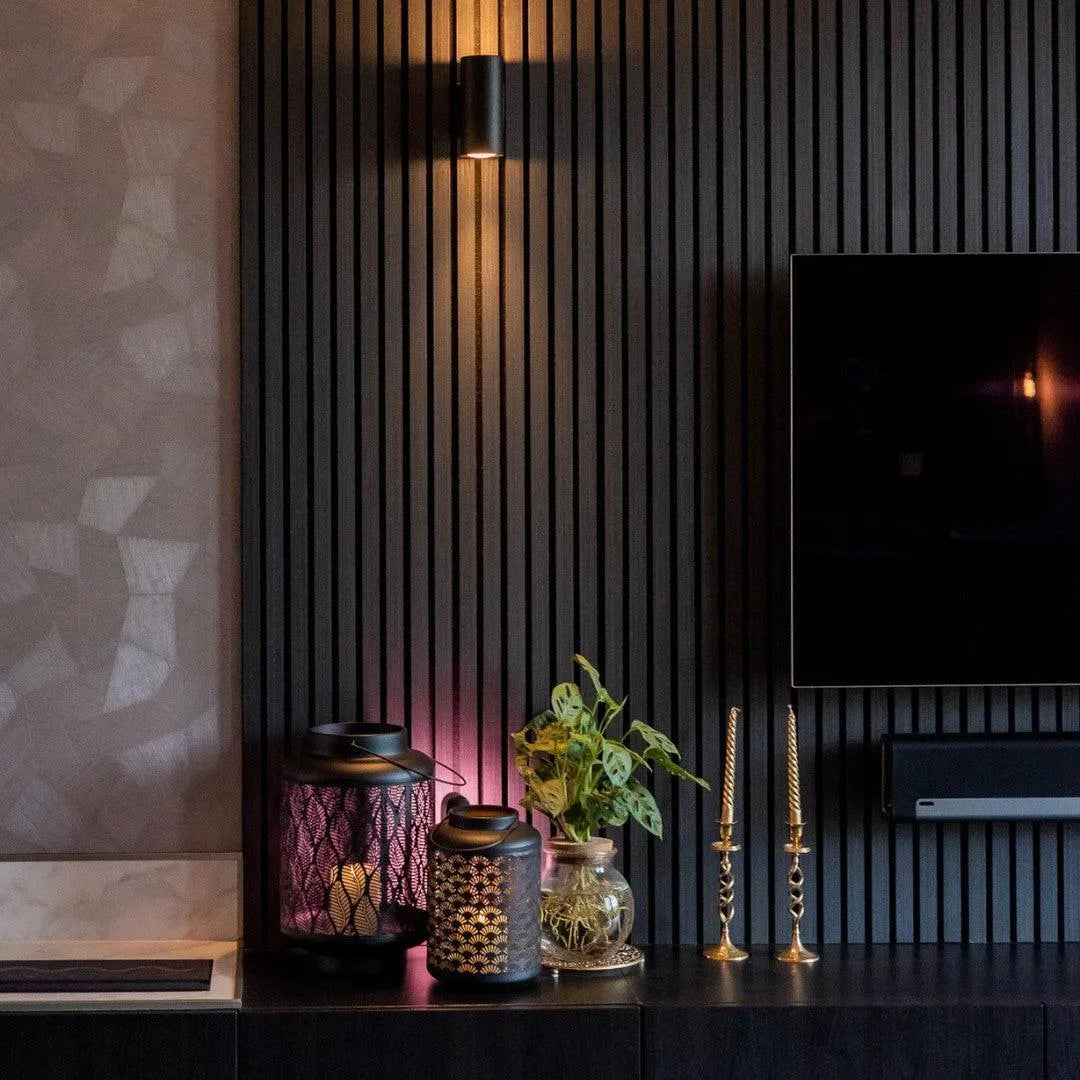
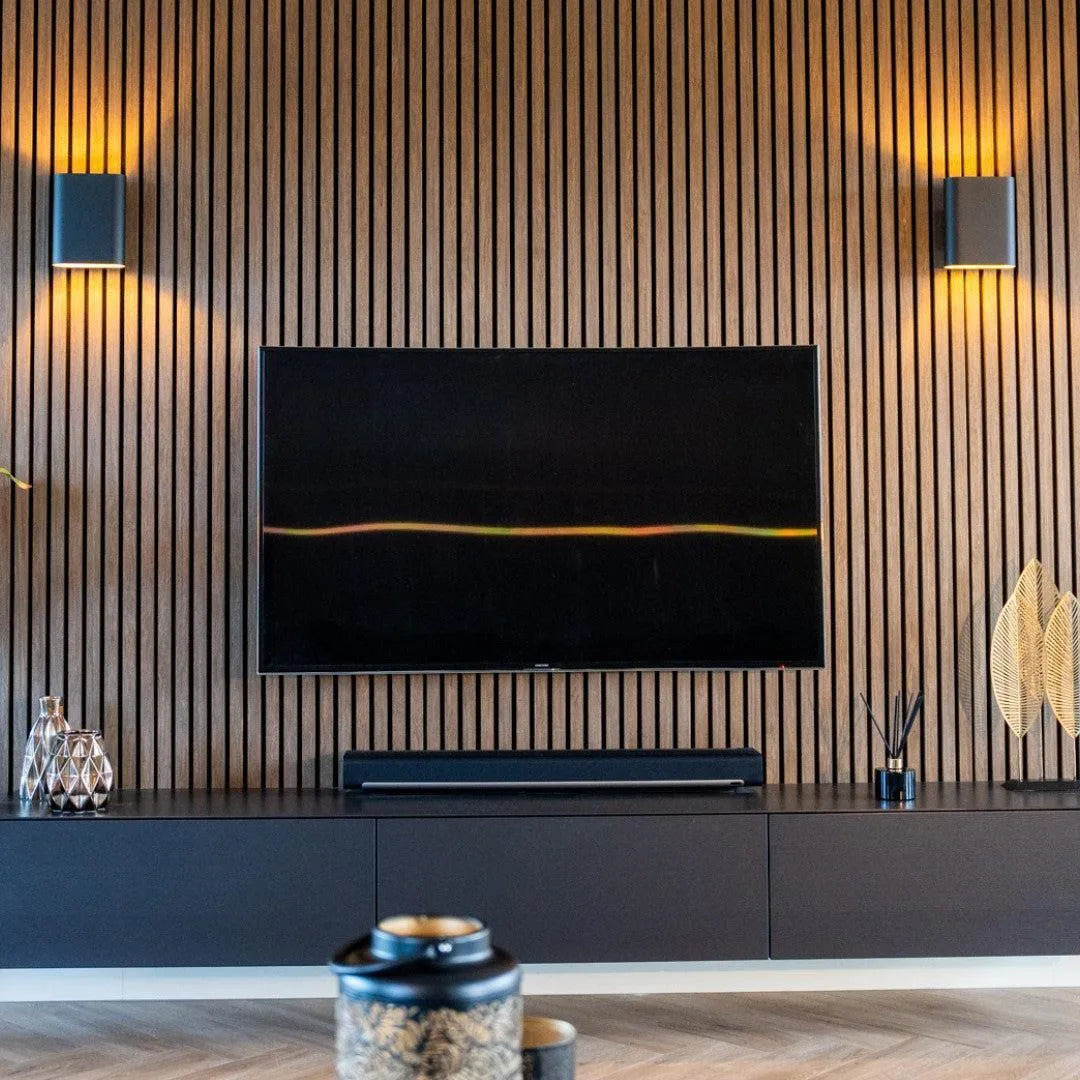
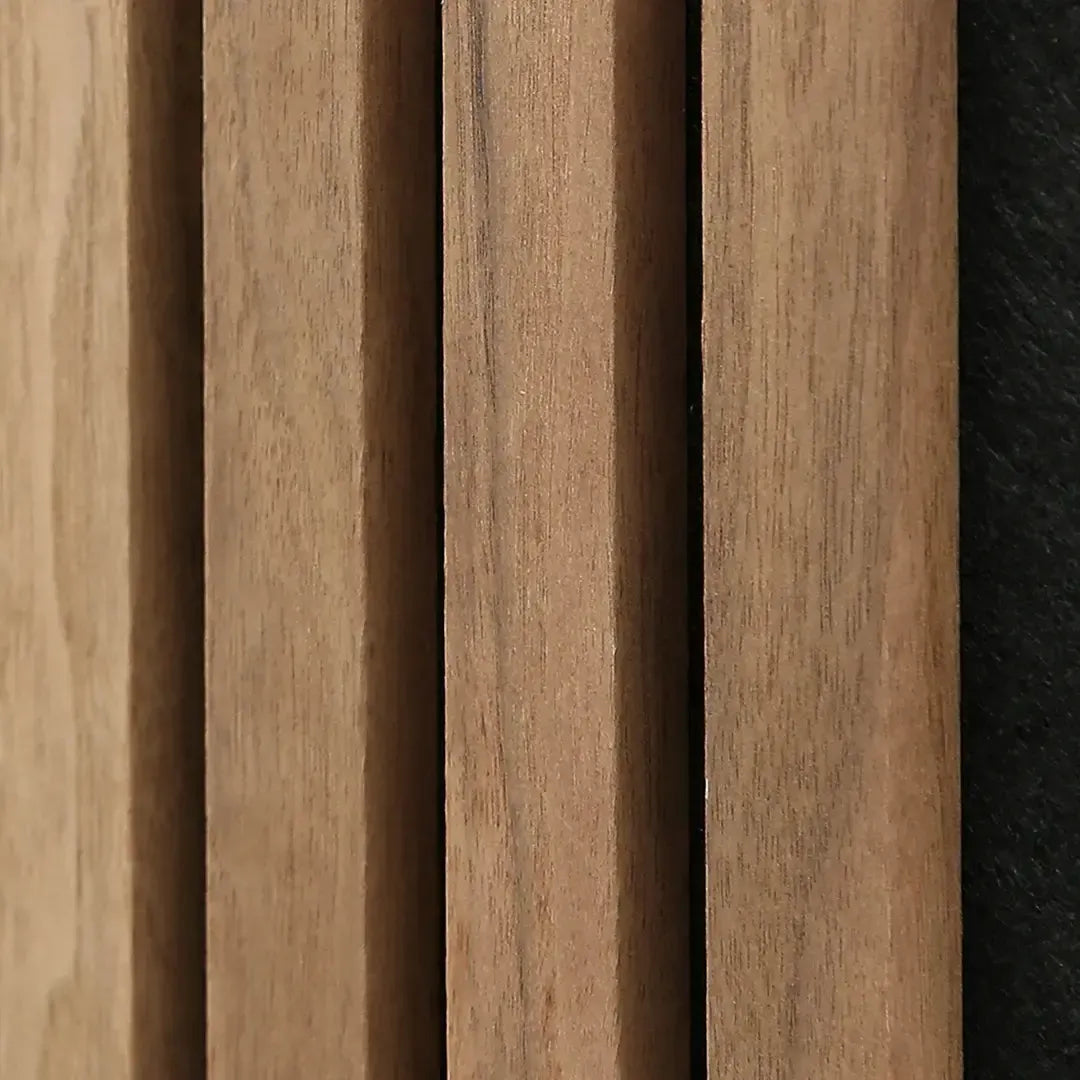
2. Acoustic Slat Wall Panel — Walnut — the premium pick. At $182.95, walnut's deeper grain reads more upscale on a frame display wall, which suits boutiques positioning above mid-market pricing. Keep it off walls with direct sightlines to a visual acuity chart. Buy for the retail-facing side of the store.
3. Hexagon Acoustic Panel — Walnut with Gray Felt — the wildcard. At $165.95 with a felt backing rated 0.75 NRC, this geometric layout breaks up a plain wall while doing real acoustic work in a busy waiting room. It's a design commitment, not a neutral background. Consider for waiting rooms with hard flooring and a lot of ambient noise.
4. Fluted Wall Panel — Natural Oak — the display-niche pick. The vertical fluted profile works well as a backdrop inside a recessed frame display niche, adding shadow-line texture without competing with the product on the shelf. Consider for accent niches rather than full walls.
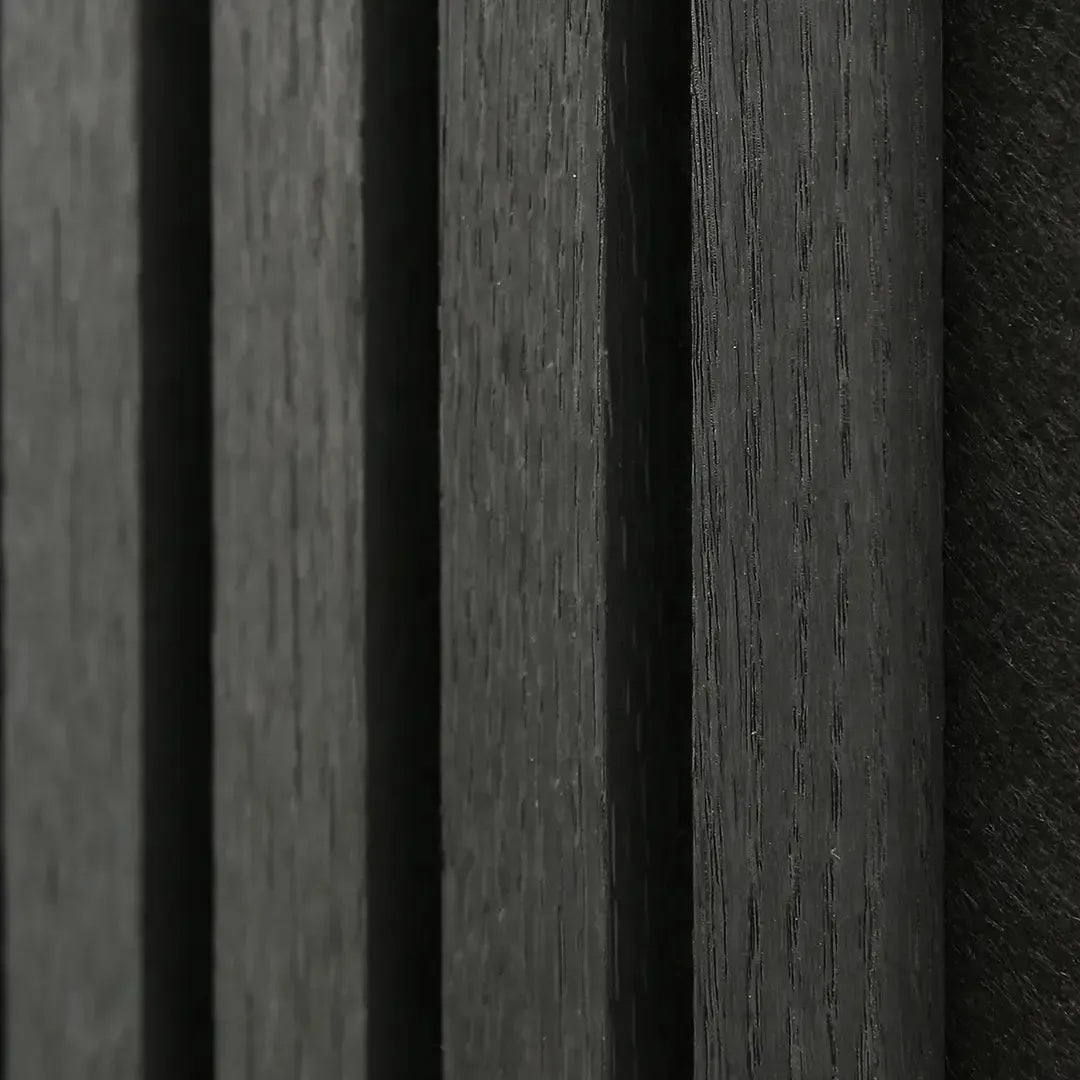
5. Acoustic Slat Wall Panel — Smoked Oak — looks striking in photos but runs dark. On a wall near an exam chair or acuity chart, that tone works against the light levels the room needs. Skip for exam-adjacent surfaces; fine for a back-office wall with no testing nearby.


What to avoid
- Printed laminate panels marketed as "wood-look." They photograph fine online but chip and show a plastic edge sheen under boutique lighting within a year of daily contact.
- Deep-groove slat profiles right at the exam chair. The shadow lines look sharp in a lobby but can throw distracting patterns into a patient's peripheral vision during testing.
- Full dark-tone walls surrounding the entire retail floor. One accent wall in walnut or smoked oak reads intentional; four dark walls make a small boutique feel smaller and cuts usable light for staff reading prescriptions at the counter.
Verdict comparison
| Panel | Tone | Acoustic spec | Best zone | Price (2026) | Verdict |
|---|---|---|---|---|---|
| Natural Oak slat | Light | Standard veneer | Reception, exam-adjacent | $169.95 | Buy |
| Walnut slat | Dark-medium | Standard veneer | Frame display wall | $182.95 | Buy |
| Hexagon Walnut w/ Gray Felt | Dark-medium | 0.75 NRC | Waiting room | $165.95 | Consider |
| Fluted Natural Oak | Light | Standard veneer | Display niche accent | Check current pricing | Consider |
| Smoked Oak slat | Dark | Standard veneer | Back office only | $177.95 | Skip near exam zones |
FAQ
What's the best wood panel for an optometry boutique reception wall?
Natural Oak acoustic slat panels at $169.95 work best for reception and exam-adjacent walls in 2026 because the light tone doesn't cut ambient light needed for testing. Walnut works better on the retail side of the same store.
Do acoustic wood panels actually reduce noise in a waiting room?
Felt-backed hexagon panels carry an NRC rating of 0.75, which measurably cuts reverberation compared to a bare drywall or plain-veneer wall. That's meaningful in a waiting room with hard flooring and staff calling patient names.
Is walnut or natural oak better for an eyewear boutique frame wall?
Walnut at $182.95 reads more premium for a frame display wall and suits boutiques priced above mid-market. Natural oak at $169.95 is the safer, lighter choice if the same wall sits within view of an exam or testing area.
How much does a wood acoustic panel wall cost for a small optical boutique?
Individual acoustic slat panels run $165.95 to $182.95 depending on finish as of 2026, with total project cost depending on square footage and how many walls get paneled. A single accent wall in a sub-1,500-square-foot boutique typically needs far fewer panels than a full-room treatment.
Should exam room walls use dark wood panels?
No — dark finishes like smoked oak absorb more ambient light, which works against the even lighting an optometrist needs for acuity charts and phoropter stations. Keep exam-adjacent walls in a light-to-medium tone.
Can wood slat panels be used for hanging frame displays?
Yes, slat panels with wider spacing give more surface area for mounting brackets and floating shelves used to display eyewear frames. Narrower slat profiles look sleeker but limit how much hardware you can hang without adding blocking behind the wall.
Are real wood veneer panels worth it over printed laminate for a boutique?
Real three-sided wood veneer holds up to daily bumps from bags and displays better than printed laminate, which tends to chip at the edges within a year on a busy retail floor. Veneer also shows genuine grain variation that reads as premium under boutique lighting.
One last thing
The detail most optical retailers miss: the felt backing on hexagon panels isn't decorative, it's the acoustic component doing the actual NRC 0.75 work, so swapping to a non-felt version for a slightly lower price quietly removes the sound control you paid for in the first place. Match the backing to the zone, not just the finish.


 Better performance and aesthetic appeal
 In Stock