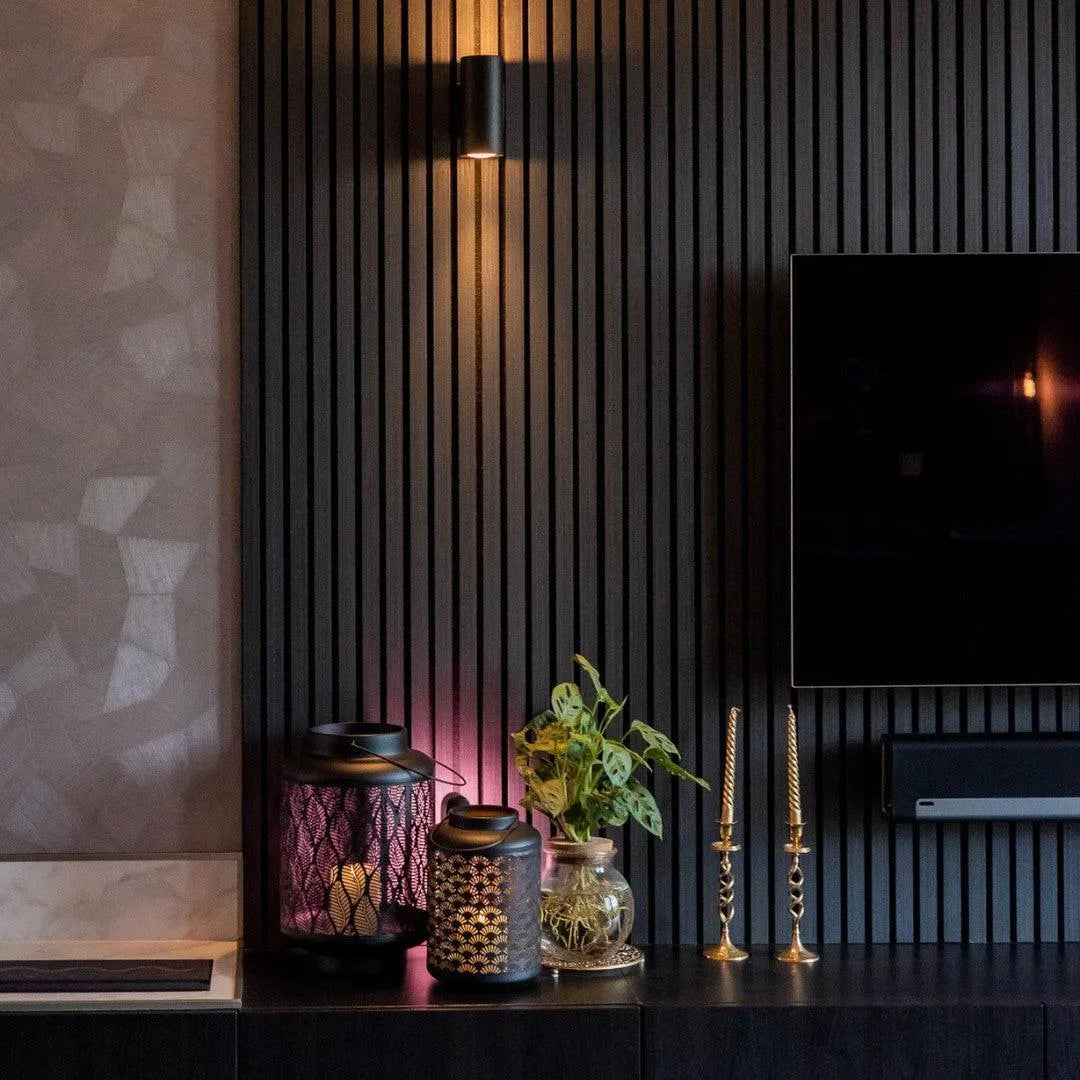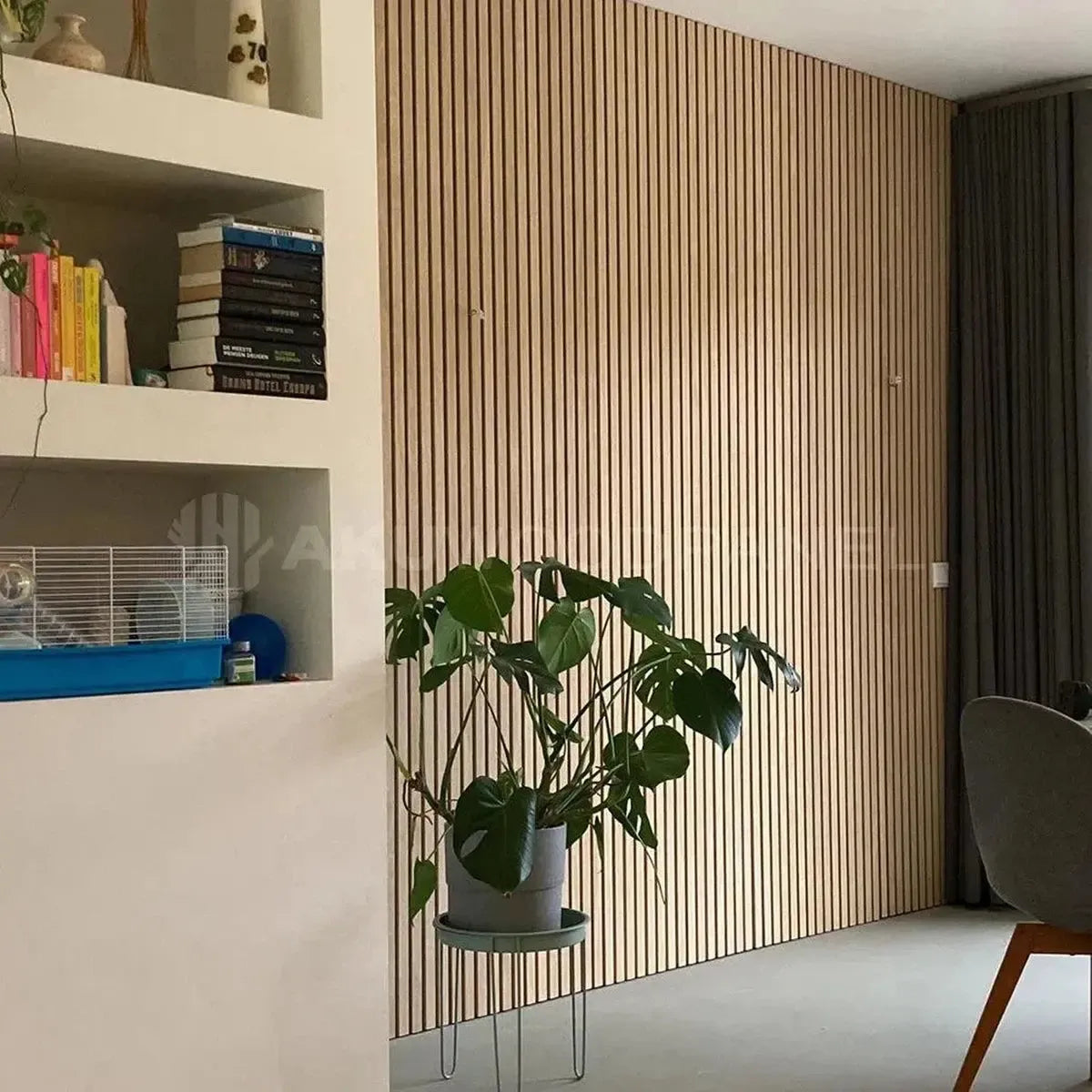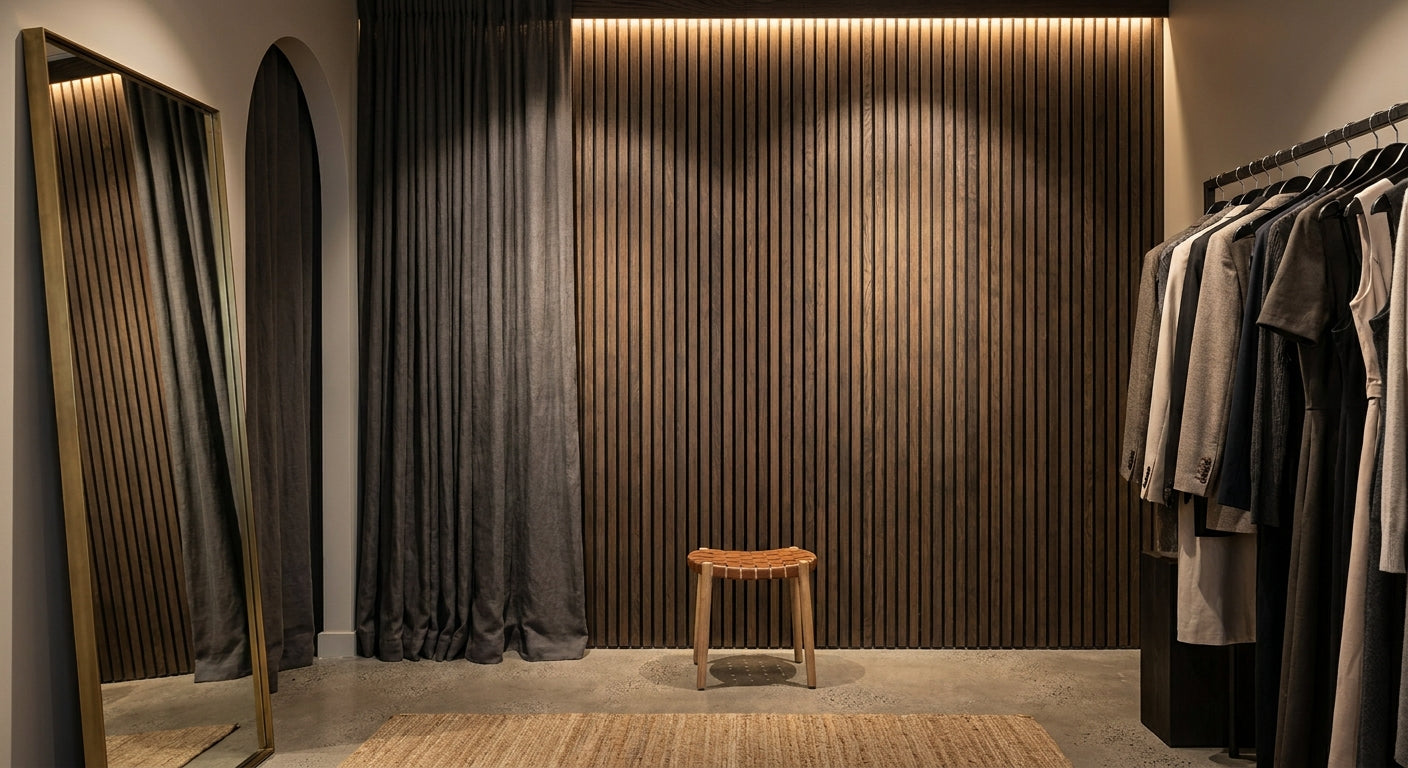
Smoked oak slat panels solve two problems at once in a retail fitting room: they hide the scuffs three fitting sessions an hour create, and they knock down the echo that makes a changing room feel like a locker room. This guide covers what to check before you spec smoked oak for a boutique buildout in 2026.
- Smoked oak slat panels retail fitting rooms hide scuffs better than natural oak -- buy the standard smoked oak acoustic panel.
- NRC 0.75 sound rating on the acoustic slat line cuts changing-room chatter bleeding onto the sales floor.
- The gray felt-backed smoked oak variant adds extra dampening for mall corridors and loud retail strips.
- Search volume sits at 160 per month with a difficulty score of 14 -- a low-competition term worth owning in 2026.
- End pieces finish exposed panel edges cleanly -- skip raw-cut edges in any customer-facing fitting room.
Why this matters
Fitting rooms take more physical abuse per square foot than almost any other retail surface. Hangers, belt buckles, zippers, and rolling racks scrape walls all day, and a scuffed white or painted panel shows every mark under fitting-room lighting within a season.
Smoked oak's dark grain hides that wear pattern instead of broadcasting it. It also does double duty on acoustics: retail fitting rooms sit right off the sales floor, and thin partition walls carry conversation, zippers, and phone calls straight into the store. An acoustic slat wall panel in smoked oak with an NRC rating of 0.75 absorbs a meaningful share of that noise instead of bouncing it back.
At a search volume of 160 per month and a difficulty score of 14, this is not a crowded keyword. Most competing content talks about smoked oak for bedrooms or living rooms — almost nothing addresses the retail buildout use case directly, which is exactly why a boutique owner searching this in 2026 finds thin results.
Who this is for
This guide is for boutique owners, retail designers, and store buildout contractors specifying fitting room finishes for independent apparel stores, mall-based boutiques, or multi-location retail chains planning a 2026 refresh. If you're choosing between paint, laminate, and wood veneer for changing room walls and want something that survives daily foot traffic without looking clinical, this is your buyer profile.
What to look for in smoked oak slat panels for retail fitting rooms
Light reflectance and mirror pairing
Dark smoked oak absorbs more ambient light than natural or white oak, which matters directly next to a fitting room mirror. A room lit only by a single overhead fixture will read darker with smoked oak on three walls than with natural oak — plan for supplemental sconce or LED strip lighting near the mirror wall, not just overhead cans.
Scuff and scratch tolerance
Fitting rooms see rolling racks, belt buckles, and shoe heels contact the lower third of the wall dozens of times a day. Smoked oak's grain pattern camouflages light surface marks far better than a solid painted finish, which is the single biggest reason boutiques choose it over drywall and paint.
Acoustic performance
A changing room needs enough privacy that a customer doesn't feel like the whole store can hear them get undressed. The acoustic slat line carries an NRC rating of 0.75, and the felt-backed version adds another layer of dampening — worth the upgrade if your fitting rooms sit within 10 feet of a checkout counter or a busy aisle.
Install speed for a live retail buildout
Retail buildouts run on tight timelines — a store can't stay closed for a two-week finish install. Slat panels install over drywall with adhesive or mechanical fasteners in a single day per bay, which matters when you're coordinating around a grand opening or seasonal reset.
Batch consistency across multiple bays
A boutique with four or five fitting rooms needs the veneer grain and tone to match across every bay. Order full panel runs from a single production batch rather than mixing older stock with a fresh order — a visible tone shift between adjacent stalls reads as a defect to customers, even when it isn't one.
Budget per bay
A typical single fitting room bay runs three to four wall panels depending on stall width. Price per panel against paint-and-trim alternatives before committing to a full multi-bay rollout, since the wood veneer premium adds up fast across five or six stalls.
Top picks for retail boutique fitting rooms
Acoustic Slat Wall Panel — Smoked Oak. The anchor pick. Real wood veneer over an NRC 0.75 acoustic backing gives you the scuff-hiding grain and the sound dampening in one panel, and it's the version most boutiques should start with. Buy.
Acoustic Slat Wall Panel — Smoked Oak with Gray Felt. The acoustic upgrade. Same smoked oak face, denser felt backing behind the slats — pick this one if your fitting rooms sit within earshot of a register or a narrow aisle where every conversation carries. Buy for high-noise locations, Consider for standalone boutiques.
End Piece Slat Wall Panel — Smoked Oak. The finishing pick. Not a wall panel itself — it caps the exposed edge where a slat panel meets a doorframe, corner, or curtain track, and skipping it leaves a raw MDF edge visible to every customer who steps into the stall. Consider — near-mandatory if the panel run ends at an open edge rather than a corner.
Natural or black oak as a contrast wall. The wildcard. Some boutiques run smoked oak on three walls and a lighter or darker contrast tone on the mirror wall to break up a dark box feel. It works visually but doubles your SKU count and complicates batch matching across bays. Consider only if you have a design reason for it — Skip if you just want a clean, repeatable spec.
What to avoid
- Painted MDF slat lookalikes. They photograph fine online but show scratches within weeks of daily rack contact — real wood veneer over smoked oak hides that wear, a painted finish doesn't.
- Mixing panel batches mid-rollout. Ordering three bays now and two more next quarter from a different production run risks a visible tone mismatch between stalls that customers will notice even if you don't.
- Skipping the edge trim to save on the order. A slat panel that ends bare at a doorframe or corner looks unfinished no matter how good the panel itself is — the end piece is a small line item next to the wall panel cost.
A full retail fitting room wall panel breakdown covers layout and lighting decisions in more depth if you're specifying more than two or three bays.
Verdict comparison
| Pick | Light behavior | Scuff hiding | Acoustic rating | Verdict |
|---|---|---|---|---|
| Smoked Oak Acoustic Panel | Moderate light absorption | Strong | NRC 0.75 | Buy |
| Smoked Oak with Gray Felt | Moderate light absorption | Strong | NRC 0.75, extra dampening | Buy for loud locations |
| Smoked Oak End Piece | N/A — trim only | Prevents raw edge wear | N/A | Consider |
| Natural/Black Oak contrast wall | Varies by tone | Strong | NRC 0.75 | Consider selectively |
FAQ
What's the best smoked oak slat panel for retail fitting rooms in 2026?
The standard Acoustic Slat Wall Panel in Smoked Oak is the best fit for most boutique fitting rooms in 2026, combining real wood veneer with an NRC 0.75 acoustic backing. Upgrade to the gray felt-backed version if the fitting rooms sit near a register or busy aisle.
Is smoked oak too dark for a small fitting room?
Smoked oak absorbs more ambient light than natural oak, so a small stall needs a dedicated mirror-side light source rather than relying on overhead lighting alone. Pair it with a sconce or LED strip near the mirror to avoid a cave-like feel.
How much sound does an acoustic slat wall panel actually block?
The acoustic slat wall panel line carries an NRC rating of 0.75, meaning it absorbs roughly three-quarters of the sound energy that hits it rather than reflecting it back into the room. That's a meaningful reduction for a fitting room positioned close to a sales floor.
Do fitting room slat panels need edge trim?
Yes, if the panel run ends at an open edge rather than tucking into a corner or doorframe. An end piece caps the exposed MDF edge so it doesn't show raw material to customers standing in the stall.
How long does it take to install slat panels in one fitting room bay?
A single bay with three to four wall panels typically installs in about a day using adhesive or mechanical fasteners over drywall. Retail buildouts on tight reopening timelines can usually complete a full bank of fitting rooms across a weekend.
Can I mix smoked oak with a lighter oak tone in the same fitting room?
You can run smoked oak on the side walls and a lighter tone on the mirror wall for contrast, but it adds a second SKU to track and complicates batch matching. Most boutiques get a cleaner result sticking to one tone across all fitting room bays.
Does smoked oak show scuffs less than a painted fitting room wall?
Yes — the wood grain pattern in smoked oak camouflages light scuffs from rolling racks and belt buckles far better than a solid painted surface. That's the primary reason boutiques choose real wood veneer over paint for high-traffic fitting rooms.
What's the keyword difficulty for smoked oak slat panels retail fitting rooms in 2026?
The keyword carries a difficulty score of 14 out of 100 with a search volume around 160 per month in 2026, making it a low-competition term relative to broader oak panel searches.
One last thing
The detail most boutiques miss: smoked oak's light absorption means the same fixture that lit a white-walled fitting room adequately will read noticeably dimmer once smoked oak goes up on three sides. Budget for one extra light source per bay before the install, not after a customer complains the mirror wall feels dark.



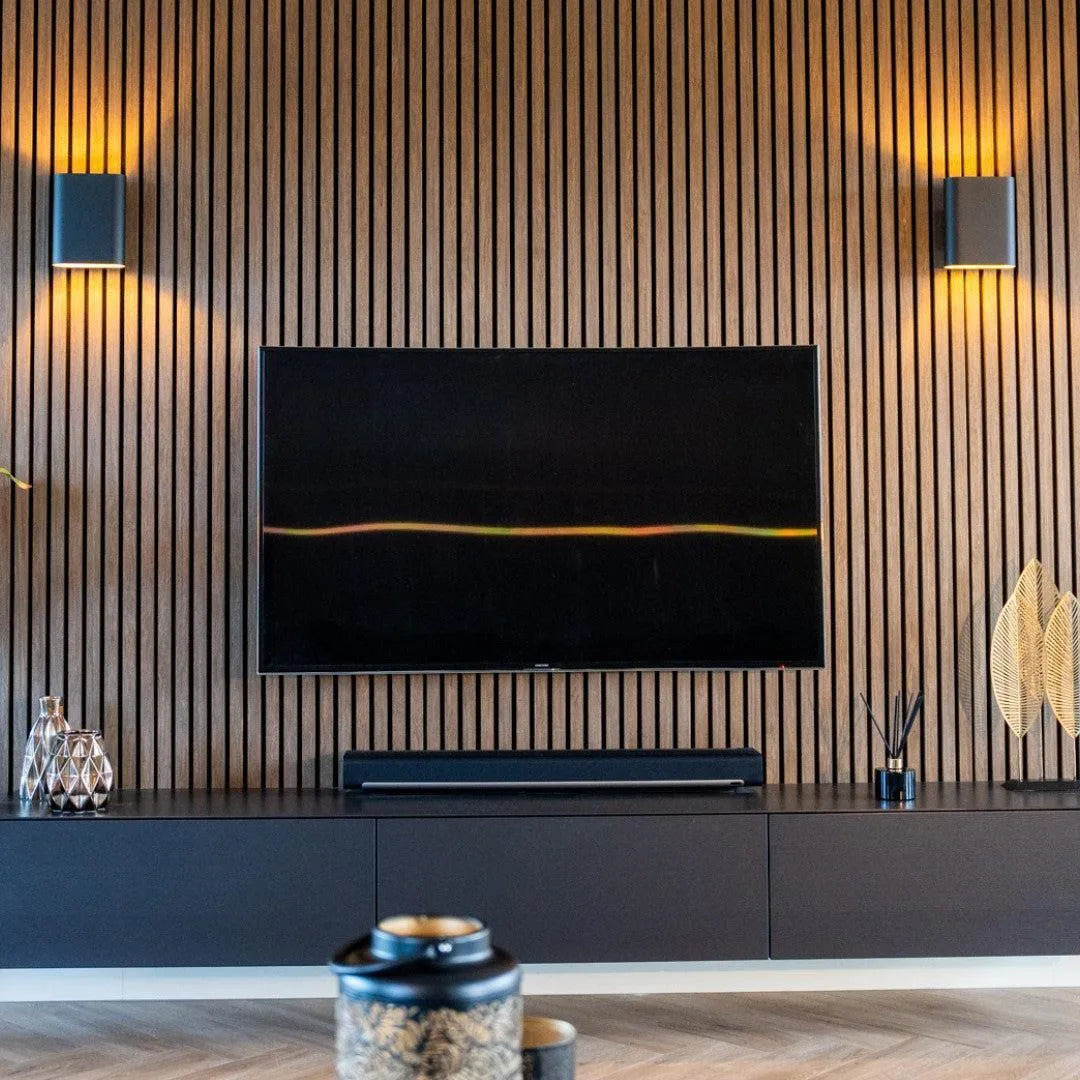

 Better performance and aesthetic appeal
 In Stock