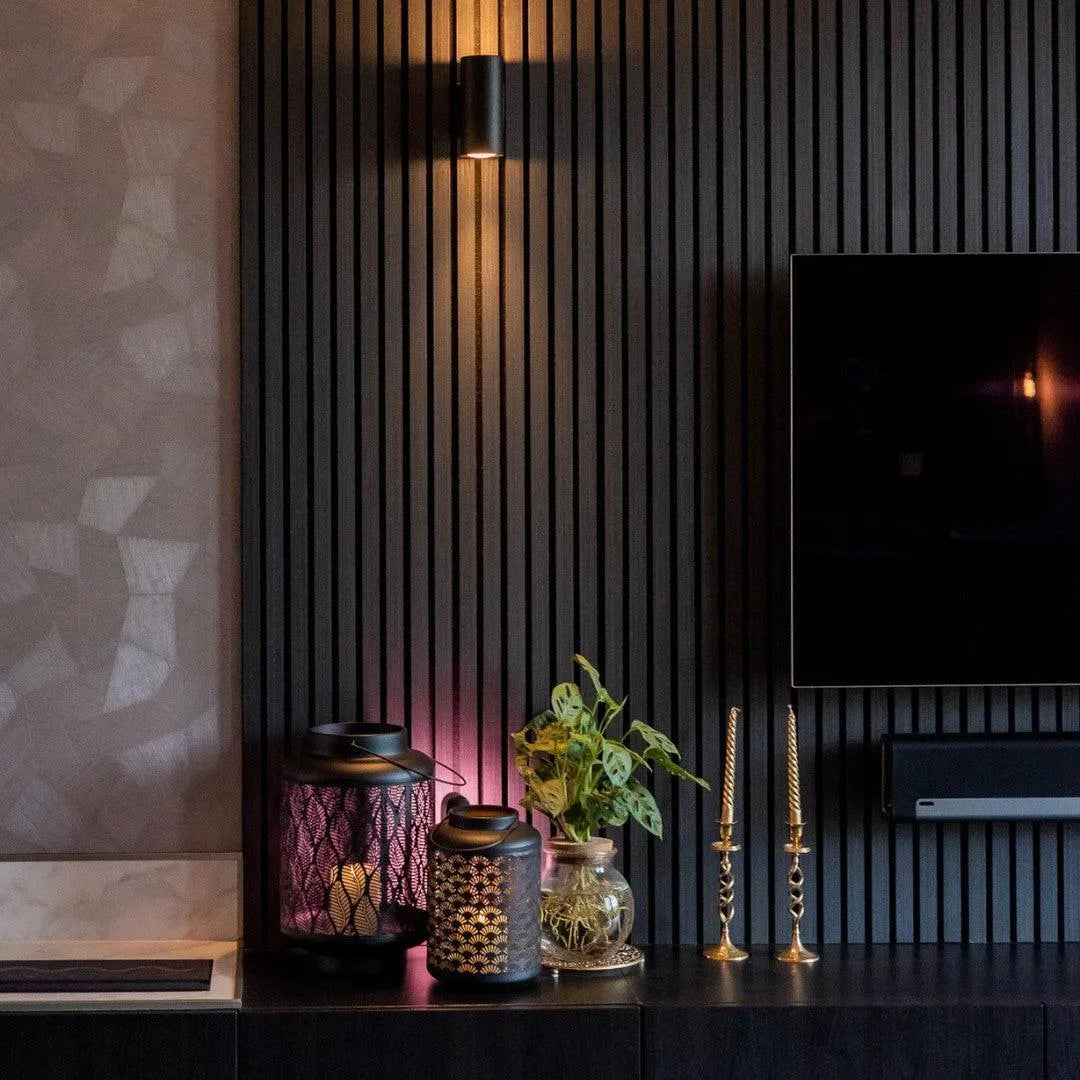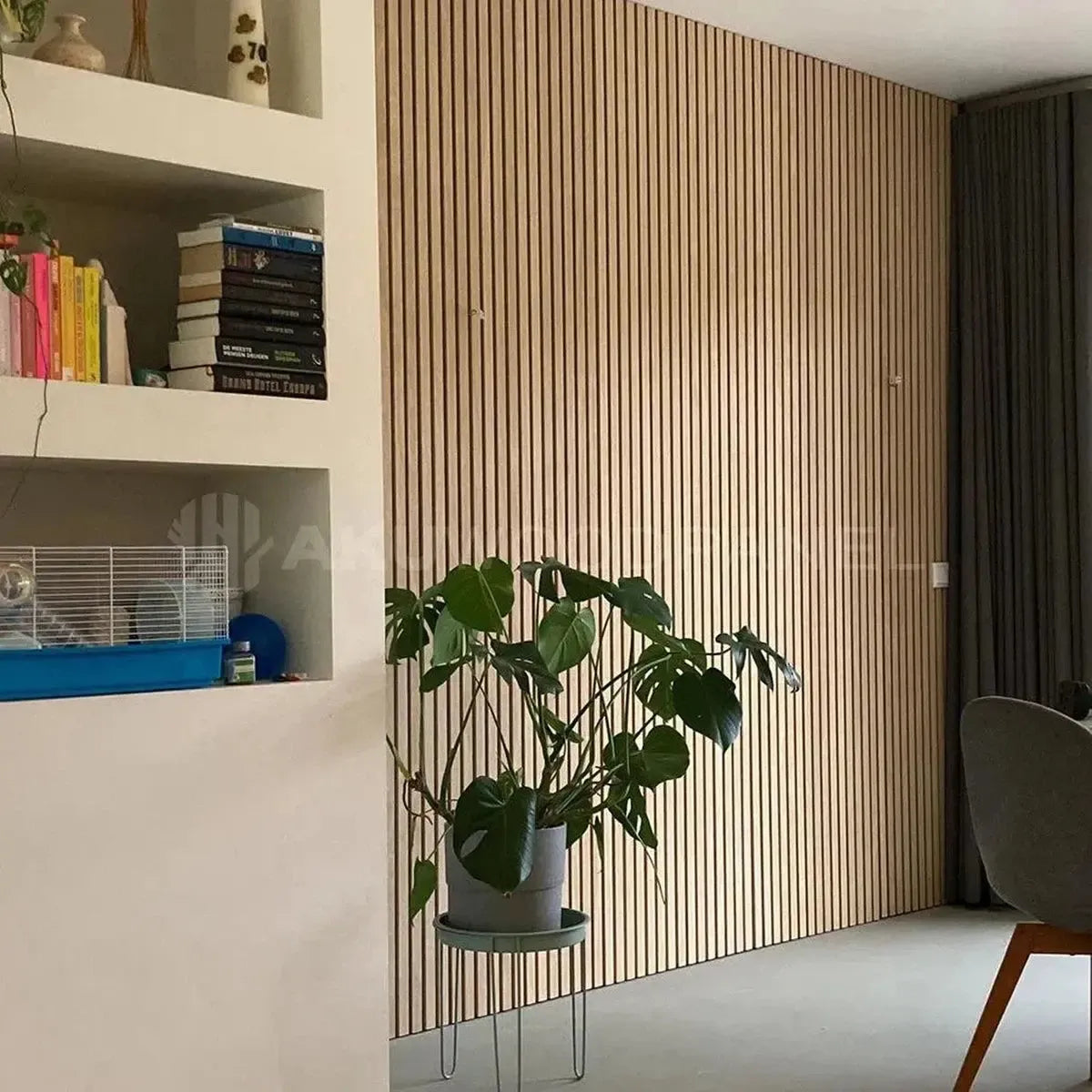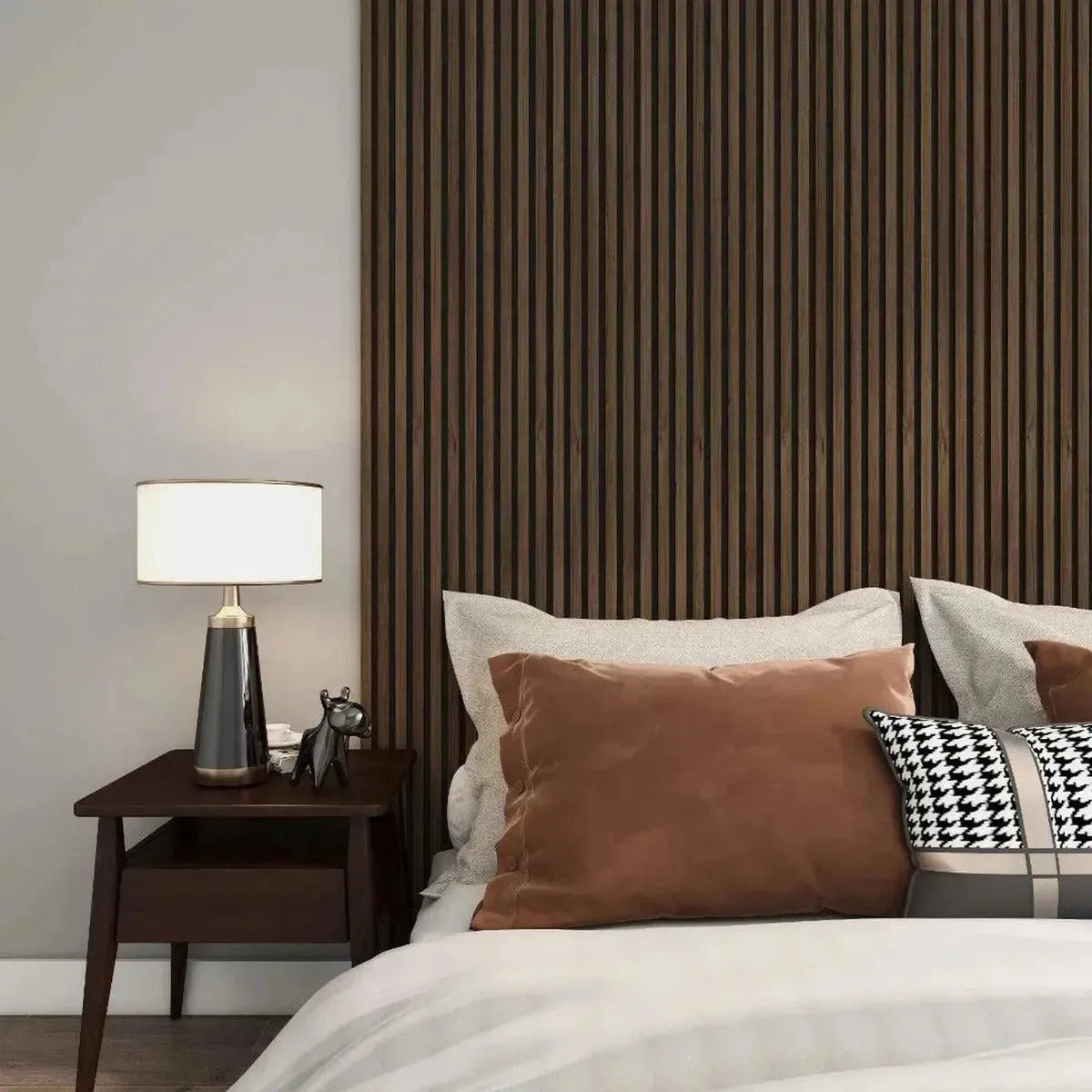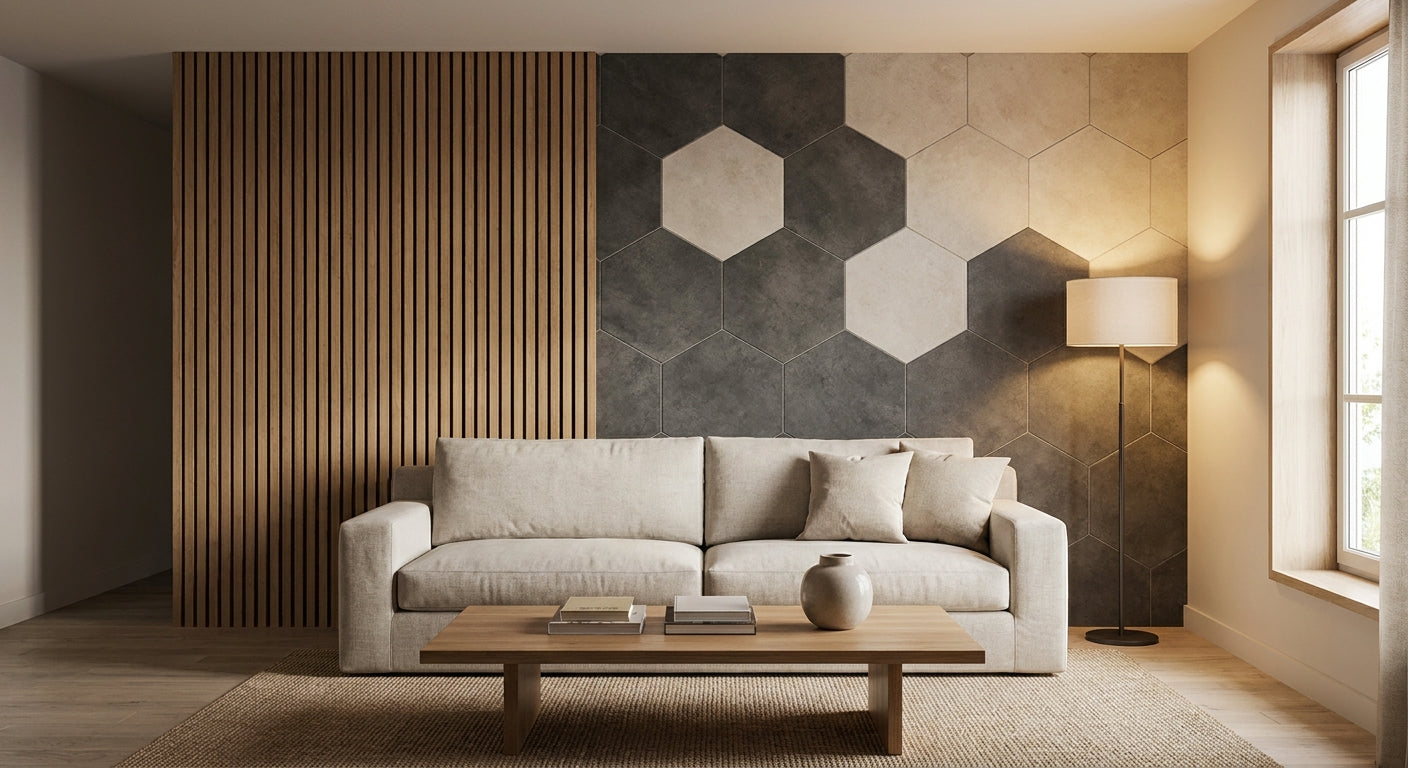
Combining hexagon acoustic panels with linear slat panels on the same wall or in the same room takes color planning first and layout second — get the wood tone wrong and the mix reads as clutter instead of intentional design.
- Match wood tone before shape when you mix hexagon slat panels one room design projects — Walnut hexagon with Walnut slat is Buy, mismatched tones are Skip.
- Zone by function: hexagon for a small accent (TV wall, headboard), slat for the larger acoustic run.
- Order sample panels first in 2026 — a $5 hexagon sample next to a slat sample settles the tone question in a day.
- End pieces and trim finish the transition line where hexagon meets slat cleanly.
Why this matters
Hexagon acoustic panels and slat wall panels both cut down room echo, but they behave differently on a wall. Hexagon panels read as a graphic, geometric block — great for a focal point behind a TV or bed. Slat panels read as a linear, architectural surface — better for covering a full wall or running along a corridor. Mixed carelessly, two strong patterns compete and the room looks busy instead of designed. Mixed with a plan, they split the work: one shape carries the eye, the other carries the acoustic load across more square footage.
Most of the DIY questions that come up in 2026 aren't about whether hexagon and slat panels can go together — they can — but about which wall gets which shape, and how to keep the wood veneer color consistent across two very different panel geometries.
What you'll need
- Wall measurements for both zones (hexagon accent area and slat run), in square feet
- Sample panels in the same wood tone from both product lines — a Walnut slat wall panel sample and a matching hexagon sample side by side
- A tape measure, pencil, level, and stud finder
- Construction adhesive or a track system, depending on the wall substrate
- End pieces or trim for the panel type that borders the transition line
- A full sample box if you're undecided between more than two finishes
The steps
1. Pick one dominant panel and one accent panel
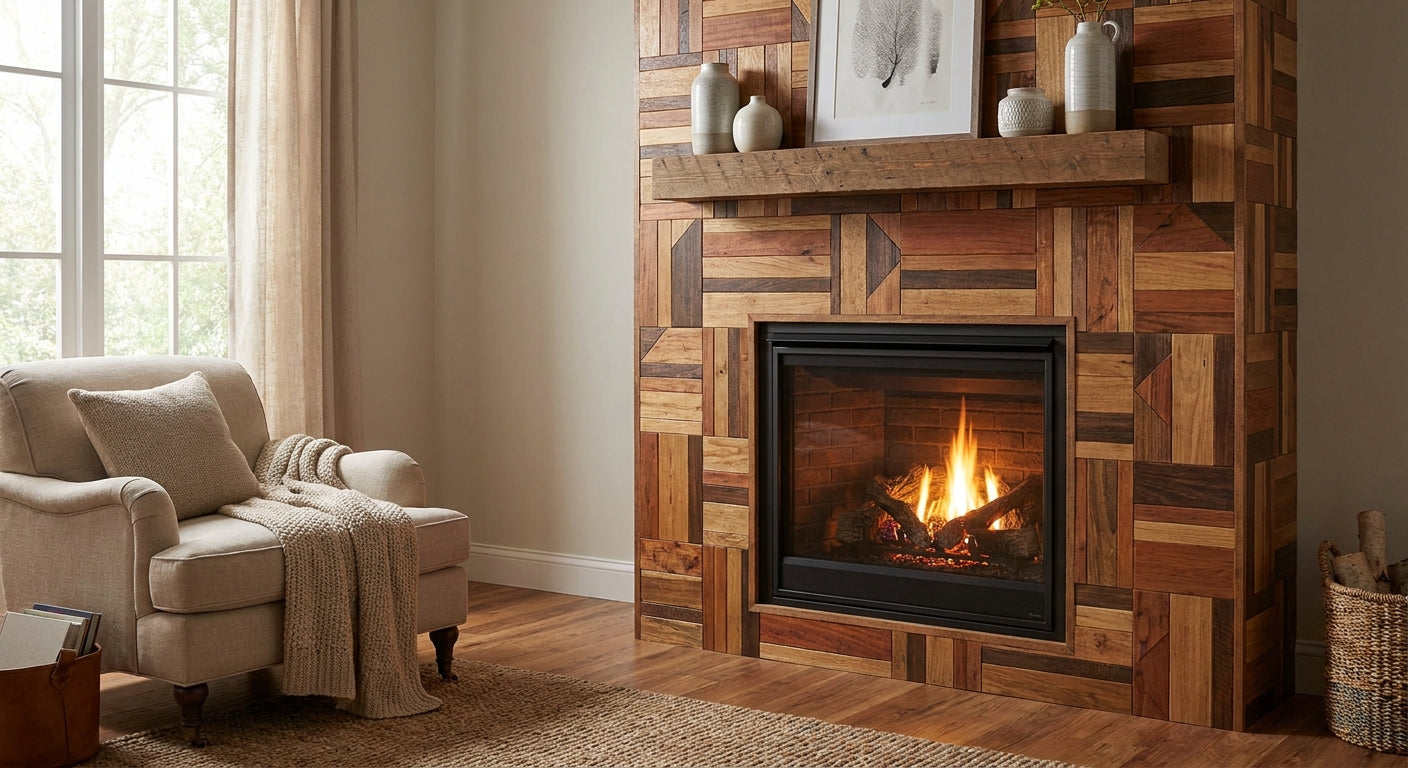
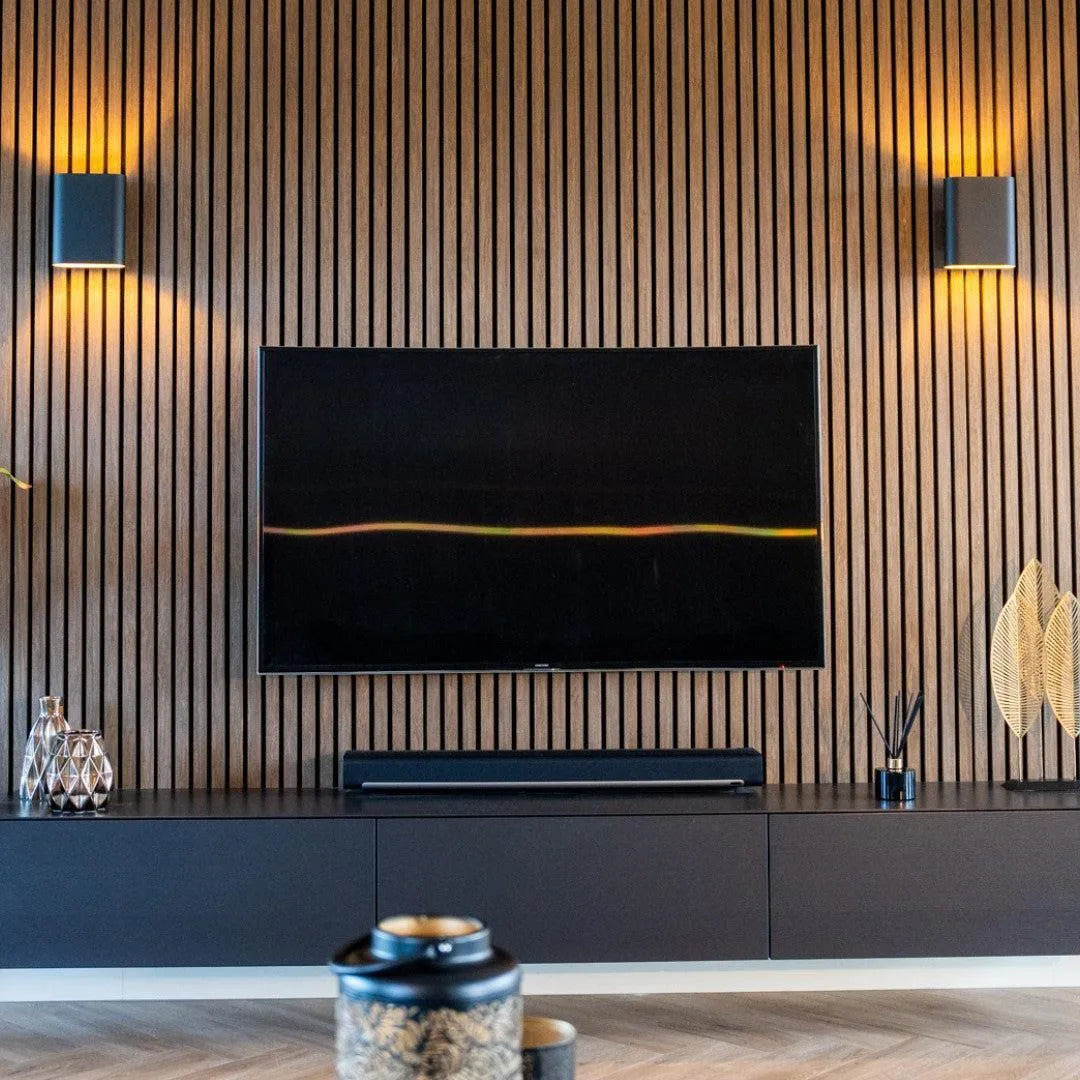
Decide up front which panel covers more wall area. In most rooms, slat panels are the dominant surface because they run wall to wall or floor to ceiling, while hexagon panels stay contained to a smaller feature zone — a headboard wall, a fireplace surround, or a TV backdrop. Reversing this (hexagon everywhere, slat as a trim detail) rarely reads well because hexagon's repeating angles get visually heavy at scale. Common mistake: trying to give both panels equal wall share — one always needs to win.
2. Match wood tone before you match shape
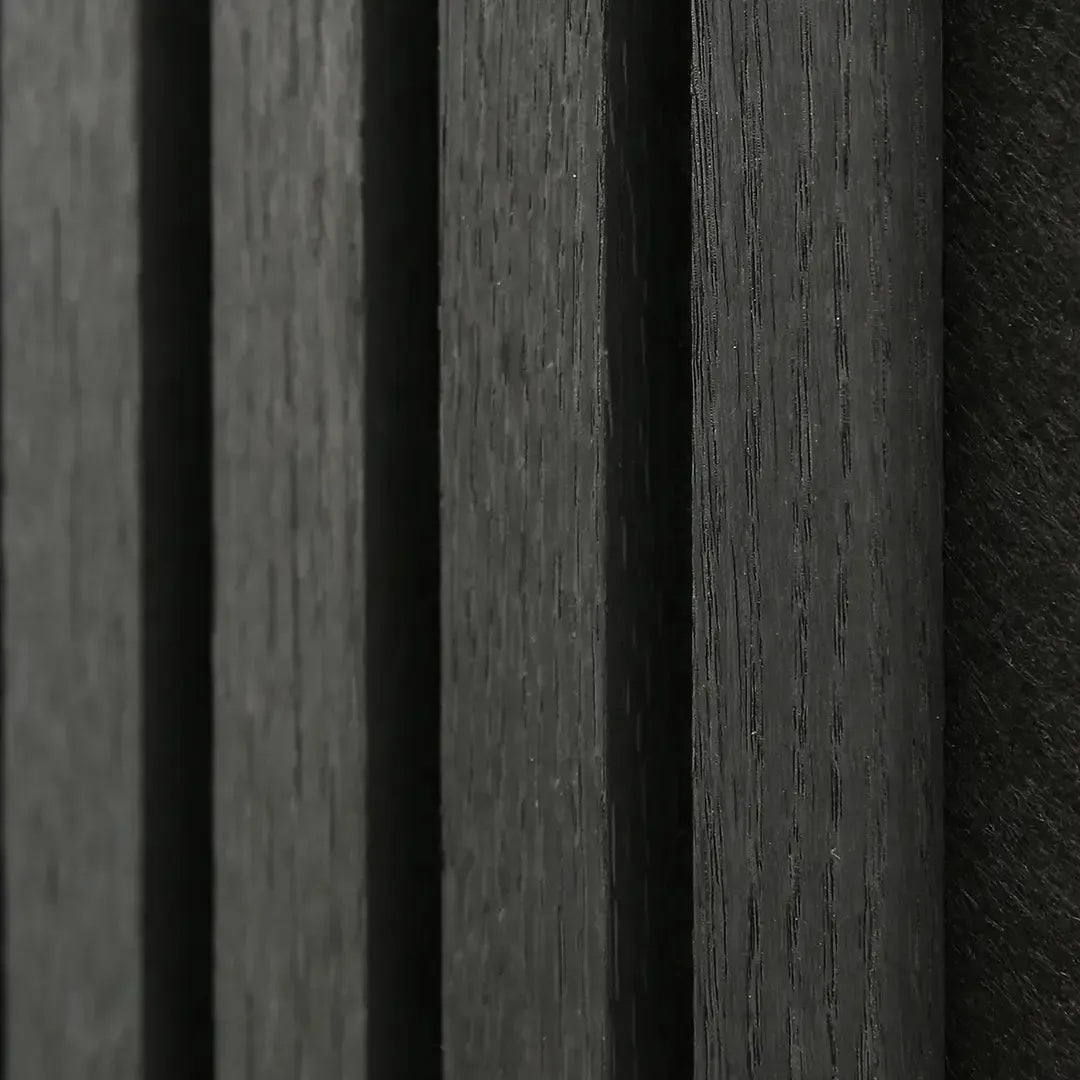
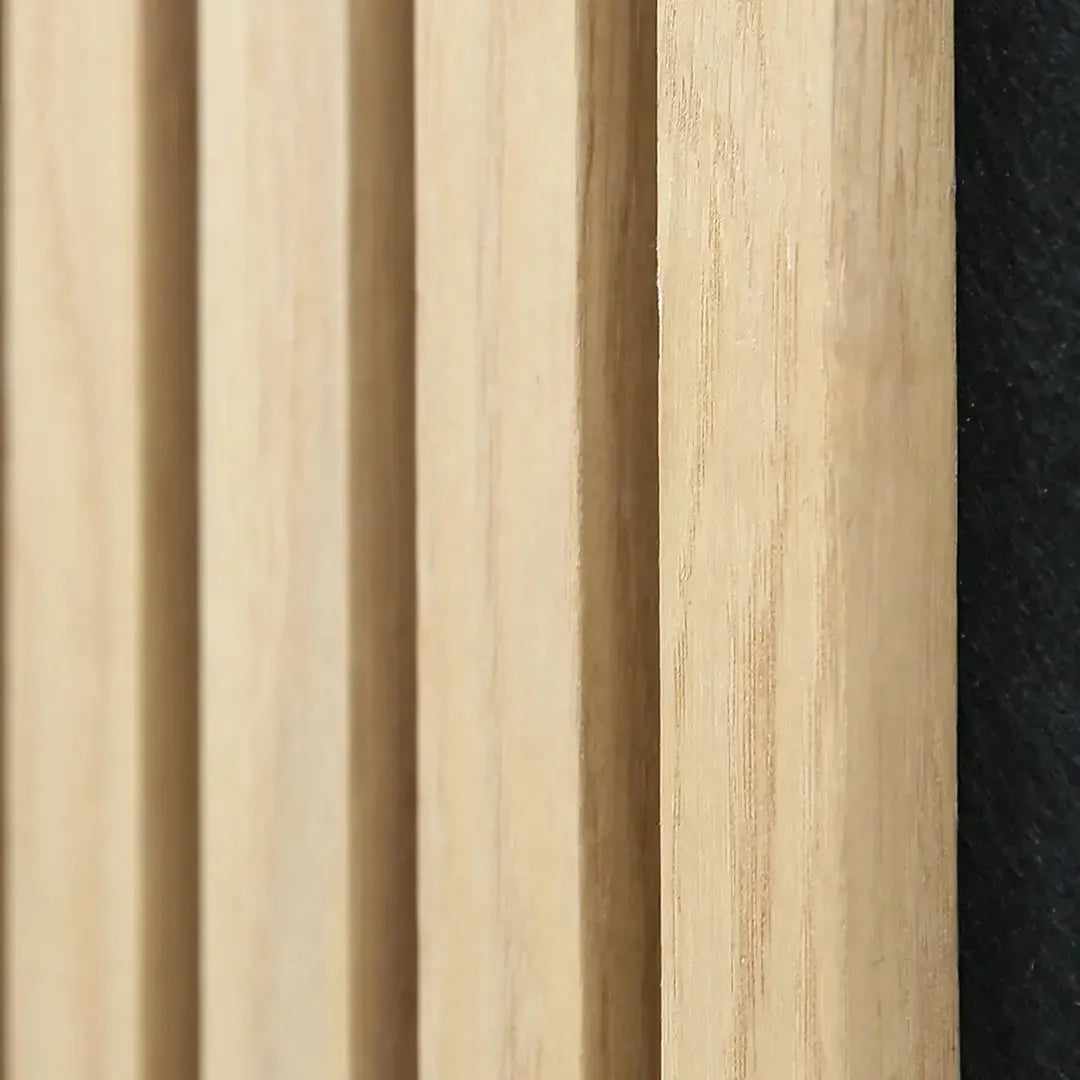
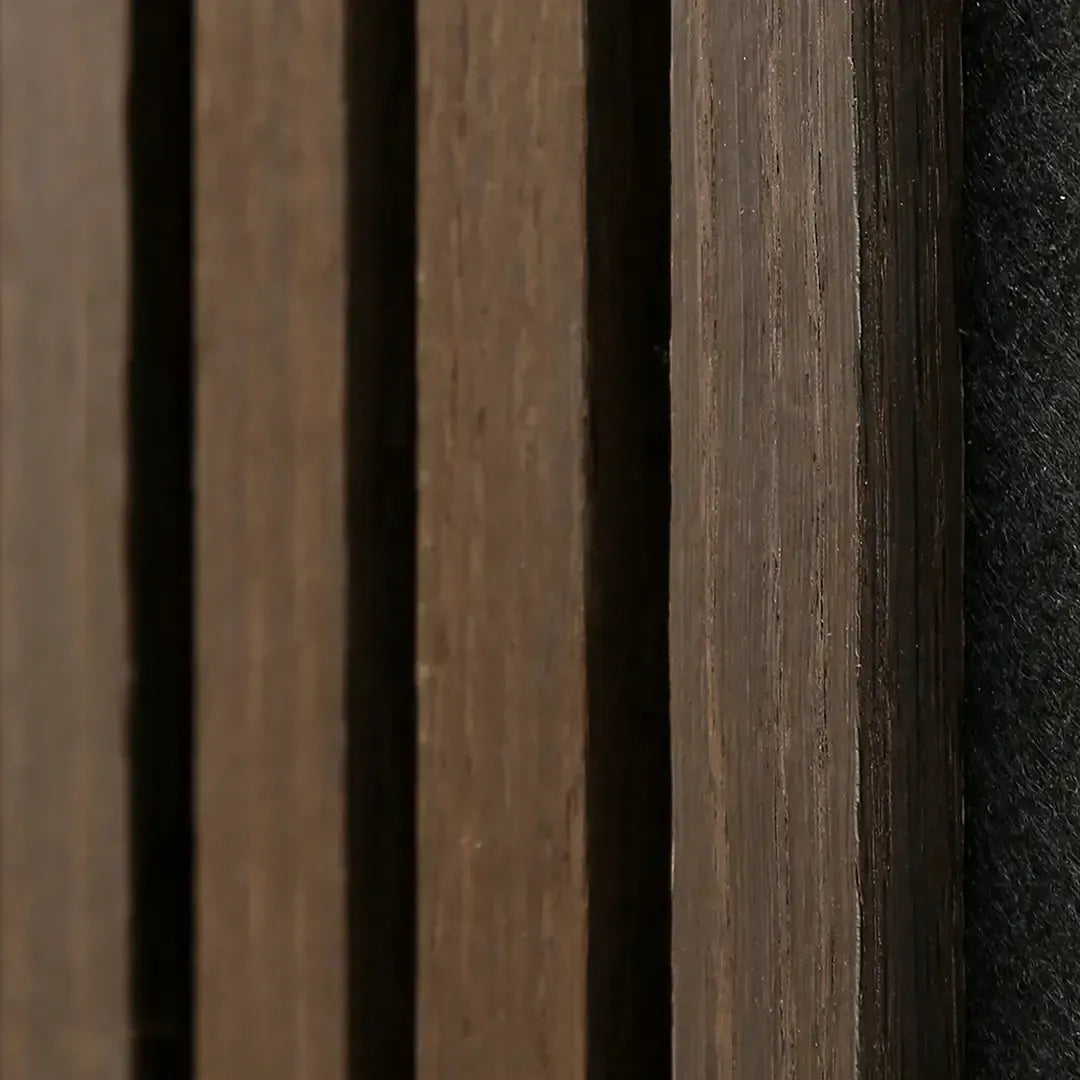
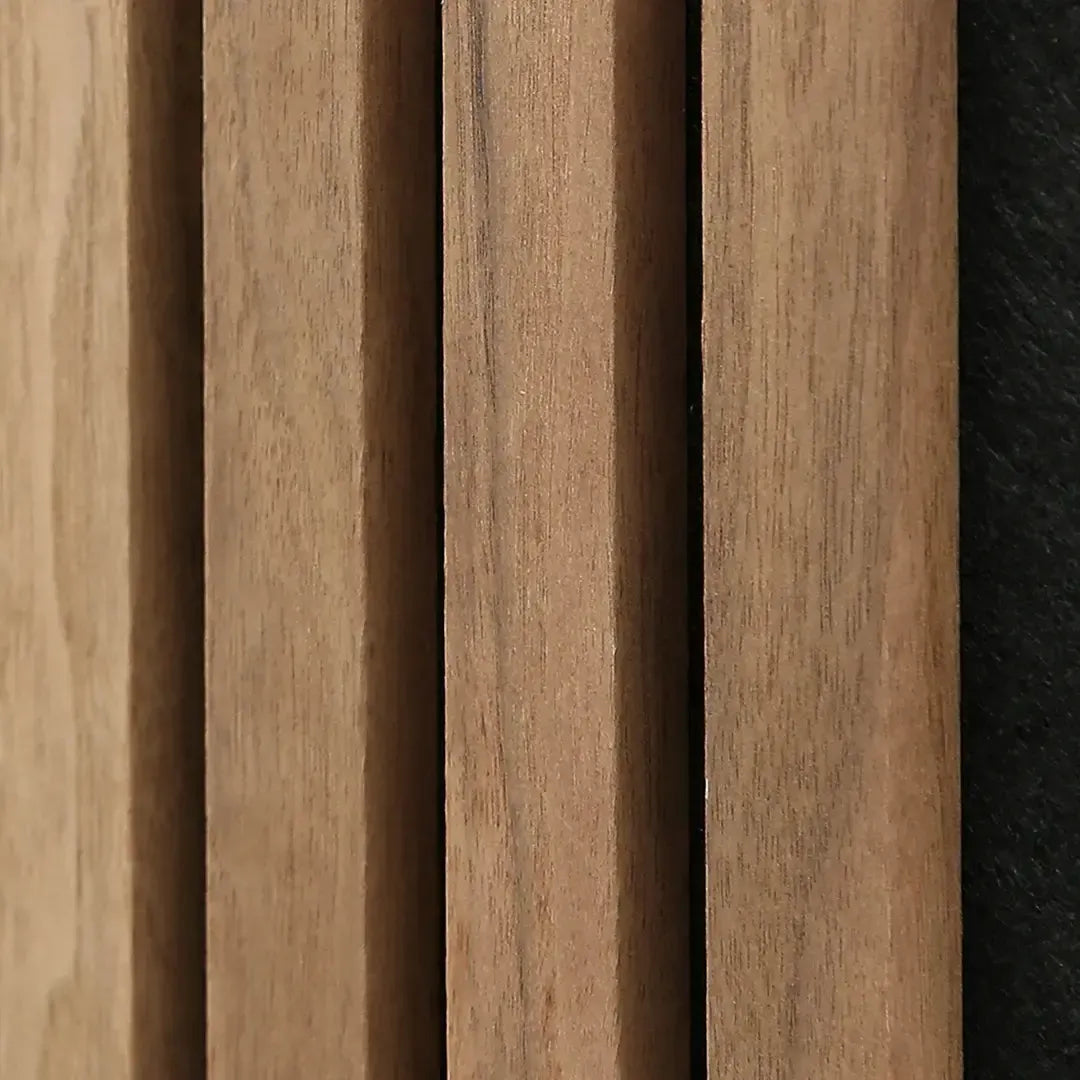
The single biggest reason a hexagon-and-slat mix fails is tone mismatch, not shape mismatch. A Natural Oak slat panel and a hexagon panel labeled "natural oak" from a different production run can still sit half a shade apart under room lighting. Order both samples in the same batch and hold them together near a window and under your room's actual light fixture before you commit to full panels. Expected outcome: the two samples should read as one wood family, not two similar-but-different woods.
3. Zone the wall by function, not symmetry
Map the room into a hexagon zone and a slat zone before ordering anything. A bedroom headboard wall, for example, might get hexagon panels centered behind the bed (roughly 6 to 8 feet wide) while the slat panels wrap the remaining wall and return around a corner. Trying to split a single wall 50/50 between the two shapes usually looks indecisive. Common mistake: centering the split exactly in the middle of a wall instead of letting furniture or architecture dictate the line.
4. Test with samples before you order full panels
A full slat panel runs roughly $170 to $183 depending on finish, and a full-size hexagon order for an accent wall adds up fast — sample panels remove the guesswork for a few dollars. Order a hexagon sample and a slat sample in the same finish, tape them to the wall in daylight and again at night with your lamps on, and live with them for 48 hours minimum. Expected outcome: confidence in the tone match before a few hundred dollars of panels arrive.
5. Plan the transition line where hexagon meets slat
The cleanest transitions happen at a natural break — an inside corner, a change in ceiling height, or a piece of furniture that visually separates the two zones. Avoid ending one panel type mid-wall with no architectural reason; it reads as an unfinished job rather than a design choice. Common mistake: letting the hexagon pattern trail off into slat panels without a trim piece or corner to mark the switch.
6. Keep acoustic backing consistent across both zones
If noise control is part of the goal, check that both panel types you're mixing carry acoustic backing rather than pairing a decorative-only hexagon panel with an acoustic slat panel and expecting even sound absorption. Felt-backed hexagon panels rated around NRC 0.75 perform close to felt-backed slat panels of the same thickness, so the acoustic drop-off across the room stays minimal. Expected outcome: no noticeable echo hot spot where the panel type changes.
7. Install the dominant panel first, then the accent
Hang the slat panels (your dominant surface) first and let them set the baseline height and spacing. Bring the hexagon accent panels in second, aligning their top or bottom edge to a slat panel seam or a piece of trim so the two systems look coordinated rather than independently placed. Finish exposed slat ends with matching end pieces so no raw MDF edge shows at the transition. Common mistake: installing hexagon panels first and then discovering the slat run doesn't land at a clean height relative to them.


Troubleshooting
The wall looks busy instead of designed. Reduce the hexagon zone to a smaller, clearly bordered area rather than letting it spread across multiple wall sections — one focal zone reads as intentional, three scattered ones read as clutter.
Wood tones don't match even though both are labeled the same finish. Natural wood veneer varies batch to batch. Order fresh samples in 2026 rather than relying on product photos, and hold them under your actual room lighting before ordering full panels.
The transition line looks unfinished. Add a trim piece or align the switch with a corner, doorway, or furniture edge instead of stopping mid-wall. A raw edge where hexagon meets slat is the most common giveaway of a rushed install.
Sound absorption feels uneven across the room. Confirm both panel types carry felt backing if acoustic performance matters — pairing a decorative-only panel with an acoustic one creates an audible dead spot at the boundary.
Budget ran over from ordering twice. Measure both zones and order full panel quantities in one pass; ordering hexagon and slat panels separately as you go usually means paying for a second small shipment.
Tools and resources
- Tape measure, level, stud finder, construction adhesive or track clips
- A full sample box of slat panel finishes if you're choosing between more than two wood tones
- Matching end pieces or trim for whichever panel type borders the transition
- A wall visualizer tool, if available, to preview the hexagon-plus-slat layout before cutting anything
- A finish-matched hexagon sample and slat sample ordered together, never separately
What to do next
Once the wood tone and zoning decisions are locked, the color-blending question comes up next for most rooms that combine more than one panel finish. The guide on how to combine wood panel colors in one interior space covers how far you can push contrast (light oak against black oak, for instance) before a room stops feeling coordinated.
FAQ
Can you mix hexagon and slat panels in one room?
Yes, mixing hexagon and slat panels in one room works well when one shape dominates the wall area and both use the same wood tone. Use hexagon for a smaller accent zone and slat panels for the larger acoustic run.
Should hexagon and slat panels match in wood color?
Wood color should match closely, if not exactly, across both panel types. Order samples of both in 2026 and compare them under your room's actual lighting before ordering full panels.
Where should hexagon panels go versus slat panels?
Hexagon panels work best as a contained focal point behind a bed, TV, or fireplace, while slat panels cover the larger wall area or wrap a full room. Splitting a wall 50/50 between the two rarely looks intentional.
Do you need acoustic backing on both panel types when mixing them?
If noise control matters, both panel types should carry felt backing rated around NRC 0.75. Mixing an acoustic panel with a decorative-only panel creates an uneven sound absorption zone at the boundary.
How do you finish the edge where hexagon meets slat panels?
Finish the transition with a trim piece or end piece, and align the switch with a corner, doorway, or furniture edge rather than stopping mid-wall. This keeps the seam looking planned instead of unfinished.
Is it cheaper to order hexagon and slat panels separately?
No, ordering separately usually costs more once shipping is added twice. Measure both wall zones up front in 2026 and place one combined order to avoid a second small shipment.
What room styles suit a hexagon and slat panel mix?
Living rooms, bedrooms, and home offices all suit the mix, since the hexagon zone reads as a graphic focal point while the slat run keeps the rest of the room architectural rather than busy.
Can you use samples to test a hexagon and slat mix before buying?
Yes, ordering a hexagon sample and a slat sample in the same finish for a few dollars each settles the tone question before you commit to full panels, which run considerably more per wall.
One last thing
The tone mismatch problem shows up more often between hexagon and slat panels than between two slat finishes, because the hexagon's faceted surface catches light differently than a flat slat run — the same "walnut" label can look noticeably warmer or cooler depending on which shape it's molded into. Order both samples together, not weeks apart, and you'll catch this before the panels are on the wall.
 Better performance and aesthetic appeal
 In Stock