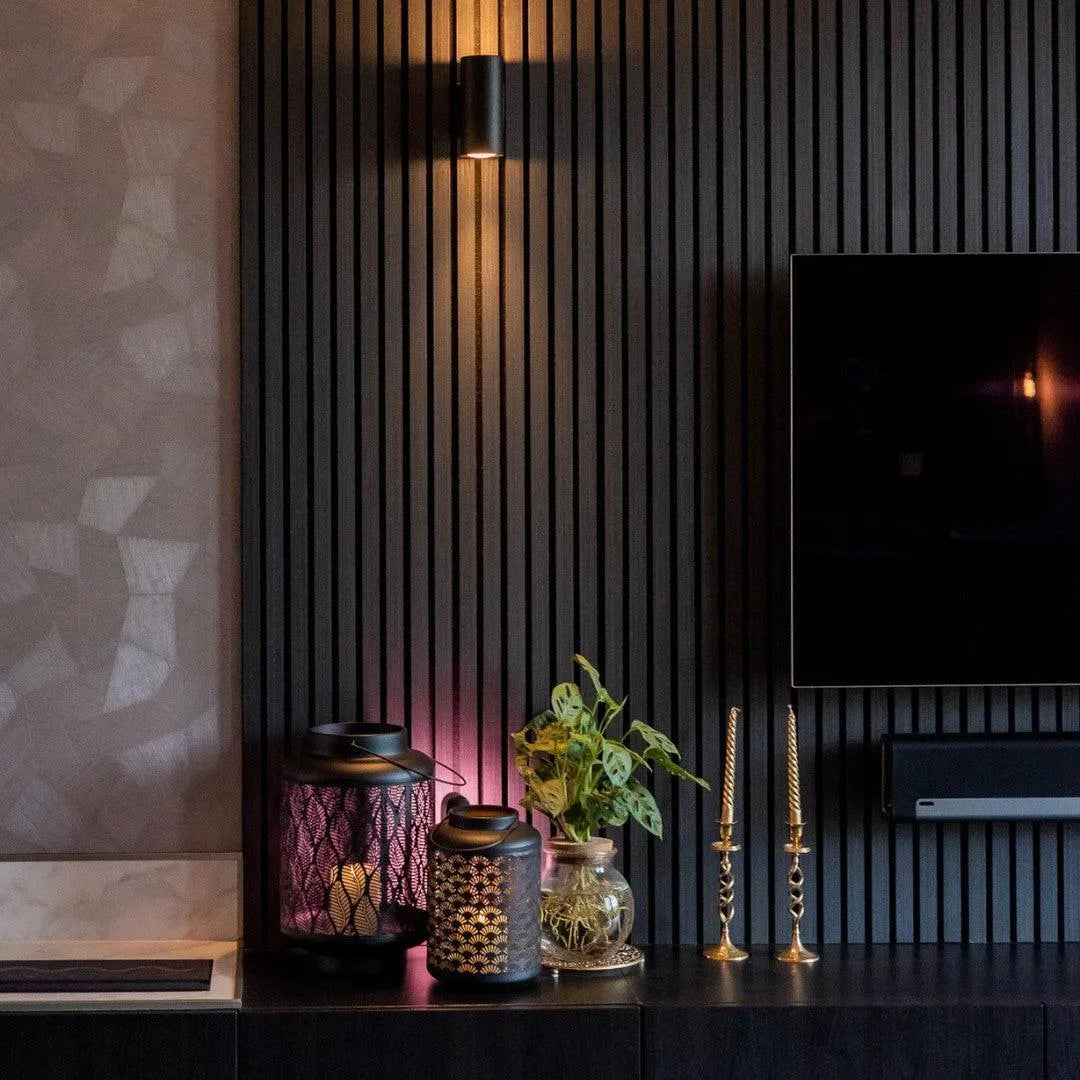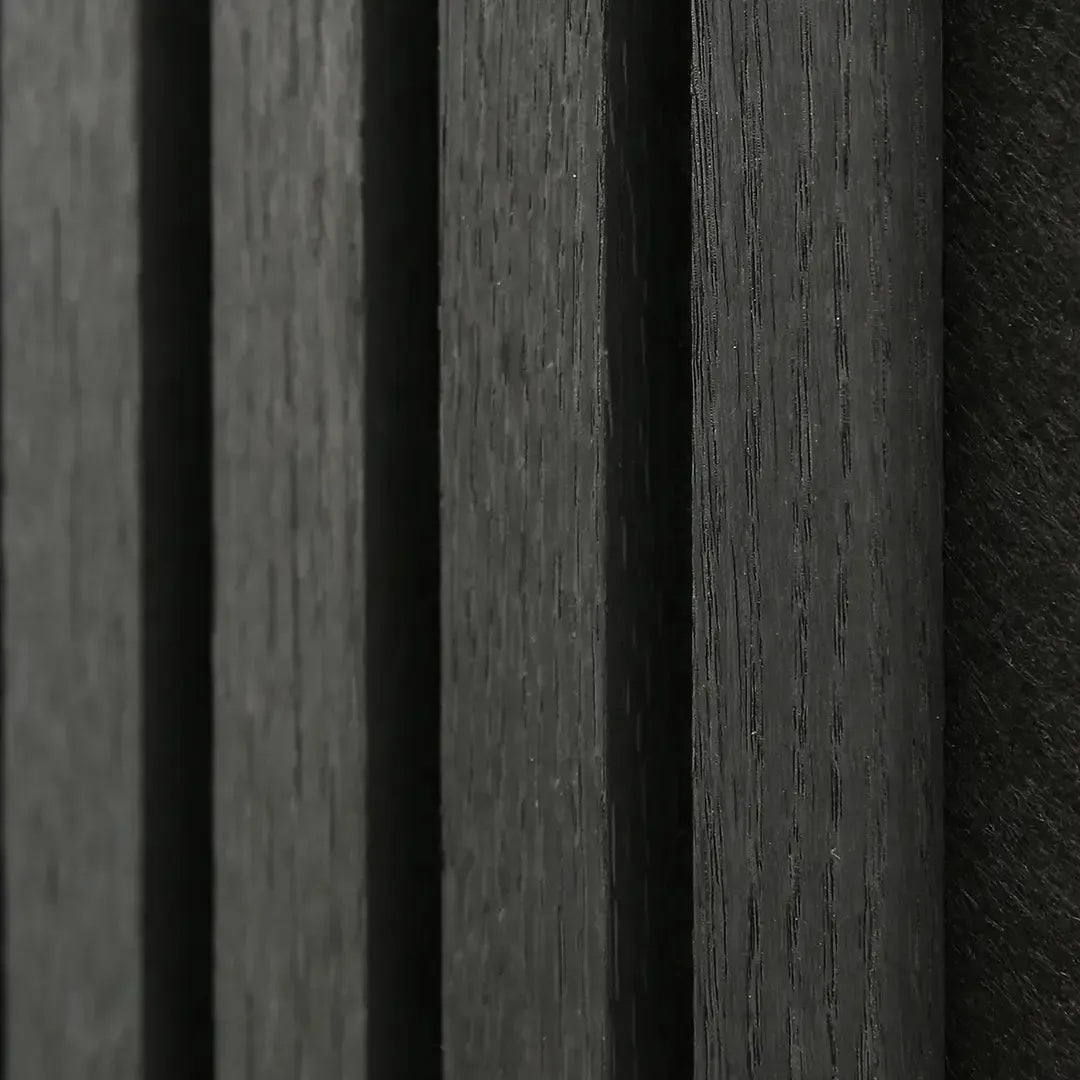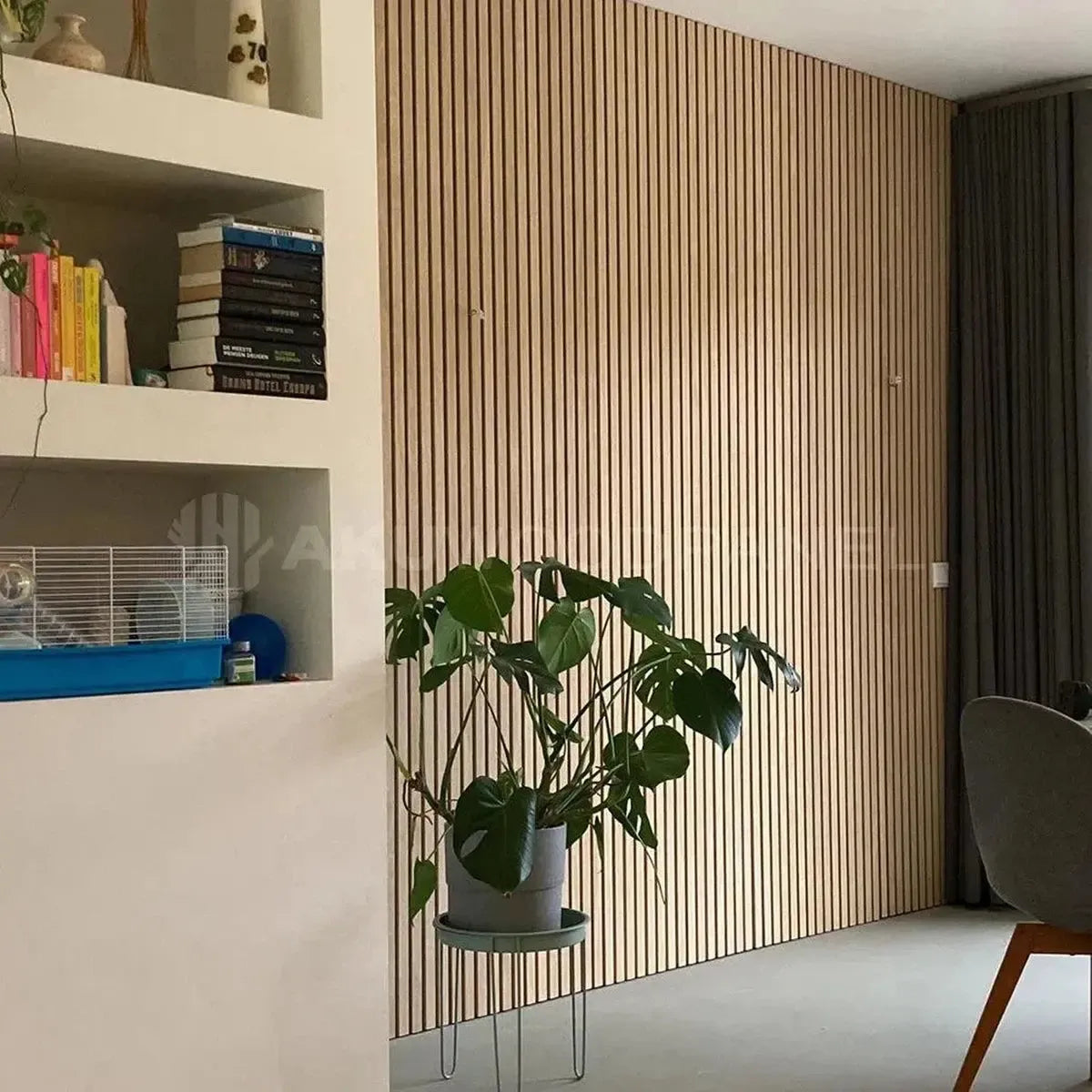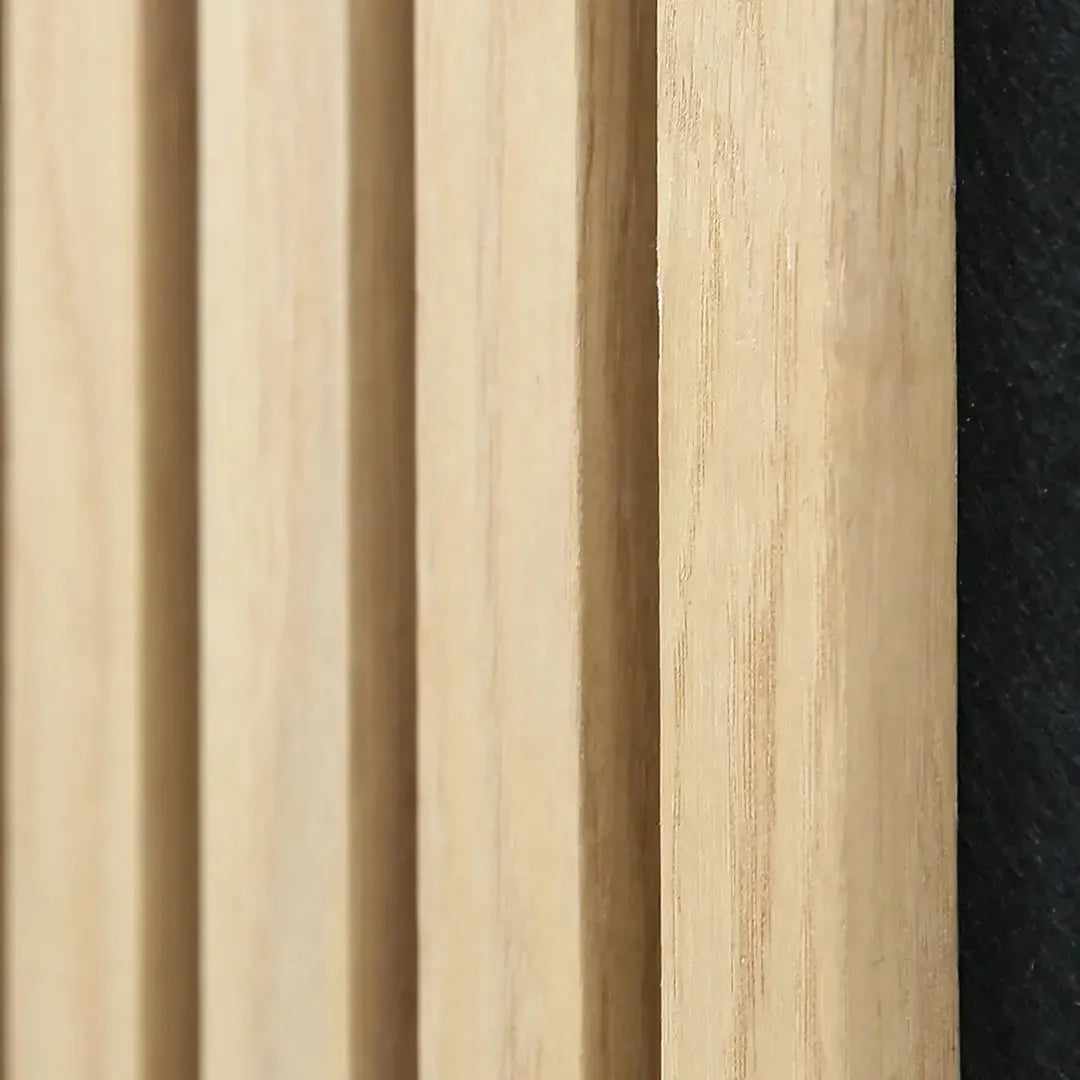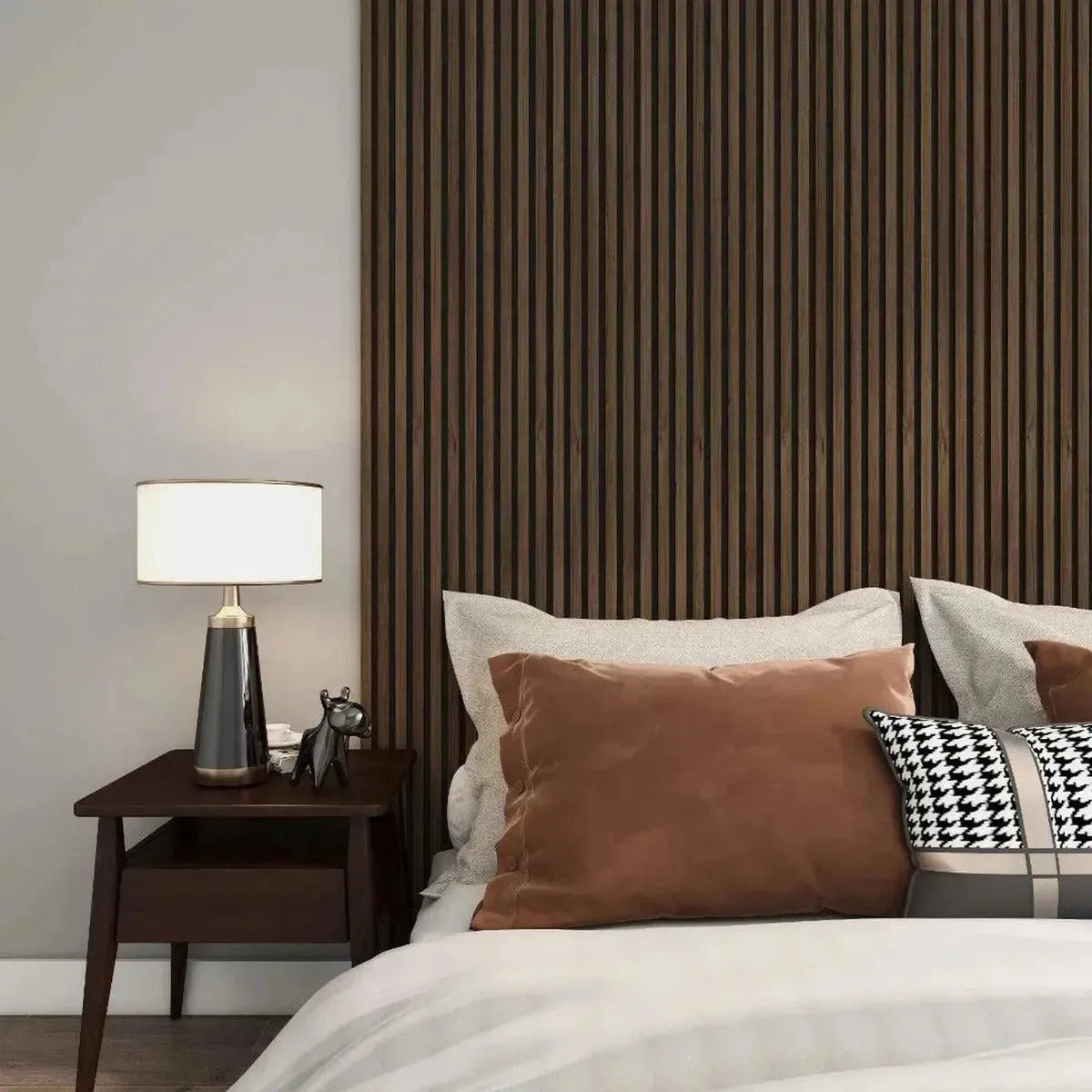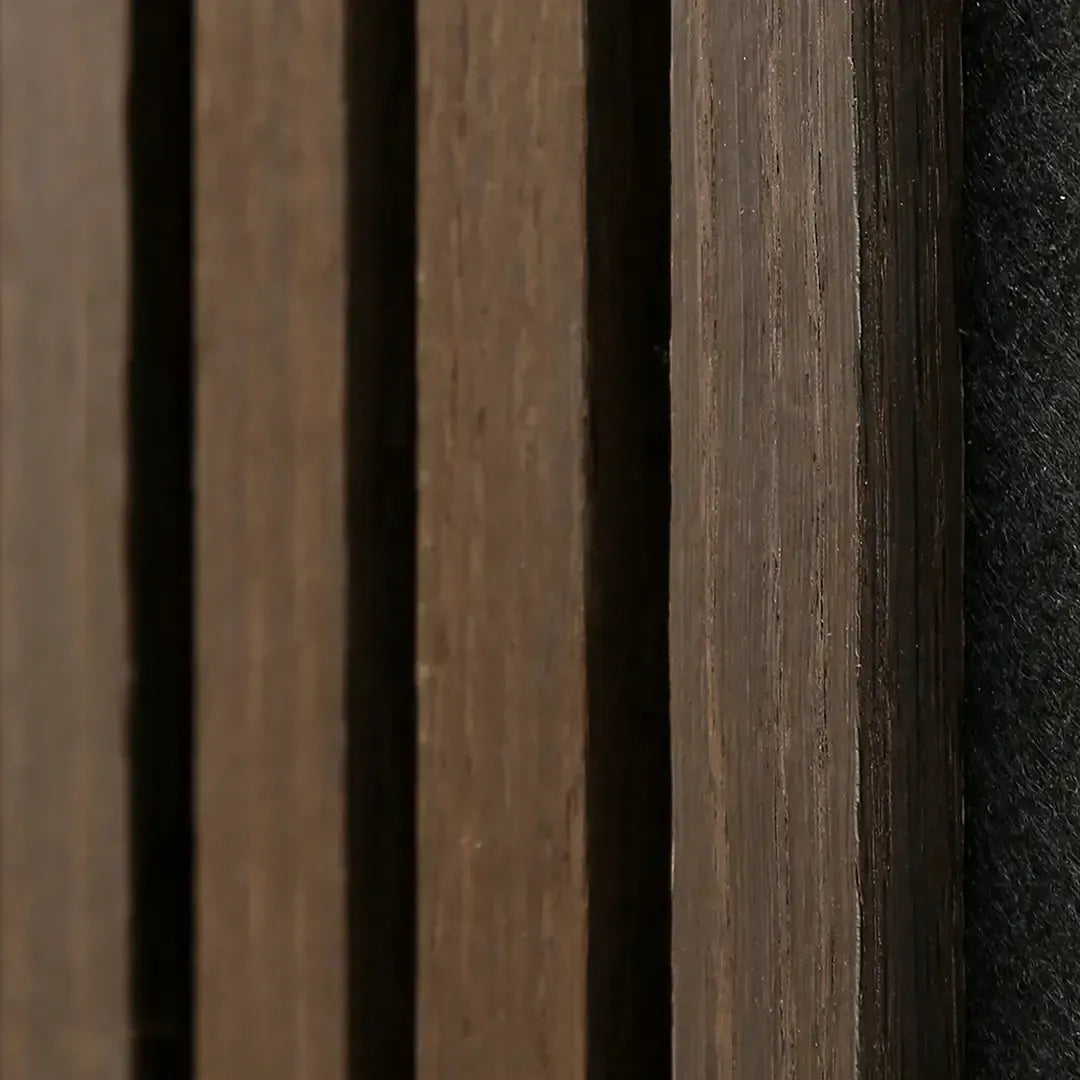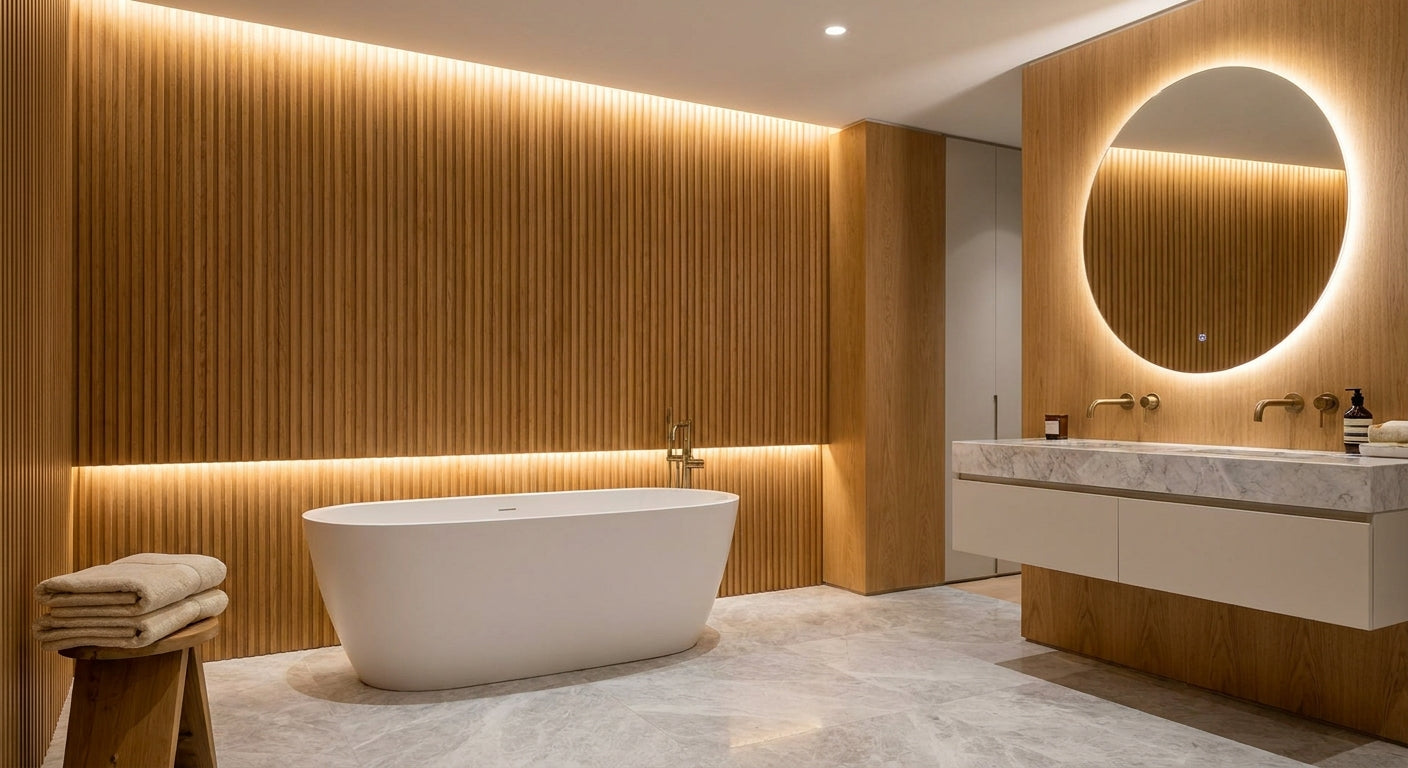
Fluted oak wall panels turn a flat, builder-grade bathroom into a hotel-spa feature wall, but not every oak finish survives steam, humidity, and a shower running twice a day. This guide breaks down what actually matters when you're shopping fluted oak panels master bathroom projects, and which finishes from Akuwood Panel earn a spot on a wet-room wall versus a dry powder room.
- Fluted Wall Panel Natural Oak is the safe buy for master bathrooms with standard exhaust ventilation in 2026.
- Rustic Oak fluted panels hide water spotting and towel-bar scuffs better than lighter natural finishes.
- Skip walnut fluted panels near a walk-in shower; dark veneers show mineral spotting faster than oak tones.
- Order a sample panel before committing to a 40-square-foot feature wall behind a freestanding tub.
- Groove depth and orientation matter more than color for a true luxury look under vanity lighting.
Why This Matters
A master bathroom feature wall gets more daily eye contact than almost any other surface in the house, and it takes more humidity abuse than any other wall you'll panel this year. Akuwood Panel builds its fluted oak line on the same 3-sided wood veneer core used across its acoustic slat panels, which is why the same durability questions apply: how the veneer handles ambient steam, how the groove holds up to towel contact, and whether the finish reads as premium or as a Pinterest screenshot gone wrong.
Most fluted oak failures in bathrooms aren't structural. They're placement mistakes: panels installed inside a shower stall instead of behind it, or a natural oak finish chosen for a room with no exhaust fan running during a 20-minute shower. Get the placement and finish right in 2026 and a fluted oak wall outlasts the tile grout around it.
Who This Guide Is For
This is for homeowners and designers finishing a primary bathroom renovation who want a textured, dimensional wall behind a vanity, tub, or shower enclosure — not a full wet-area cladding job. If you're tiling the inside of a shower stall, you need waterproof tile backer, not a wood veneer panel. If you're doing the wall the shower faces, or the vanity wall, or a soaking tub surround with normal bathroom humidity, fluted oak is squarely in play for 2026 builds.
What To Look For In Fluted Oak Panels For A Master Bathroom
Moisture Exposure Of The Install Location
The single biggest variable isn't the panel — it's where it's going. A wall that catches direct shower spray needs tile or a sealed composite, not a veneer panel. A wall that only sees ambient steam from a running shower with working exhaust ventilation is a reasonable fit for oak veneer in 2026.
Veneer Tone Against Bathroom Lighting
Bathroom lighting runs cooler and brighter than living-room lighting, and that flattens warm oak tones fast. Natural oak reads lighter and more Scandinavian under vanity LEDs; rustic oak's visible grain and knots hold their depth better under the same bulbs.
Groove Depth And Orientation
The groove is the whole point of fluted oak — hide it under harsh bathroom lighting and you paid for texture you can't see. Vertical orientation reads taller under a standard 8-foot bathroom ceiling; horizontal orientation reads wider but can visually chop up a small powder room.
Panel Thickness For A Real Feature Wall Look
Thin, decal-style fluted sheets photograph fine and feel cheap in person, especially next to stone countertops and matte black fixtures common in 2026 master bath designs. A panel with real dimensional groove depth is what separates a feature wall from wallpaper with shadows printed on it.
Maintenance Under Daily Steam
Daily steam is not the same as daily water contact, but it still calls for a wipeable finish and a wall that isn't directly under a rain shower head. Ask how the finish handles condensation before you ask how it looks in photos.
“The groove is the whole point of fluted oak - hide it under harsh bathroom lighting and you paid for texture you can't see.”
Top Picks For Master Bathroom Feature Walls
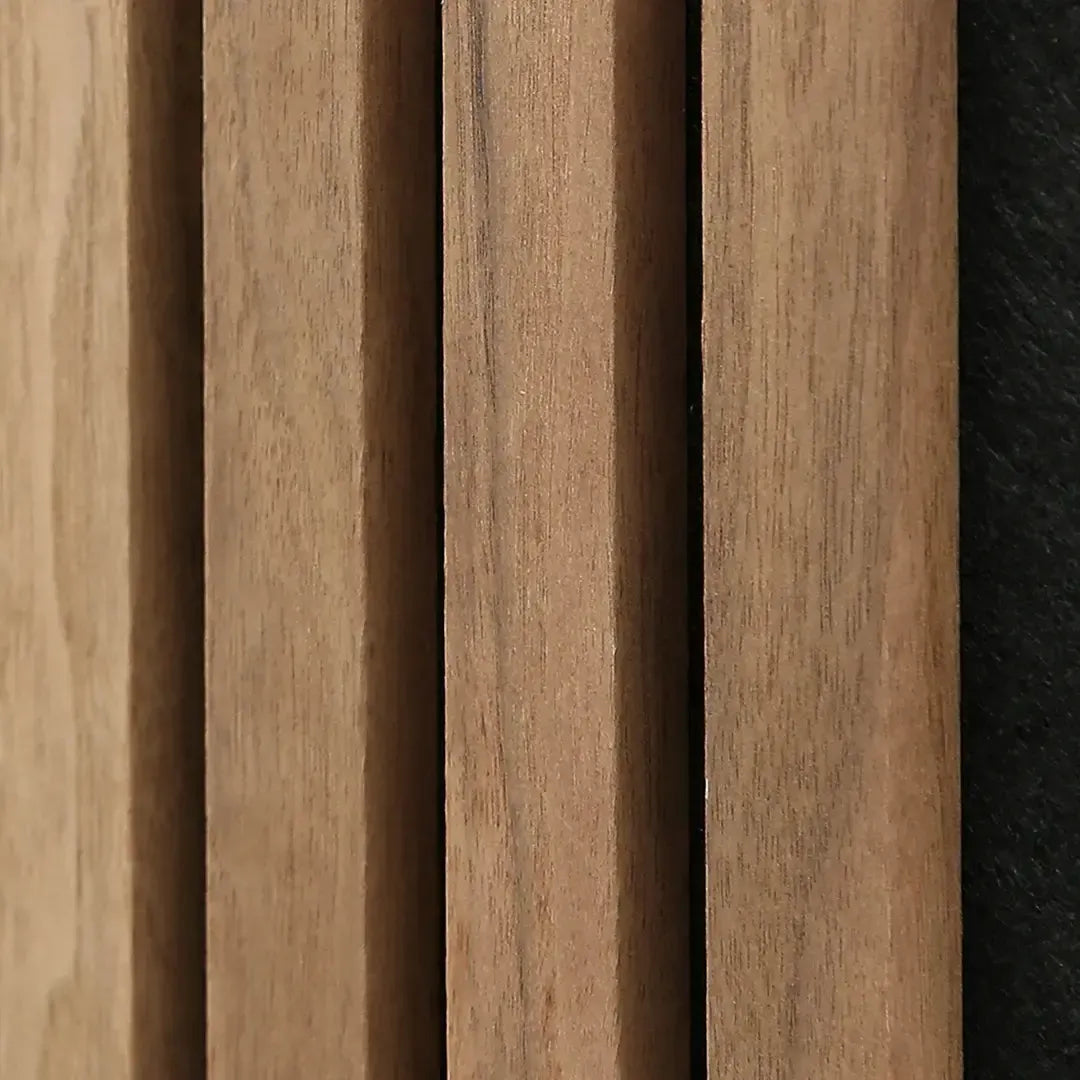
Fluted Wall Panel Natural Oak — the safe pick. Light, warm veneer tone that holds its color under cool vanity lighting instead of washing out. Works best on a vanity wall or the wall a soaking tub faces, away from direct spray. Standard install ventilation (a working exhaust fan) is enough to keep it looking new through 2026 and beyond. The Natural Oak fluted panel is the pick for anyone unsure which finish to start with. Buy.
Rustic Oak fluted panel — the wear-forgiving pick. More visible grain and knot character than the natural oak line, which does double duty hiding water spotting and the small scuffs a towel bar or robe hook leaves over time. Better fit for a family master bath that sees heavier daily traffic than a guest powder room. The Rustic Oak fluted panel reads less precious, more livable. Buy.
Walnut fluted panel — the wildcard. Deep, espresso-brown veneer tone that photographs beautifully in a dry powder room but shows mineral water spotting faster than oak tones in a high-humidity master bath. If the brief specifically calls for oak, this isn't the panel; if the brief calls for a darker, moodier palette in a low-humidity room, it's worth a look. Skip for a steamy master bath, Consider for a dry powder room.
Fluted Wall Panel Natural Oak sample — the no-risk pick. Before committing to a full feature wall, order a sample of the exact finish and hold it under your bathroom's actual lighting for a few days. It's the cheapest mistake-avoidance step in the whole project and the one most homeowners skip. Buy before you buy the full run.
What To Avoid
- Hexagon acoustic panels as a bathroom feature wall. They're built for sound absorption in living rooms and studios, not moisture exposure, and the geometric shape reads busy next to bathroom tile patterns.
- Full wet-area cladding with veneer panels. Any wall inside the shower spray zone needs waterproof tile or a sealed composite. Fluted oak belongs on the walls around the wet zone, not inside it.
- Skipping the sample step. A finish that looks warm in a showroom photo can read flat and gray under a bathroom's cool LED vanity lighting. Sample first, order the full run second.
Verdict Comparison
| Pick | Veneer Tone | Best For | Verdict |
|---|---|---|---|
| Natural Oak fluted panel | Light, warm | Vanity wall, tub surround | Buy |
| Rustic Oak fluted panel | Warm, high-grain | Heavy-traffic family bath | Buy |
| Walnut fluted panel | Deep espresso | Dry powder room only | Consider |
| Natural Oak sample | Light, warm | Pre-purchase testing | Buy |
FAQ
What's the best fluted oak panel for a master bathroom in 2026?
Fluted Wall Panel Natural Oak is the safest choice for a master bathroom with normal exhaust ventilation in 2026. It holds its warm tone under cool vanity lighting and works well on vanity walls or tub surrounds away from direct spray.
Are fluted oak panels waterproof enough for a walk-in shower?
No. Fluted oak veneer panels handle ambient steam and humidity, not direct water spray inside a shower stall. Line the actual shower spray zone with waterproof tile and reserve fluted oak for the surrounding walls.
Is fluted oak better than smooth oak slat panels for bathrooms?
Fluted panels add more visual depth and shadow lines than flat slat panels, which reads more like a designed feature wall than a paneled surface. Smooth slat panels are a fine alternative if you want less texture and easier wipe-down maintenance.
How much oak paneling do I need for a bathroom feature wall?
Measure the wall's width and height in square feet, then order roughly 10% extra to cover cutting waste around outlets, vanities, and corners. A typical master bathroom feature wall behind a vanity or tub runs somewhere around 40 square feet.
Can fluted oak panels go behind a bathtub?
Yes, as long as the tub isn't a shower-tub combo taking direct spray on that wall. A freestanding soaking tub with the panel on the wall it faces, not the wall it's inside, is the ideal placement for 2026 master bath layouts.
Do fluted oak panels need a sealant in a bathroom?
A working exhaust fan matters more than any added sealant for panels placed outside the direct spray zone. Run the fan during and after every shower and the ambient humidity stays manageable for a veneer finish.
How much does a fluted oak feature wall cost in 2026?
Cost depends on wall size and finish, so check current per-panel pricing on the product page before budgeting a full wall. Ordering a sample first avoids paying for a full run in a finish that doesn't match your lighting.
Should fluted panels run horizontal or vertical in a bathroom?
Vertical orientation reads taller under a standard 8-foot bathroom ceiling and is the more common choice for master bath feature walls in 2026. Horizontal orientation reads wider but can make a small powder room feel chopped up.
One Last Thing
Most of the fluted bathroom photos circulating in 2026 use vertical grooves for a specific reason, not just aesthetics: vertical lines trick the eye into reading a standard 8-foot ceiling as taller, which matters more in a bathroom than almost any other room in the house because there's rarely a second wall of visual relief. If your master bath ceiling feels low, orientation will do more work than finish color ever will.
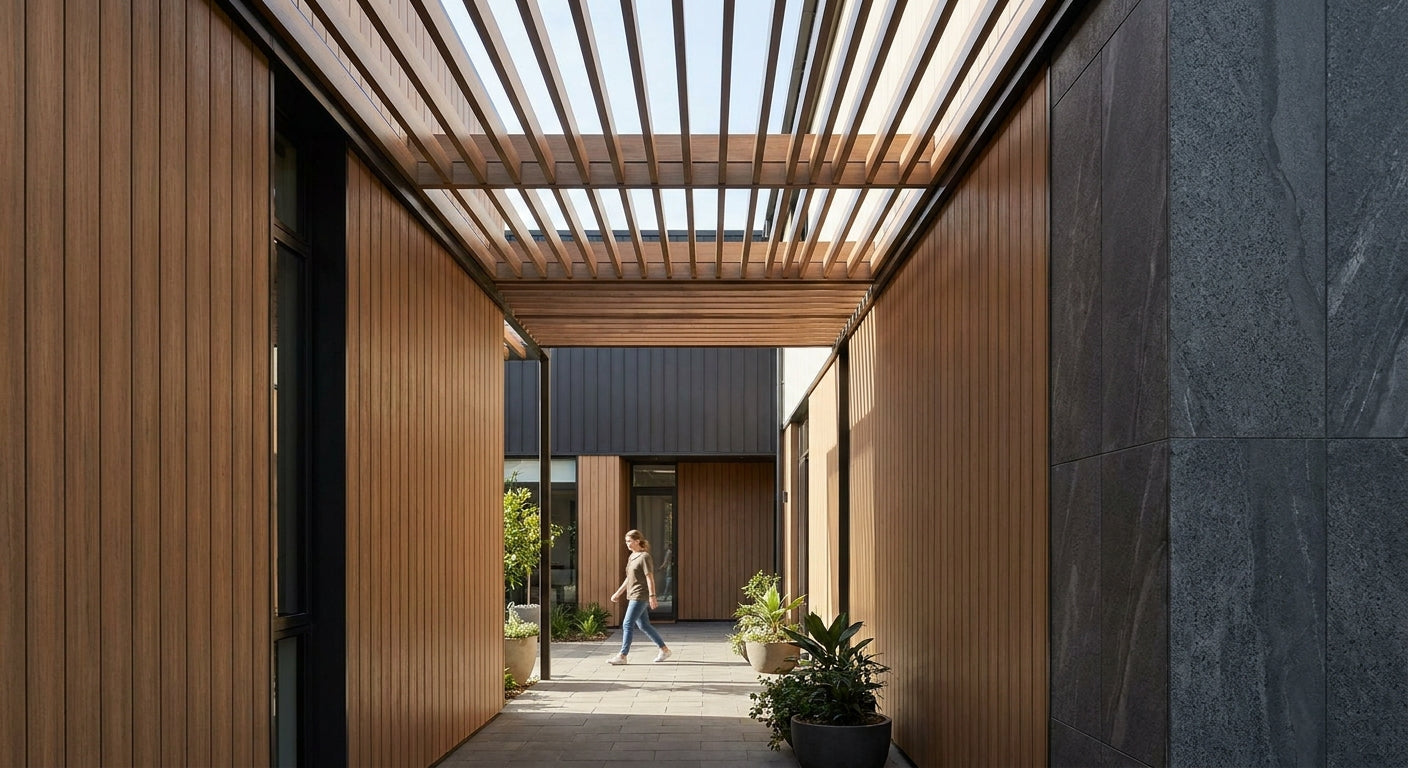
 Better performance and aesthetic appeal
 In Stock