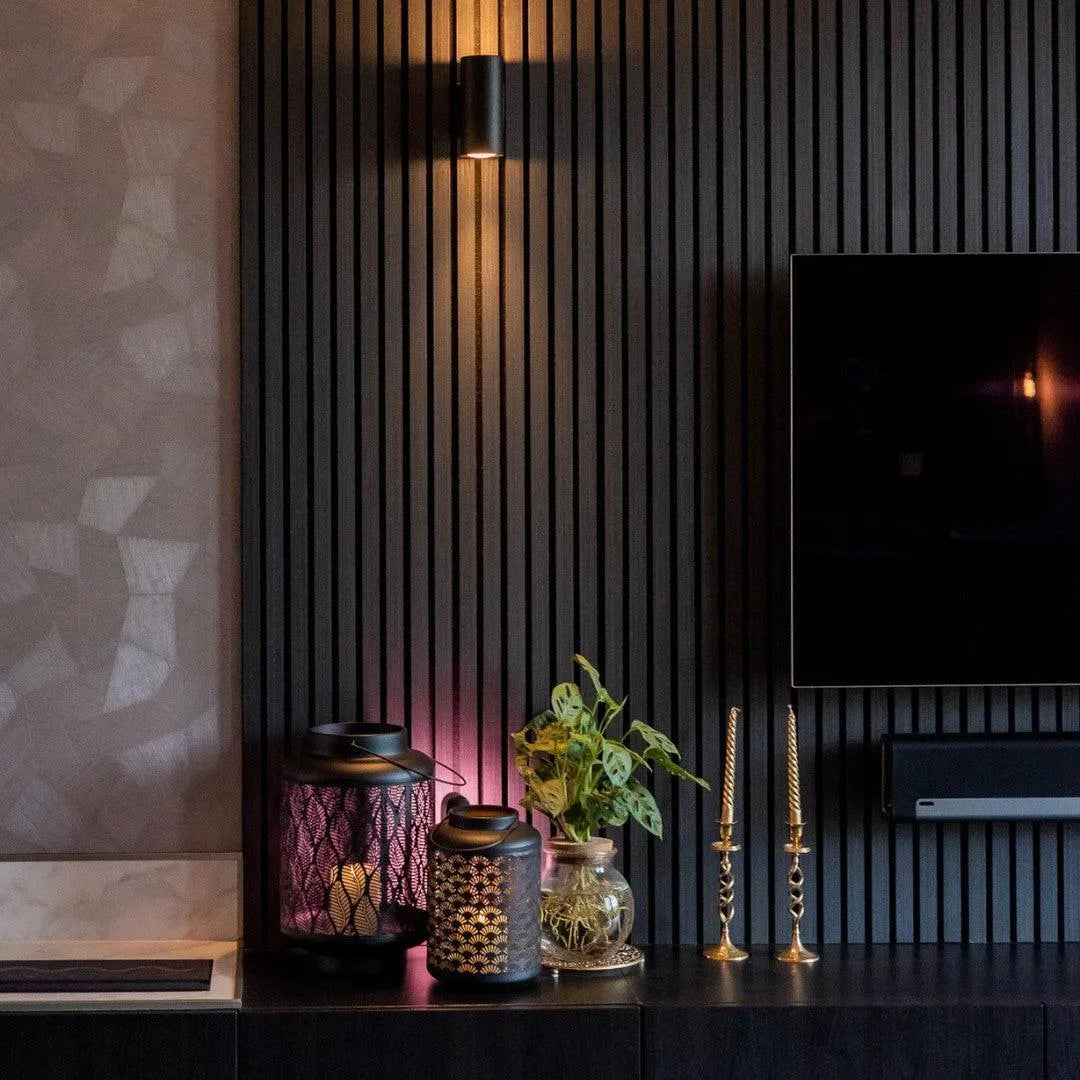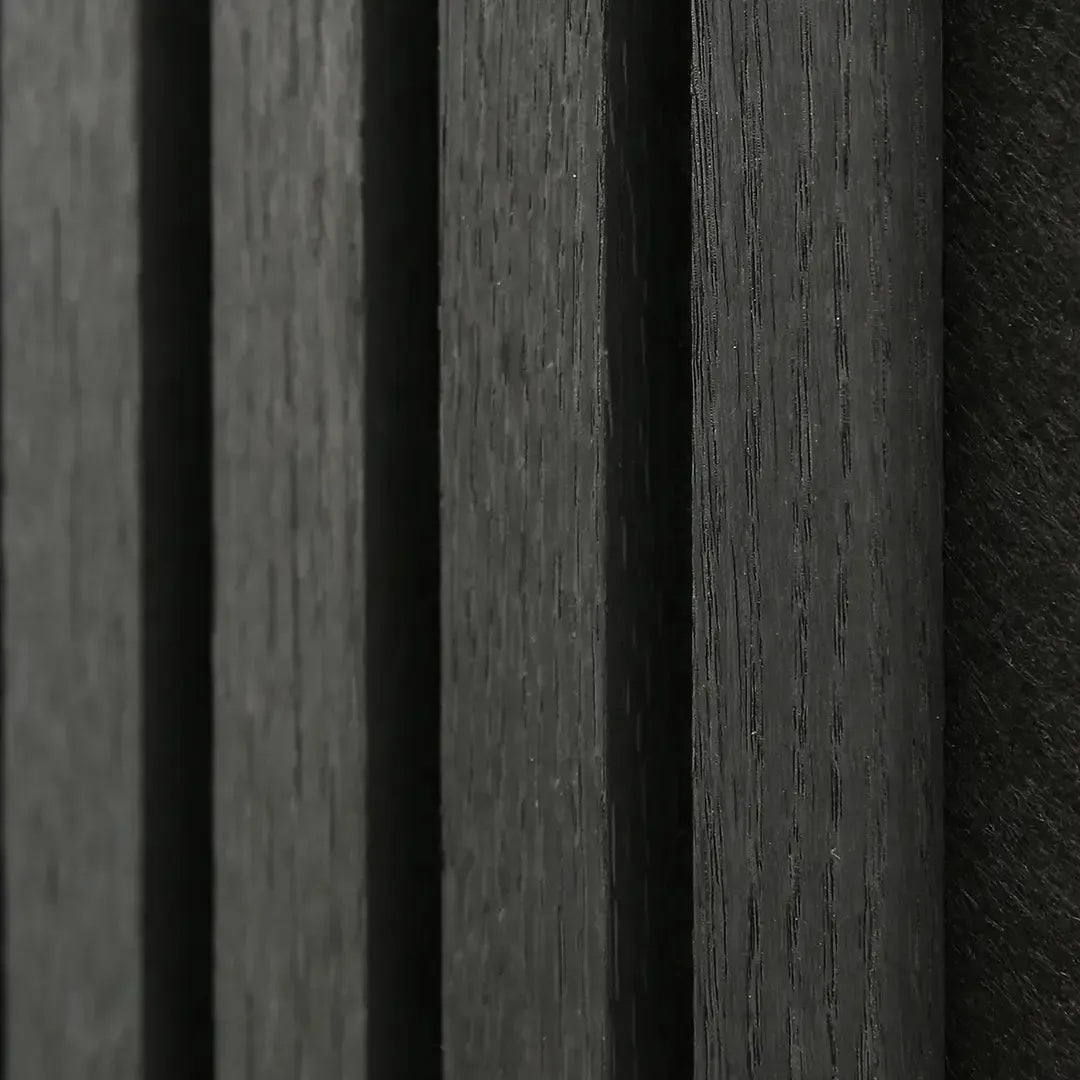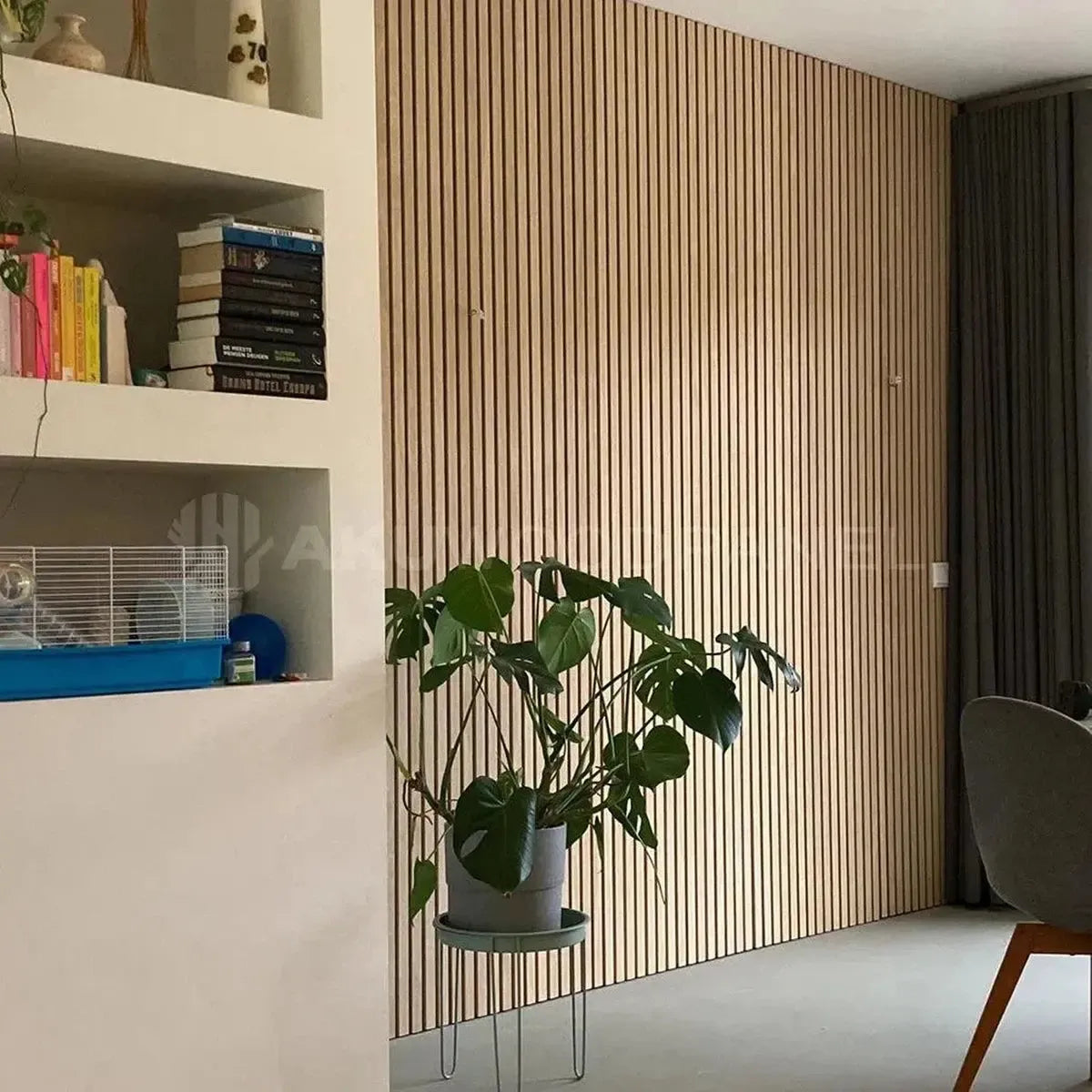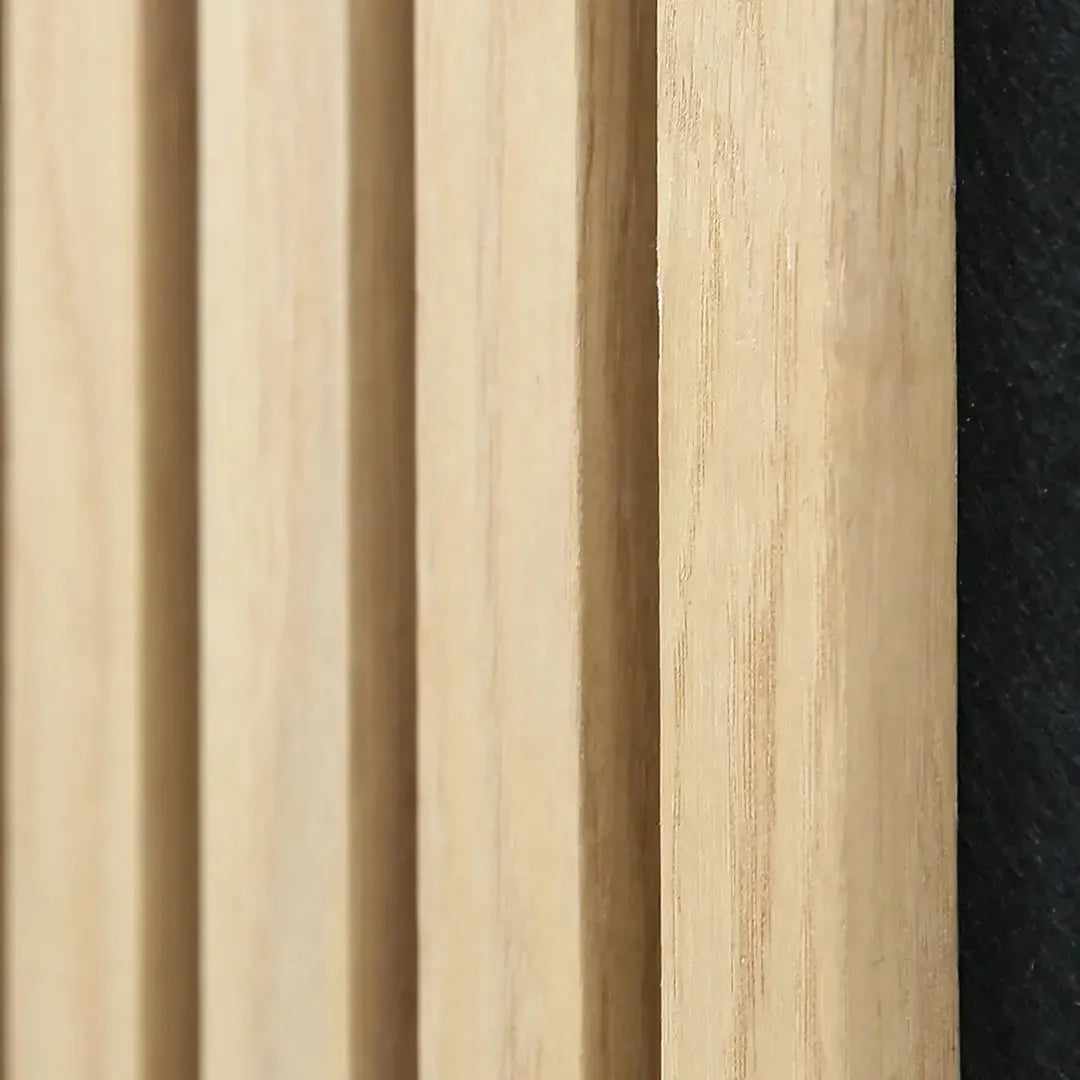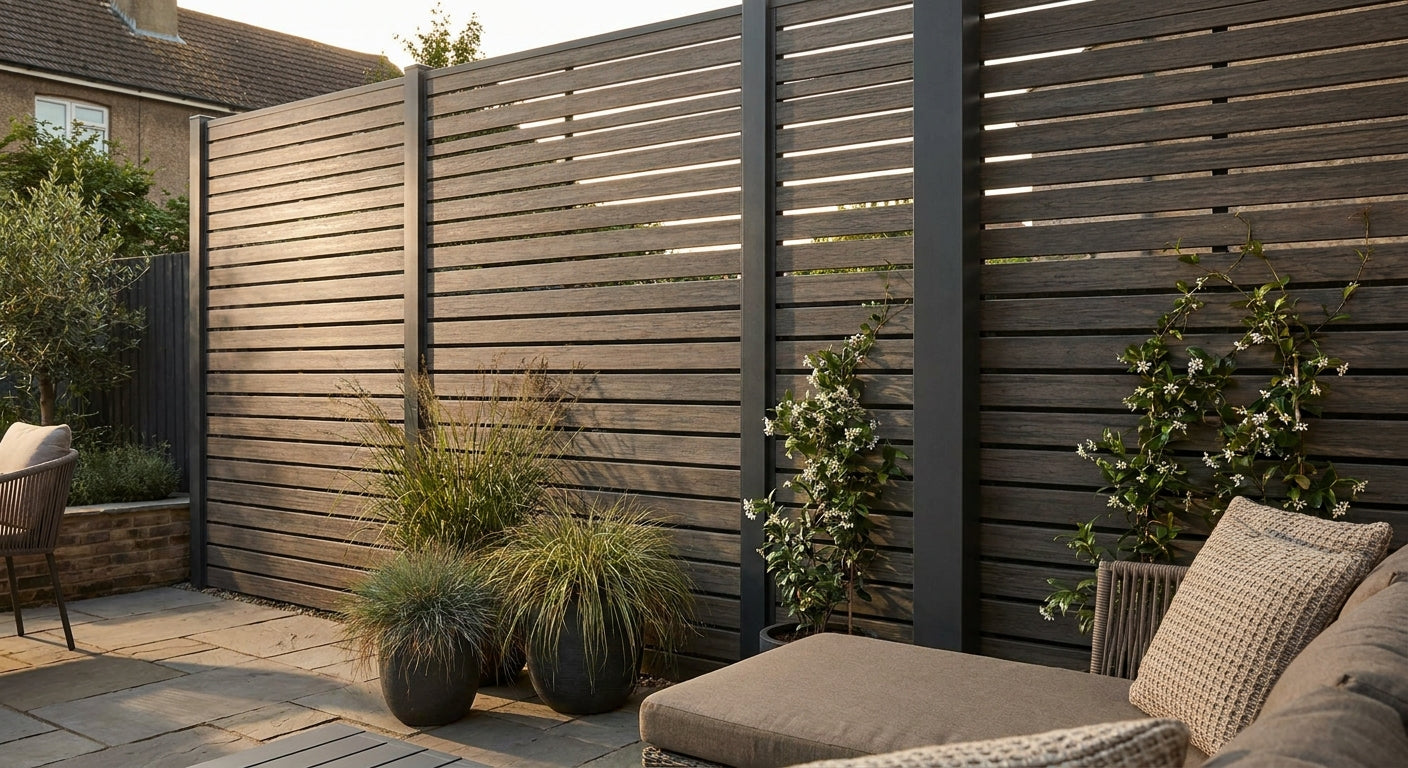
Turning a chain-link fence or bare block wall into a private, good-looking garden boundary usually comes down to one material choice: exterior cladding panels rated for outdoor exposure and built with real coverage, not decorative lattice. This guide breaks down what actually holds up outside in 2026 and which AKU Woodpanel exterior panels fit a garden screen project versus which ones don't.
TL;DR
For exterior cladding panels privacy garden screen projects in 2026, the AKU Woodpanel Exterior Wall Panel in Oak is the Buy for most backyard fence and courtyard screens — it's built for outdoor exposure, not repurposed interior slat wood. The Stone Gray panel is the low-maintenance alternative for anyone who doesn't want to reseal wood every season. Skip anything marketed as "instant privacy screen" that's really thin composite lattice — it warps within a year outdoors. Match panel to fence-post spacing before ordering, not after.
Why this matters
A garden privacy screen sits in direct sun, rain, and freeze-thaw cycles year-round — conditions interior wall panels were never engineered for. Homeowners searching for exterior cladding panels privacy garden screen solutions in 2026 are usually replacing a chain-link fence, screening a trash area, or closing off a patio from neighbors, and the panel choice determines whether the project looks finished in month one and still looks finished in year three.
The difference between an exterior-rated panel and a repurposed interior one isn't cosmetic. It's moisture sealing, UV-stable finish, and a mounting system designed for fence posts and exterior framing rather than drywall.
Who this is for
This guide is for homeowners screening a backyard, patio, or side-yard fence line who want a real wood-look privacy barrier — not a temporary tarp or a plastic trellis. It's also useful for anyone doing a courtyard or garden studio project who wants the boundary to double as a design feature, not just a blocker. If you're cladding an interior feature wall instead, this isn't the right panel category — check the AKU Woodpanel acoustic slat range instead.
What to look for in exterior cladding panels for a garden screen
Weather and moisture resistance
A garden screen panel needs a finish rated for direct rain and sun exposure, not just "water resistant" language borrowed from indoor products. Panels without a sealed, weatherproof veneer swell at the edges within one wet season and start delaminating by year two. This is the single biggest failure point homeowners report with budget exterior cladding.
Privacy coverage and slat gap
Garden screens live or die on how much they actually block. A tight slat gap or solid panel face gives you real privacy from a neighbor's second-floor window; a wide-gap decorative panel gives you texture but not screening. Decide whether you need full opacity or partial screening before you pick a finish.
Mounting and fence-post compatibility
Most garden screen failures aren't material failures — they're installation failures where the panel wasn't matched to post spacing. Confirm the panel's fastening system works with standard 6- or 8-foot fence-post centers before ordering, and budget for corner and finishing trim separately.
Finish and color for outdoor context
A finish that reads warm and rich indoors can look flat or too dark against green landscaping and bright sky. Stone Gray and Birch tend to read lighter and blend into planted borders; Oak and Black read as intentional design statements against stucco or concrete.
Maintenance load
Real wood-veneer exterior panels need periodic resealing to stay weatherproof — usually annually depending on climate and sun exposure. If you don't want that upkeep, a lower-maintenance stone-toned finish reduces how often you're up a ladder with a sealant brush.
Cost per panel
Exterior cladding is priced and sold per panel, and coverage area adds up fast on a full fence line. Measure your total linear footage first, then price out panels, corner trim, and fasteners together instead of pricing the panel alone.
Top picks for privacy garden screens in 2026
The classic pick — Exterior Wall Panel, Oak This is the panel most homeowners land on for a fence-line or patio screen because the oak finish reads as natural wood cladding, not a synthetic substitute. It's built for outdoor exposure with a weatherproof veneer, not adapted from an interior product line. Verdict: Buy — the default choice for a garden privacy screen in 2026.
The modern wildcard — Exterior Wall Panel, Black Black exterior cladding turns a privacy fence into a design statement rather than something you're hiding. It pairs well with concrete pavers and minimalist landscaping, and it hides weathering streaks better than lighter finishes over multiple seasons. Verdict: Buy — best for courtyards and modern-build exteriors, not for softer cottage-garden styling.
The low-maintenance pick — Exterior Wall Panel, Stone Gray Stone Gray is the panel to pick if you want the wood-panel look without committing to a wood-toned resealing schedule. The tone hides dust, pollen, and mineral streaking from sprinklers better than darker wood finishes. Verdict: Buy — the practical pick for busy households.
The budget pick — Exterior Wall Panel, Birch Birch delivers the same exterior-rated construction at a lighter, brighter finish that works well on smaller garden screens where you don't want a heavy, dark boundary. It's a strong option for side-yard screening where you want light to bounce rather than absorb. Verdict: Consider — great for smaller runs, less dramatic as a full fence-line statement.
What to avoid
- Interior slat wall panels used outdoors. They look identical to exterior panels in photos but lack the weatherproof veneer sealing — they will swell and delaminate outside within one wet season.
- "Instant privacy screen" composite lattice. Marketed as garden screening, these thin composite sheets warp and discolor within a year of direct sun exposure and don't hold fasteners well long-term.
- Unsealed budget wood cladding. If a listing doesn't specify a weatherproof finish rating, assume it isn't rated for continuous outdoor exposure and treat it as an interior product.
Verdict comparison
| Panel | Best for | Maintenance | Verdict |
|---|---|---|---|
| Exterior Wall Panel, Oak | Default garden fence screen | Annual reseal, moderate | Buy |
| Exterior Wall Panel, Black | Modern courtyards, concrete pairing | Annual reseal, hides weathering | Buy |
| Exterior Wall Panel, Stone Gray | Low-upkeep households | Lowest of the four | Buy |
| Exterior Wall Panel, Birch | Smaller side-yard runs | Annual reseal, moderate | Consider |
FAQ
What's the best exterior cladding panel for a garden privacy screen? The Oak exterior panel is the most reliable default for 2026 garden screens because it's built and finished for continuous outdoor exposure rather than adapted from an interior line.
Is exterior wood cladding better than a composite privacy screen? Real wood-veneer exterior panels with a weatherproof finish outperform thin composite lattice on both looks and longevity — composite lattice tends to warp and discolor within a single sun-exposed season.
How much privacy do slat-style exterior panels actually provide? It depends entirely on slat gap and panel density; a tight-gap or solid-face exterior panel blocks sightlines fully, while wide-gap decorative panels only add texture and partial screening.
Do exterior cladding panels need yearly maintenance? Most real wood-veneer exterior panels need resealing on a roughly annual basis depending on sun and rain exposure; lighter stone-toned finishes tend to show weathering less between resealing cycles.
Can I mount exterior panels directly on a fence post? Yes, but confirm the panel's fastening system matches your post spacing before ordering, and plan for corner and finishing trim as separate line items rather than assuming the panel alone finishes the edge.
Is black exterior cladding a good choice for garden screens? Black exterior panels work well for modern courtyards and concrete-paired landscaping and tend to hide weathering streaks better than lighter finishes, though they read more dramatic than traditional garden styling.
What's the cheapest way to clad a garden fence for privacy? Birch exterior panels are the lighter-cost option in the exterior-rated range, but measure total linear footage first — coverage cost adds up faster on long fence lines than on a single accent wall.
How is exterior cladding different from interior slat wall panels? Exterior cladding uses a sealed, weatherproof veneer engineered for direct rain and UV exposure, while interior slat panels use finishes meant for climate-controlled rooms and will fail if installed outside.
One last thing
Most garden screen projects that look unfinished a year in didn't fail because of the panel — they failed because nobody budgeted for corner trim and fasteners as separate purchases, and the edges were left raw against weather. Price the trim alongside the panel before you start, not after the first hard rain finds the gap.
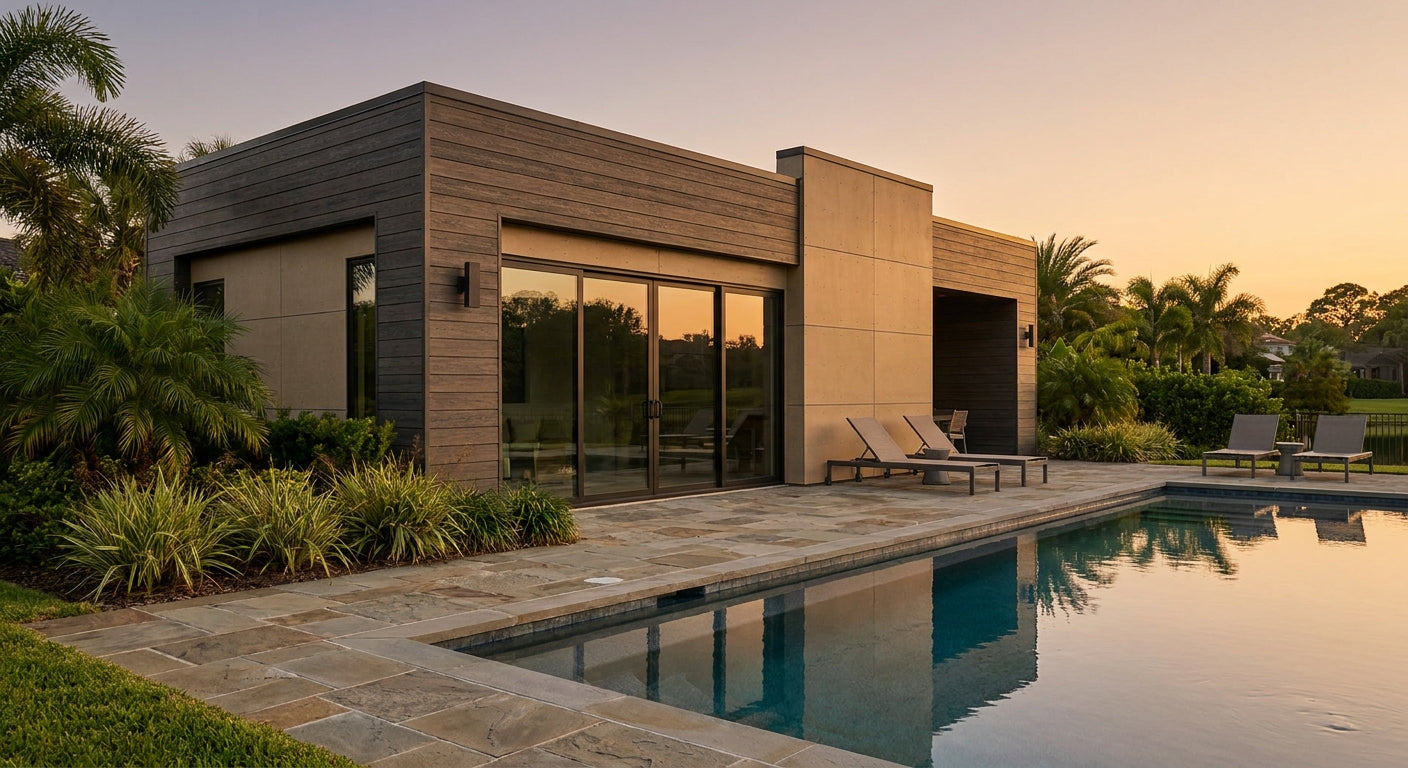
 Better performance and aesthetic appeal
 In Stock