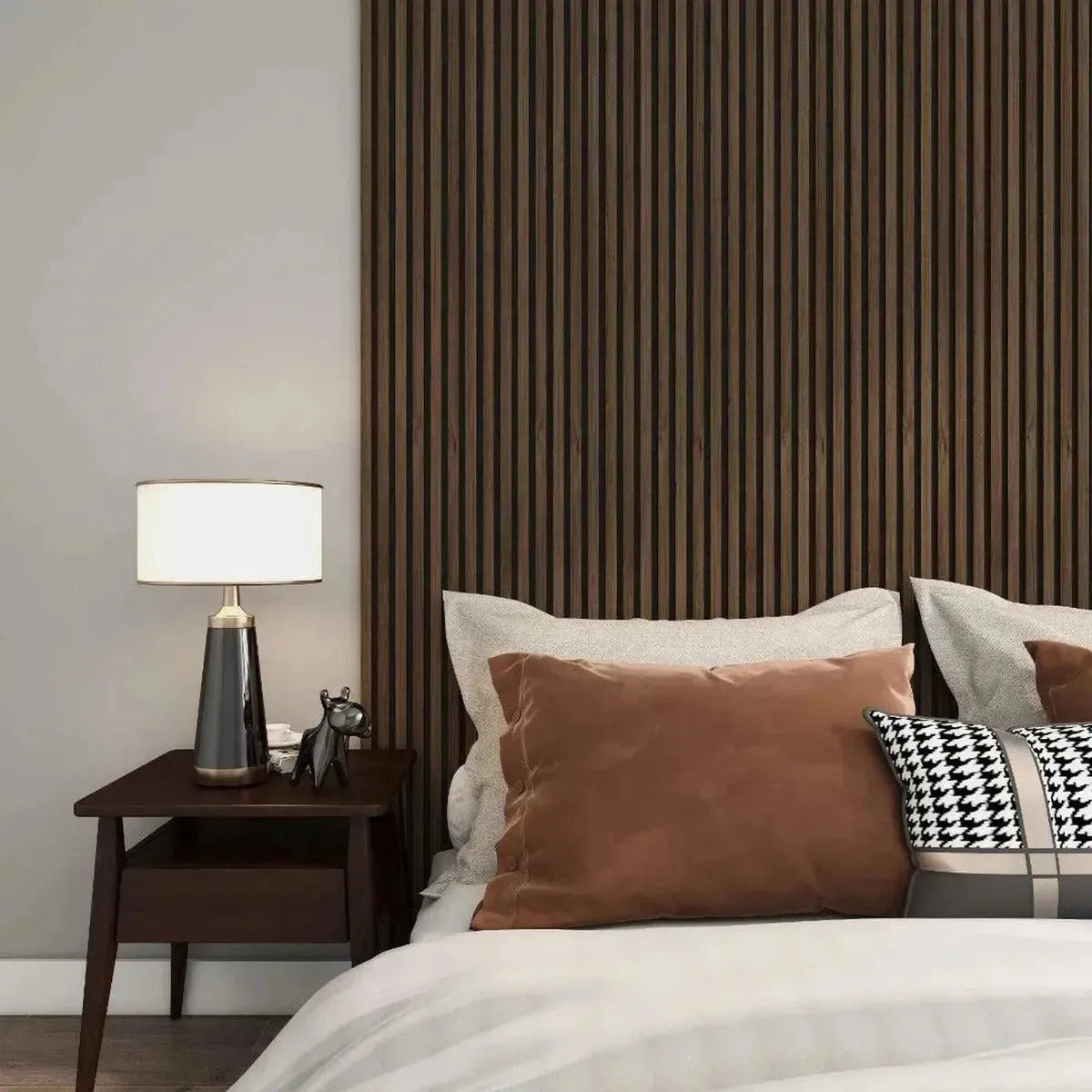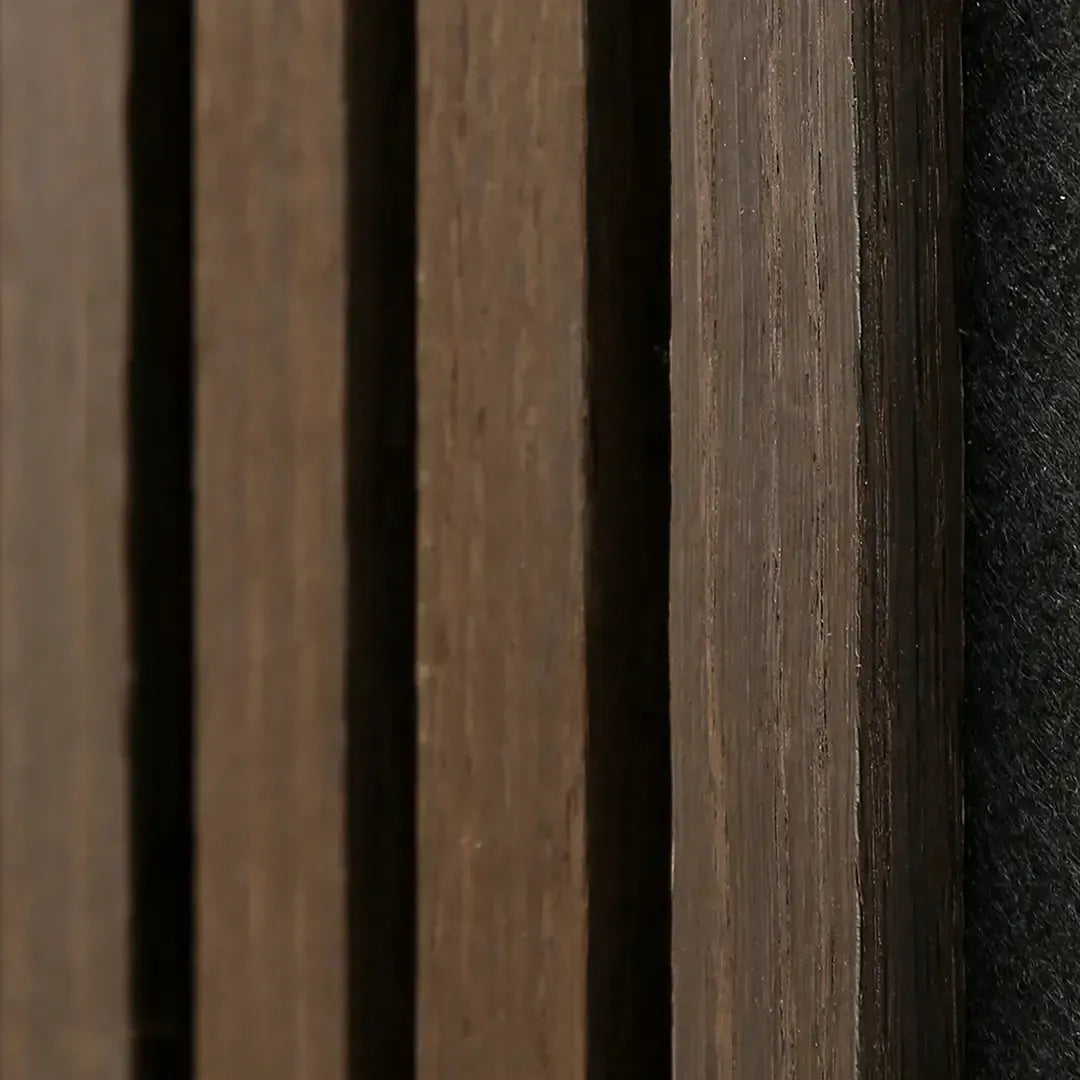
Industrial loft walls — exposed brick, poured concrete, black steel beams — sound like a boutique hotel corridor before you fix them, and the wrong wood panel just adds another hard surface to the echo problem. This guide ranks the wood slat panels that actually work in a loft: real oak veneer over acoustic felt, dark tones that hold up against concrete and steel, and formats that don't require professional install.
TL;DR
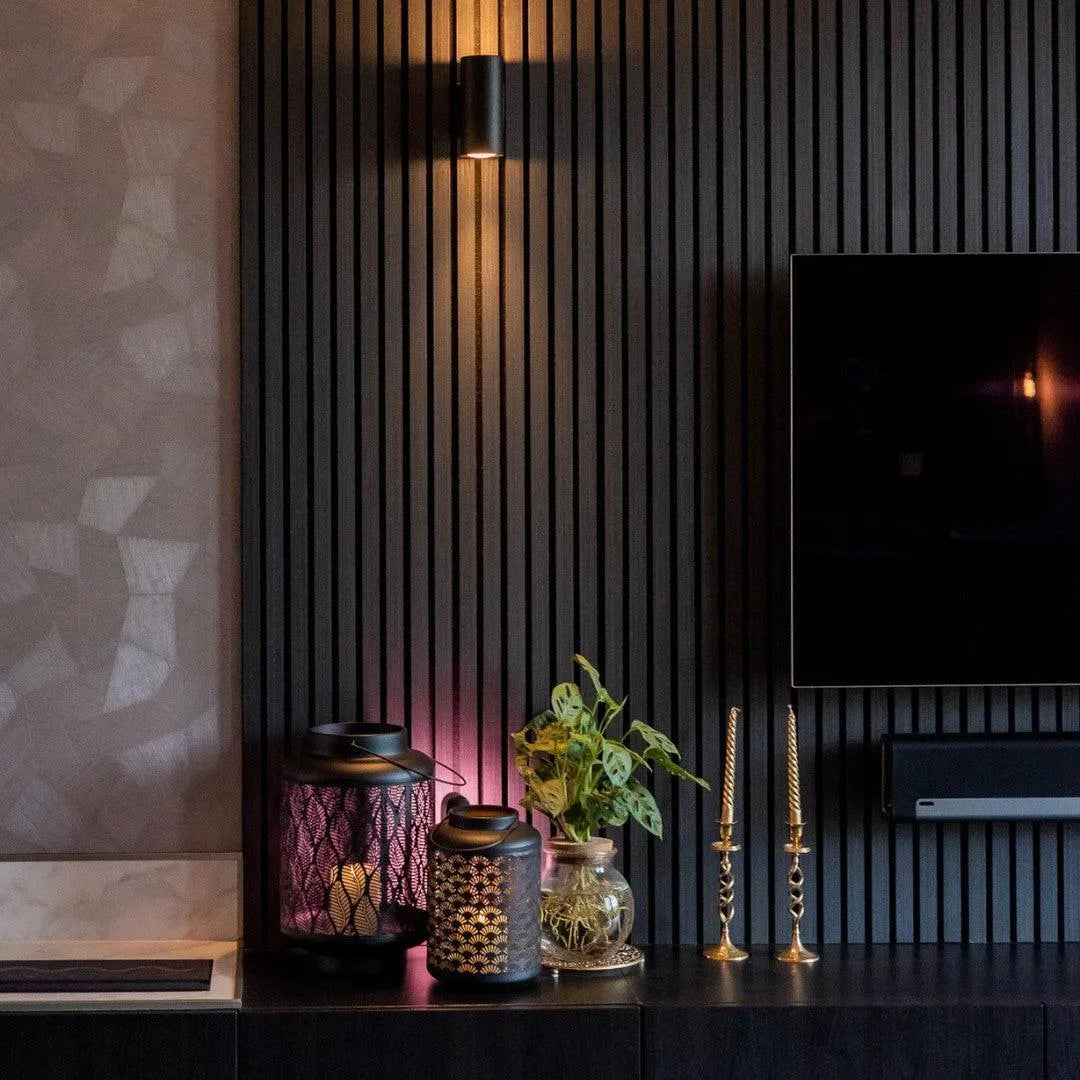
For wood slat panels industrial loft apartment walls, the Acoustic Slat Wall Panel in Black Oak is the top pick for 2026 lofts with black steel or dark concrete — real oak veneer, charcoal felt backing, and a finish that reads industrial instead of Scandinavian. The Acoustic Slat Wall Panel in Smoked Oak is the runner-up for warmer brick interiors, and the End Piece Slat Wall Panel in Walnut is the pick for finishing exposed edges around windows or corners. All three are Buy verdicts; skip anything sold without a felt-backed acoustic layer if echo control is the goal, not just looks.
Why this matters
Loft apartments have a specific acoustics problem: concrete ceilings, brick walls, steel columns, and open floor plans with nothing soft to absorb sound. Search interest around wood slat panels industrial loft apartment sits at 340 searches a month with a difficulty score of just 22 in 2026 — a signal that demand exists but the competing content is thin, mostly generic slat-wall roundups that never touch acoustic performance or loft-specific finishes.
A slat panel with no acoustic backing is decorative only — it looks the part on Instagram and does nothing for the reverb bouncing off your concrete ceiling. For anyone specifying wood panels for industrial-style interiors, see the breakdown on wood panels for industrial-style office interiors, which covers the same felt-backed logic applied to commercial spaces.
How we ranked
Each panel here is evaluated on four things: finish authenticity (real veneer versus printed laminate), acoustic backing (felt-backed versus solid), how it reads against industrial materials like brick, concrete, and black steel, and format flexibility — full panels, tiles, and end pieces for clean transitions. Panels without a documented felt or acoustic layer got excluded outright, because a loft with hard surfaces on every side needs sound absorption, not just texture. Verdicts reflect fit for industrial loft use specifically, not general interior use — a panel that's great for a soft, carpeted bedroom can still be a Skip here if it lacks acoustic backing or reads too pale against exposed brick.
The ranked list
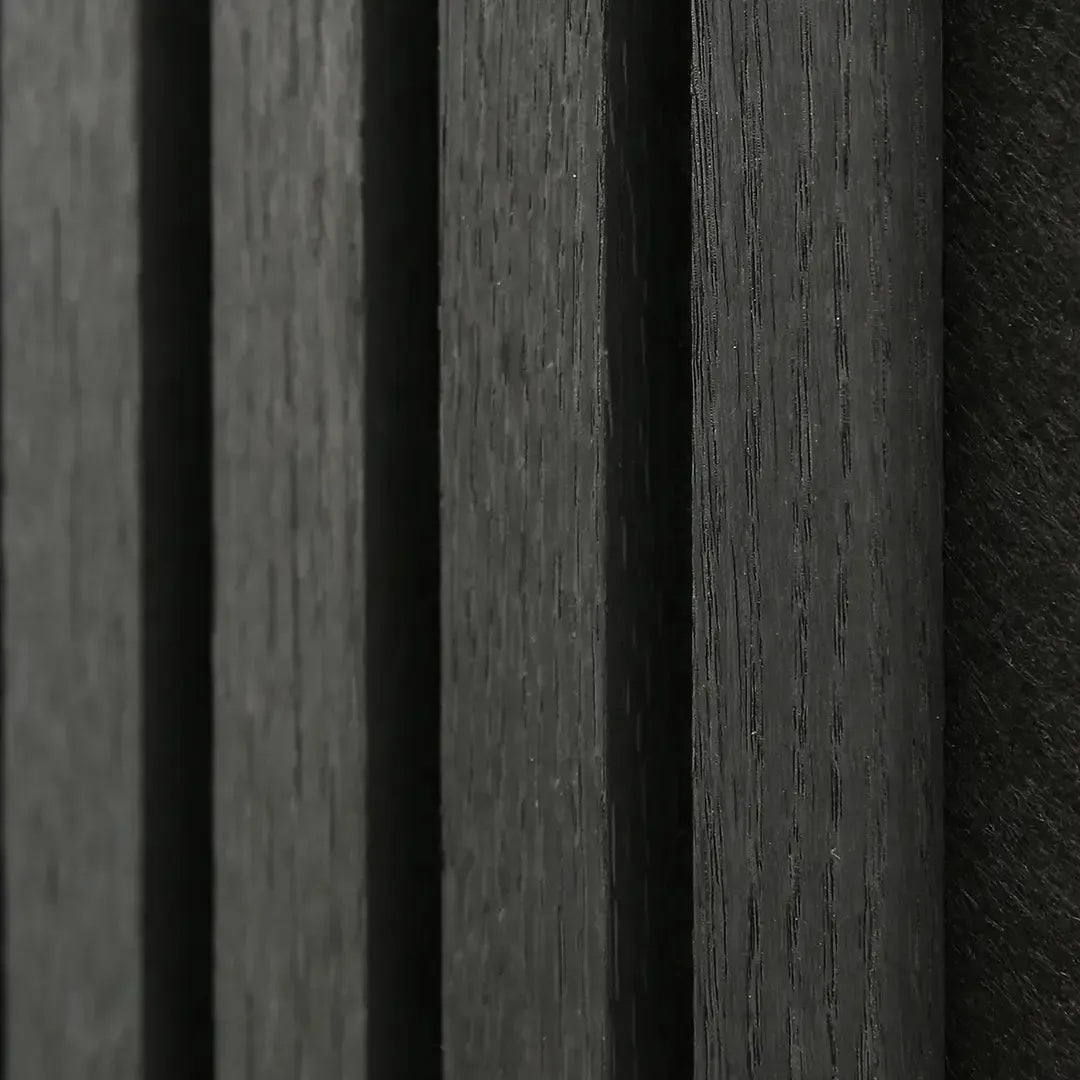
1. Acoustic Slat Wall Panel — Black Oak
The hook: the blackout pick for lofts with black steel beams or matte-black fixtures. Real oak veneer sits over a dark felt acoustic layer, so the slats read as intentional against exposed concrete instead of clashing with it. Five finish variations exist across the Akuwood Panel range, and black oak is the one that disappears into industrial color palettes rather than fighting them. Buy — this is the default choice for 2026 loft renovations leaning dark and moody. See the Black Oak acoustic slat panel.
2. Acoustic Slat Wall Panel — Smoked Oak
The hook: the warm middle ground for lofts with red or orange-toned brick. Smoked oak keeps the same felt-backed acoustic construction as the black oak version but pulls warmth into the grain, which softens a room that already has a lot of hard, cold surfaces. It reads less severe than black oak without going pale like natural oak. Buy for brick-heavy lofts that want acoustic control without an all-black wall. Check the Smoked Oak acoustic slat panel.
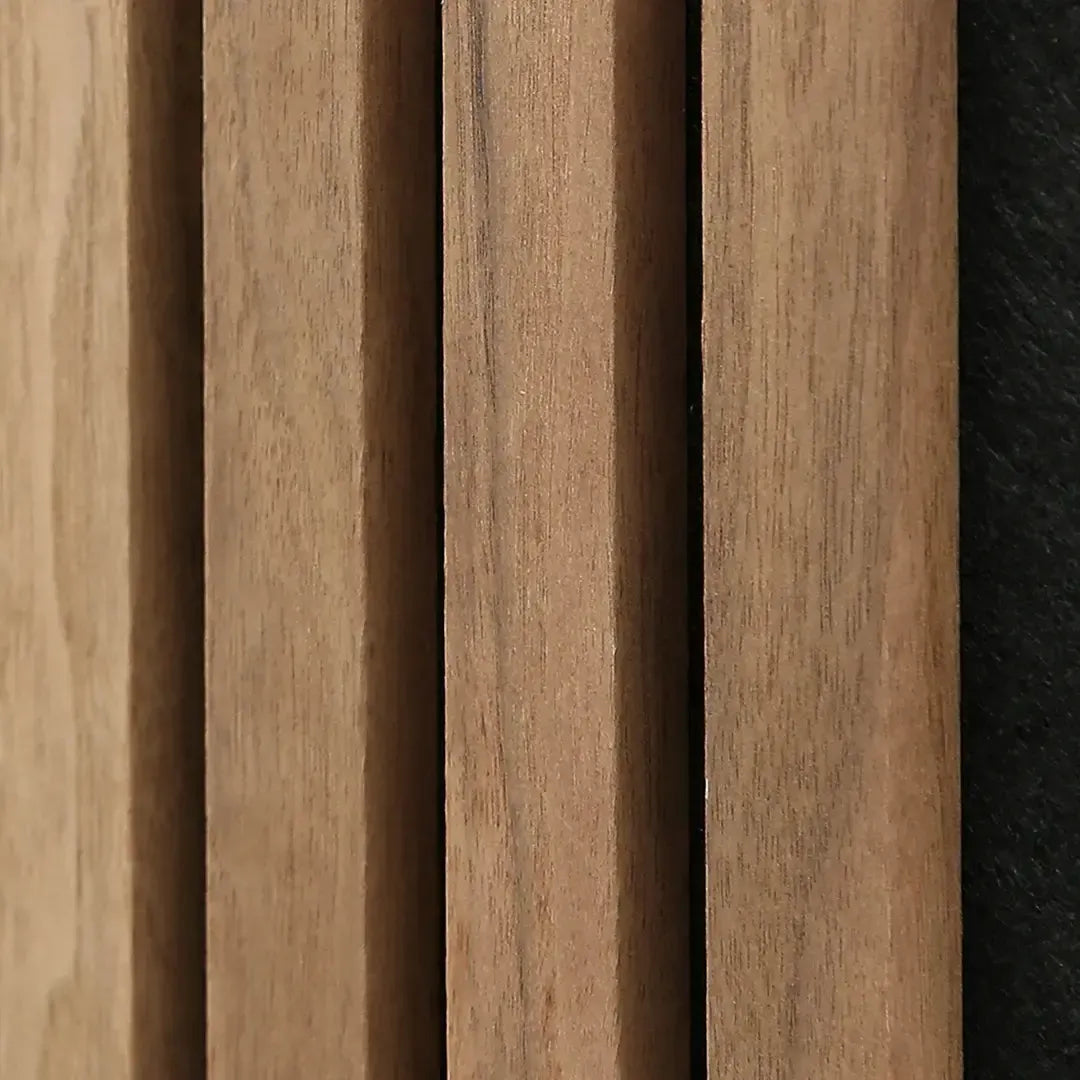
3. End Piece Slat Wall Panel — Walnut
The hook: the finishing piece nobody budgets for until the install is half done. Corners, window returns, and open edges look unfinished with a raw-cut slat panel, and walnut end pieces close that gap cleanly on darker installations. This isn't a standalone wall solution — it's the detail that makes a full panel run look manufactured rather than DIY. Buy if you're running any full-width installation; Skip if your wall has no exposed edges to finish. View the Walnut end piece panel.
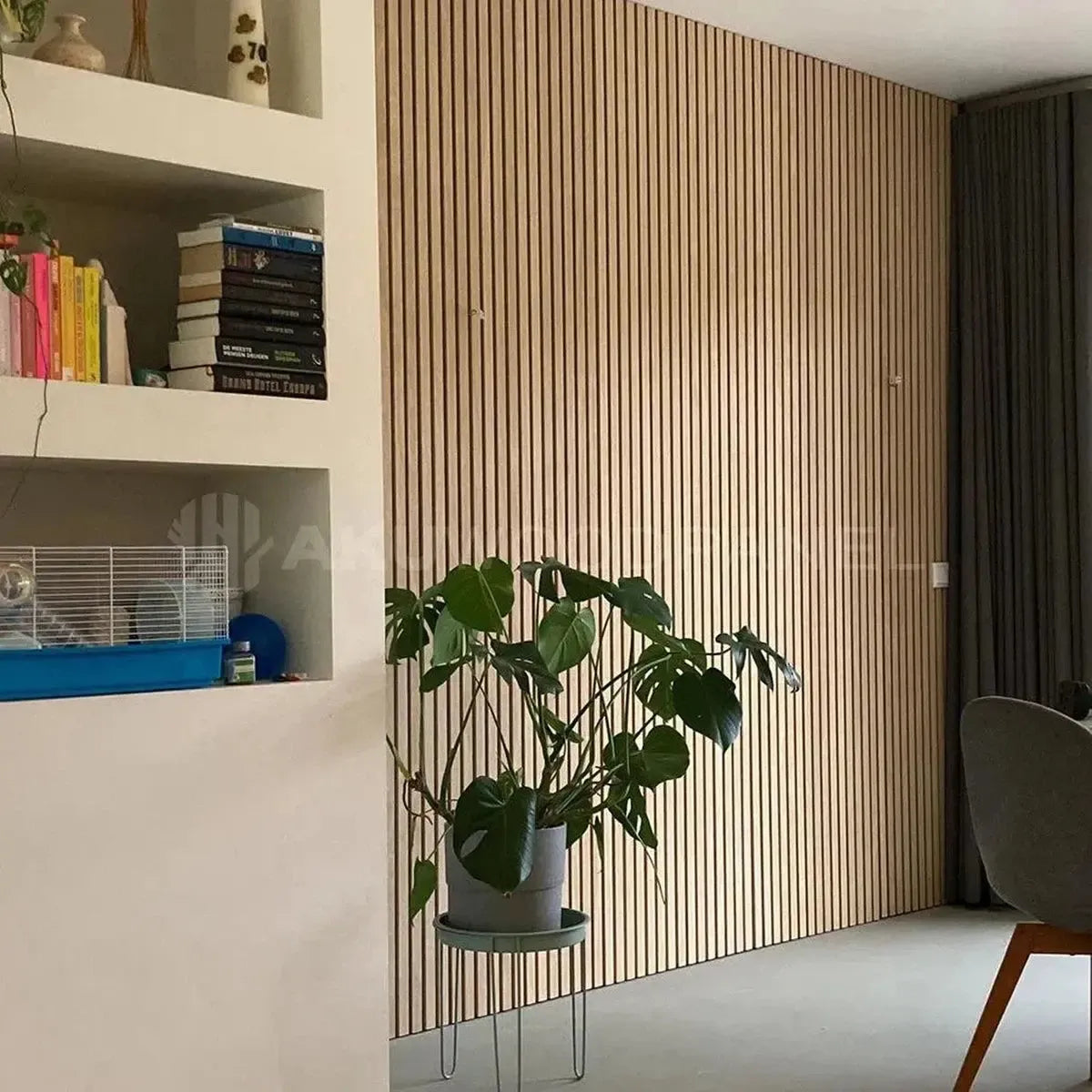
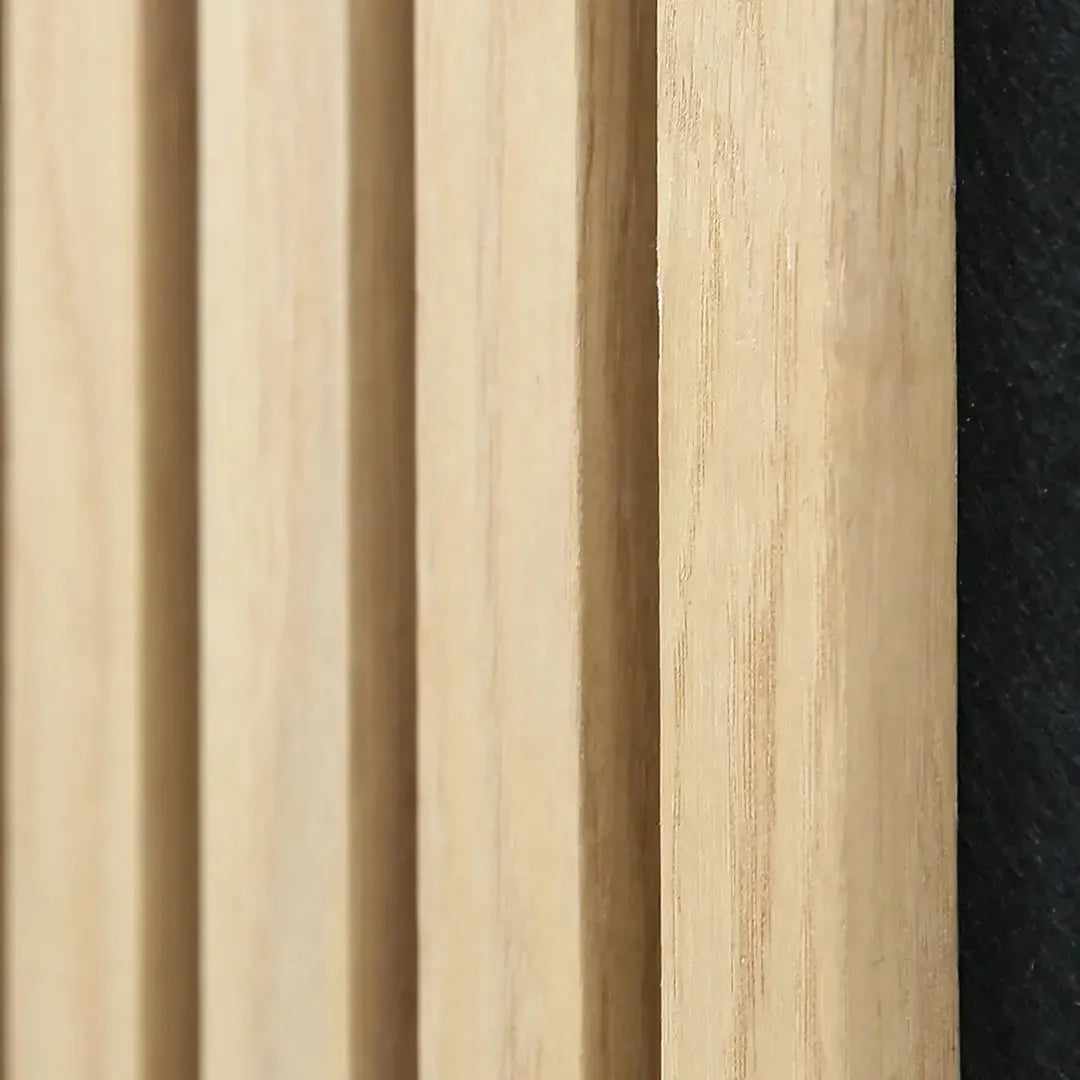
4. Acoustic Slat Wall Panel — Natural Oak with Gray Felt
The hook: the lightest option on this list, and the one that works best when the loft has enough natural light to carry a pale wall. Gray felt backing against natural oak reads more Scandi-industrial than full warehouse-industrial, which is a plus in lofts with white-painted brick or exposed ductwork rather than raw concrete. Consider for lofts with lighter finishes; Skip if the goal is a dark, moody accent wall.
5. Sample Slat Wall Panel — Natural Gray Oak
The hook: not a wall solution, a decision tool. At loft-scale wall dimensions, guessing a finish from a screen photo is how renovations go wrong — brick and concrete throw different light than a product photo studio. Ordering a sample before committing to a full run is standard practice for anyone specifying finishes at scale, especially in 2026 with felt-backed panels where color-matching against dark steel or concrete matters more than it does in a bright, neutral room. Buy before any full-wall order, full stop.
6. Full Sample Box — Slat Wall Panel
The hook: the fast-track version of the sample process for anyone who can't decide between black oak, smoked oak, and walnut from photos alone. A boxed set of finish options against your actual wall, in your actual light, settles the debate faster than scrolling product pages. Buy for anyone renovating a full loft wall who wants to compare finishes side by side before ordering. Get the full sample box.
7. Printed-Laminate Slat Panels (generic, unbranded)
The hook: the one to watch out for. Printed wood-grain laminate over MDF looks close enough in a thumbnail but shows its seams under the kind of directional light lofts tend to have from large factory-style windows. No felt backing means no acoustic benefit, which defeats the point if echo is the actual problem. Skip for any loft install where sound control matters, and check for real veneer construction before buying regardless of brand.
Comparison table
| Panel | Finish | Acoustic Backing | Best For | Verdict |
|---|---|---|---|---|
| Black Oak Acoustic Slat | Dark oak veneer | Yes | Black steel, dark concrete lofts | Buy |
| Smoked Oak Acoustic Slat | Warm smoked oak | Yes | Brick-heavy lofts | Buy |
| Walnut End Piece | Dark walnut | N/A (trim) | Finishing edges/corners | Buy |
| Natural Oak w/ Gray Felt | Pale oak | Yes | Bright, light-filled lofts | Consider |
| Generic Printed Laminate | Faux wood-grain | No | Nothing acoustic-critical | Skip |
Where to buy
- Buy directly from a manufacturer that documents the felt or acoustic backing on the product page — printed laminate sellers rarely mention it because there isn't one.
- Order a sample or a full sample box before committing to a wall's worth of panels; loft lighting from factory windows shifts finish color more than showroom lighting does.
- Confirm end pieces or trim are available in the same finish before ordering the main panel run — mismatched trim is the most common visible mistake in loft installations.
FAQ
What's the best wood slat panel for an industrial loft apartment? The Acoustic Slat Wall Panel in Black Oak is the strongest fit for 2026 lofts with black steel or dark concrete, because the felt backing handles sound absorption while the dark veneer matches industrial materials instead of contrasting against them.
Do slat wall panels actually reduce echo in a loft? Only if they're felt-backed. A solid wood or printed-laminate slat panel adds texture but no meaningful sound absorption, which matters in lofts where concrete ceilings and open floor plans amplify reverb.
Is smoked oak or black oak better for exposed brick walls? Smoked oak generally reads warmer against red or orange brick tones, while black oak works better against gray concrete or black steel — pick based on what's already in the room, not personal preference alone.
How much wall coverage do I need for one loft accent wall? Coverage depends on the wall's exact dimensions, so measure width and height first and order a sample or sample box before calculating full panel counts.
Can I install wood slat panels directly over brick or concrete? Mounting method depends on the wall surface and the manufacturer's installation guidance for that panel — check the specific product page for mounting requirements before ordering.
Do I need end pieces if I'm only covering part of a wall? End pieces matter most where a panel edge is visible — around windows, corners, or open returns — and are optional if the panel run goes wall-to-wall with no exposed edge.
What's the difference between natural oak and smoked oak finishes? Natural oak keeps a lighter, more neutral wood tone, while smoked oak is treated for a darker, warmer look that suits moodier industrial interiors better.
Are these panels only for feature walls, or can they cover a full room? Both full sample boxes and standard panels support larger installations, but full-room coverage should always start with a sample check for color consistency under your specific lighting.
One last thing
The detail most loft renovators skip in 2026 is finish-matching the end pieces to the main panel before ordering, not after — mismatched trim on an otherwise well-planned wall is the single most common visible flaw in slat panel installations, and it's the cheapest thing to get right the first time.


 Better performance and aesthetic appeal
 In Stock