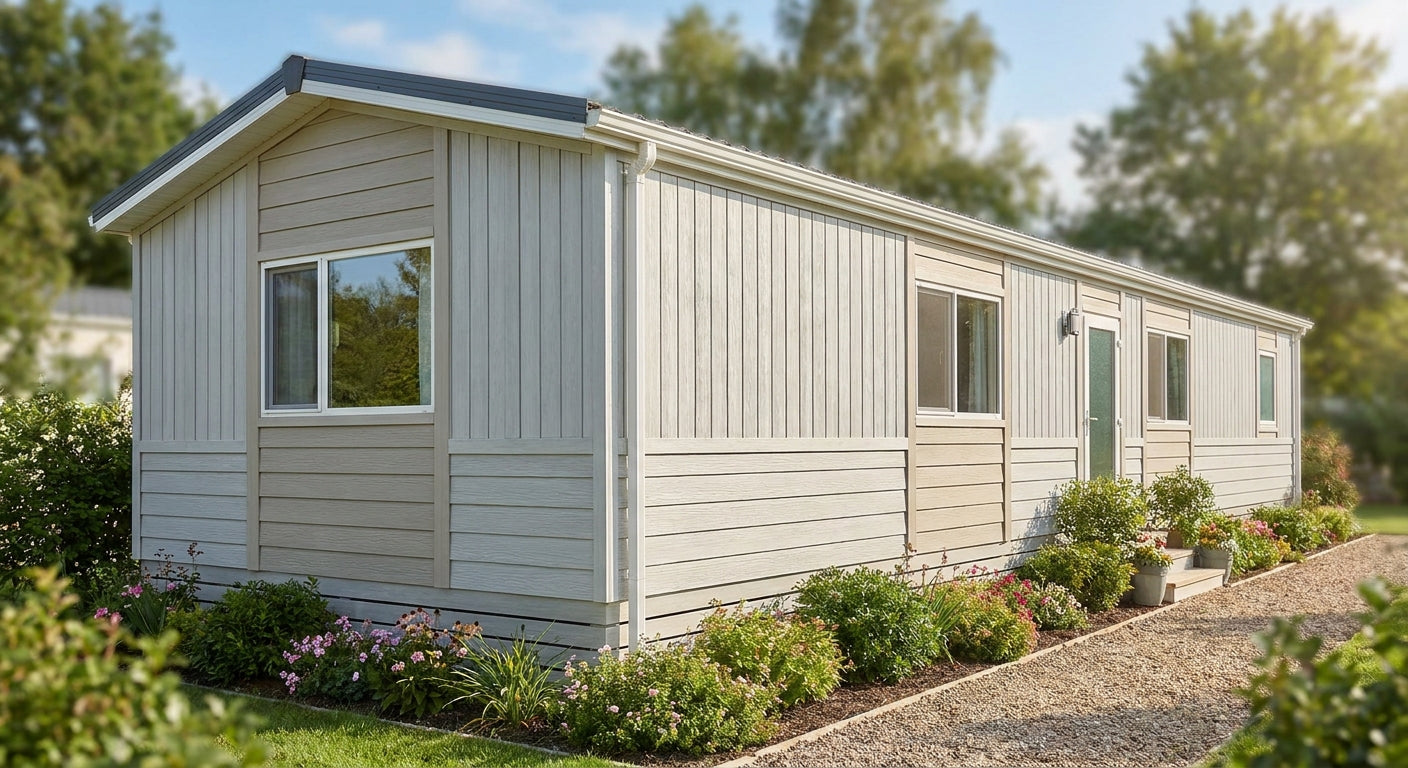
Mobile home exteriors take more wind, sun, and moisture exposure per square foot than site-built walls, and picking the wrong siding panel means a redo in five years instead of twenty. This guide ranks the exterior siding panels that actually hold up on manufactured homes in 2026, from wood-grain composite panels to the vinyl, fiber cement, and aluminum options most retrofit crews still push.
- AKU Wood Panel's Oak exterior wall panel wins for mobile home retrofits in 2026 — buy it.
- Fiber cement adds structural load most single-wide frames weren't built for — skip it.
- Vinyl siding stays the cheapest option but cracks along the locking channel in freeze-thaw cycles.
- Corner trim runs $34.95 and finishing trim $25.95 per 94.5-inch length — budget for both.
Why this matters
Manufactured and mobile homes carry thinner exterior walls and less structural bracing than a stick-built house, so the siding panel does more of the weatherproofing work on its own. A gap or a warped panel on a mobile home lets moisture reach the wall cavity faster, because there's less wall depth to slow it down before it hits insulation and framing.
Exterior siding panels for mobile homes also get judged on weight before they get judged on looks. Add 40 pounds per linear foot of fiber cement to a frame built for lightweight cladding, and you're looking at sagging or fastener pull-out within a few years instead of decades. How to weatherproof exterior wall cladding panels covers the sealing and flashing details that matter most on a manufactured-home retrofit, especially around window and door cutouts where most leaks start.
The picks below are ranked on weight, weather resistance, and how each material holds up against the specific stresses a mobile home wall sees over a full year in 2026.
How we ranked
Each option is scored on three factors that matter specifically for manufactured housing: installed weight versus what a mobile home frame can carry without added bracing, weather resistance across freeze-thaw and UV exposure, and long-term maintenance load. Pricing on the AKU Wood Panel exterior panel and trim listings reflects 2026 catalog data; category-level materials — vinyl, fiber cement, aluminum — are compared on public performance characteristics rather than one competitor SKU, since no single vinyl or fiber cement brand dominates the manufactured-housing market the way a brand might in site-built construction.
Search demand for exterior siding panels runs around 2,400 monthly searches, and most of that volume is people comparing material categories, not shopping one product page. A material that looks good but fails on weight or moisture handling gets marked down hard here, because a mobile home has less forgiveness for a bad exterior decision than a site-built house does.
The ranked list
1. AKU Wood Panel Exterior Wall Panel – Oak — the wood-grain pick that installs over existing siding
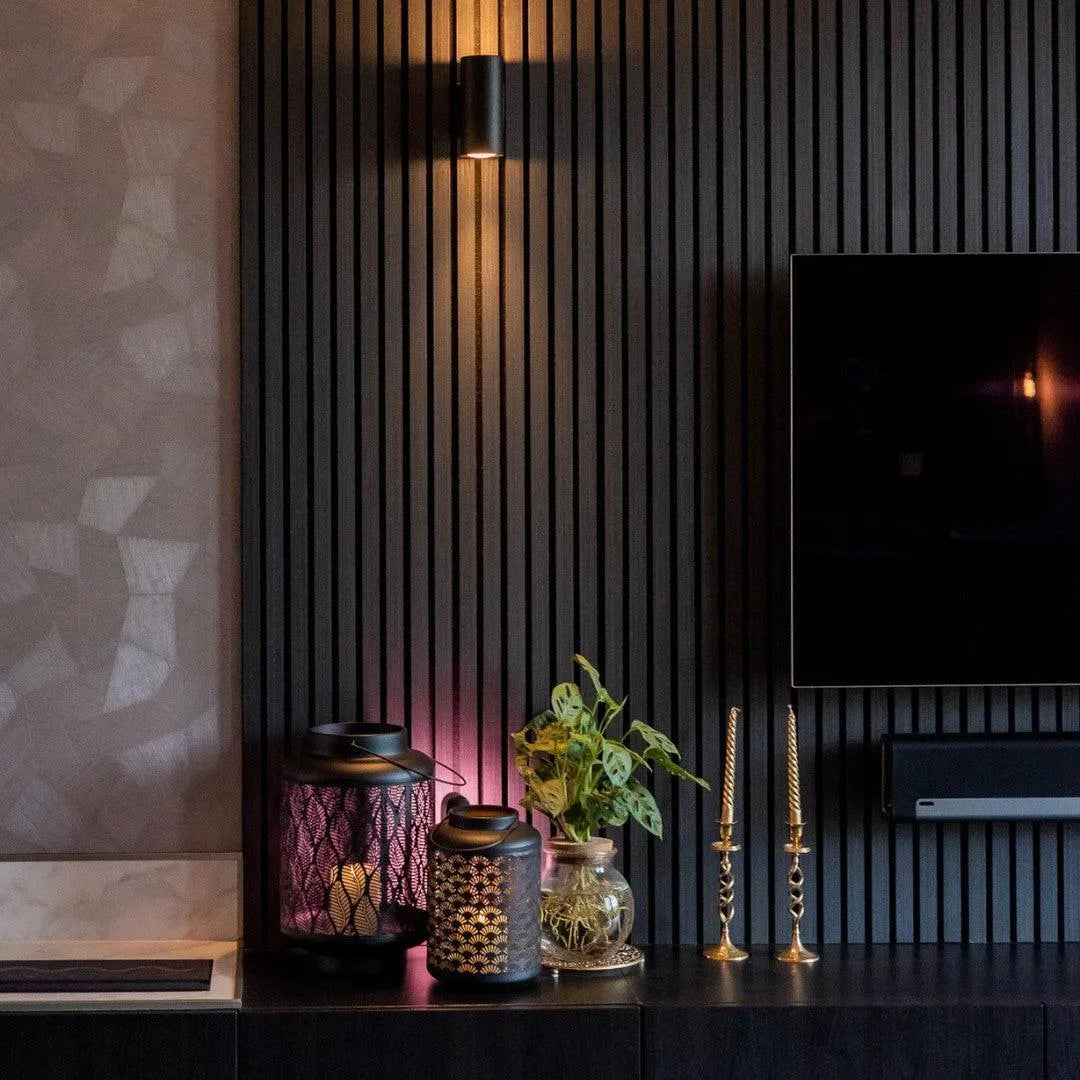
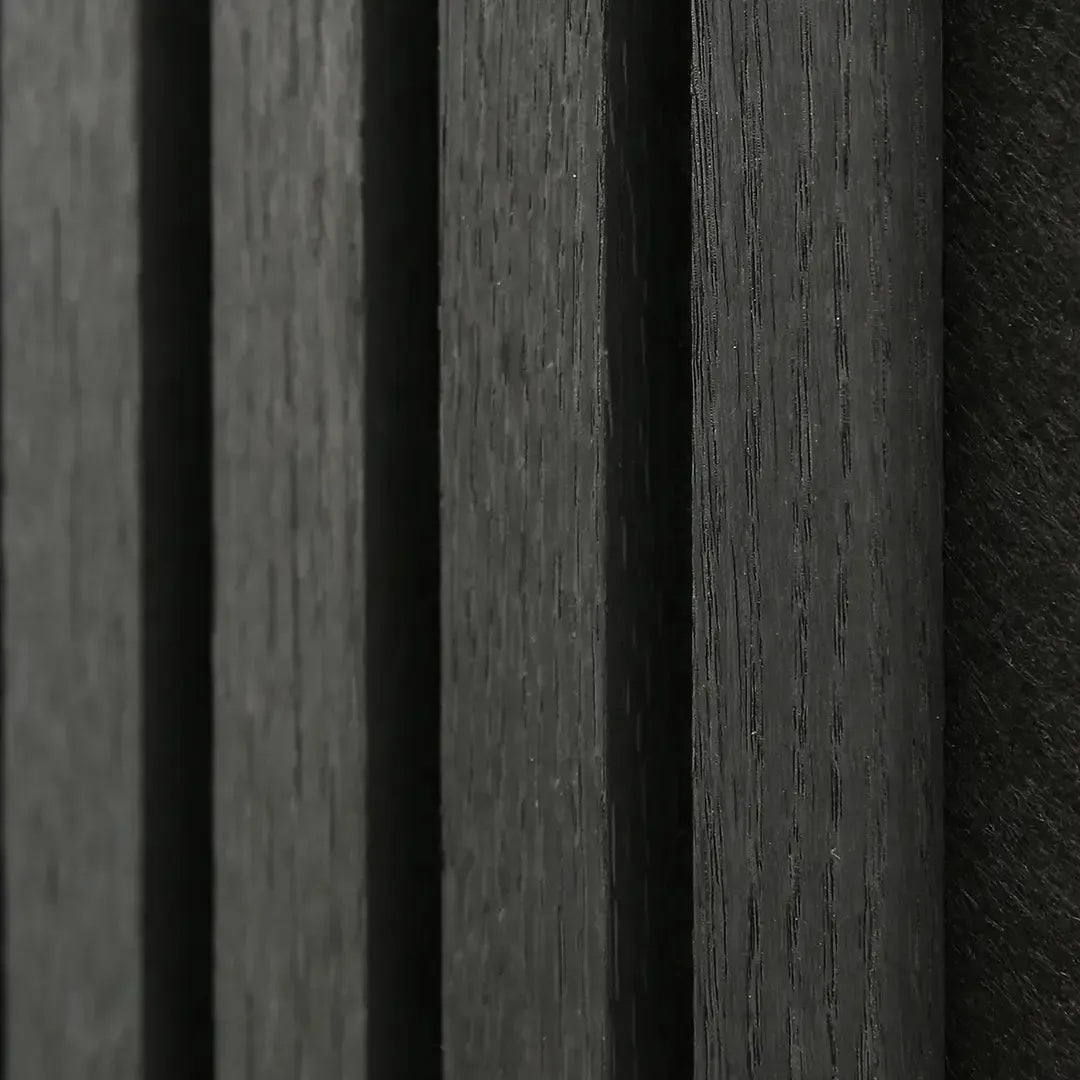
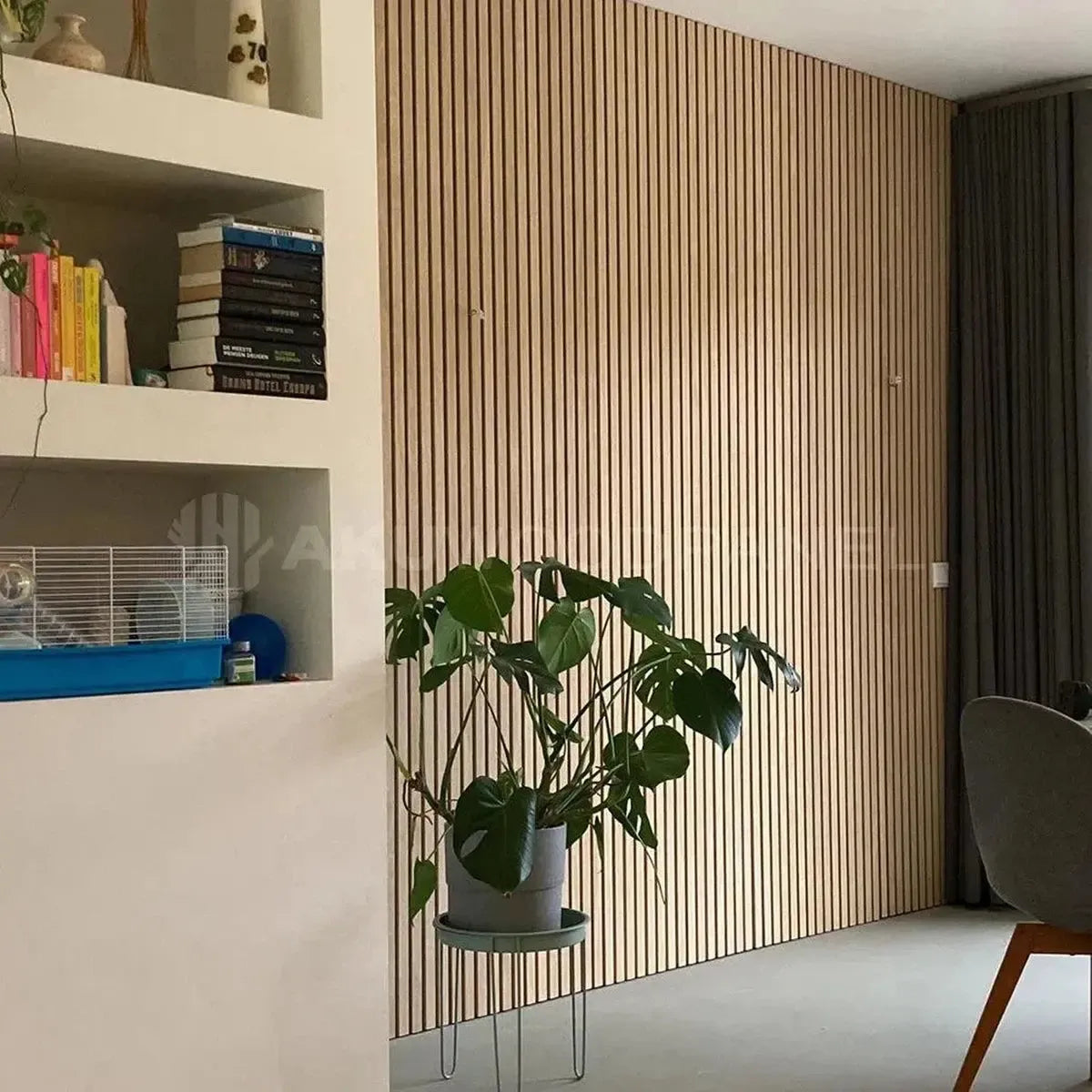
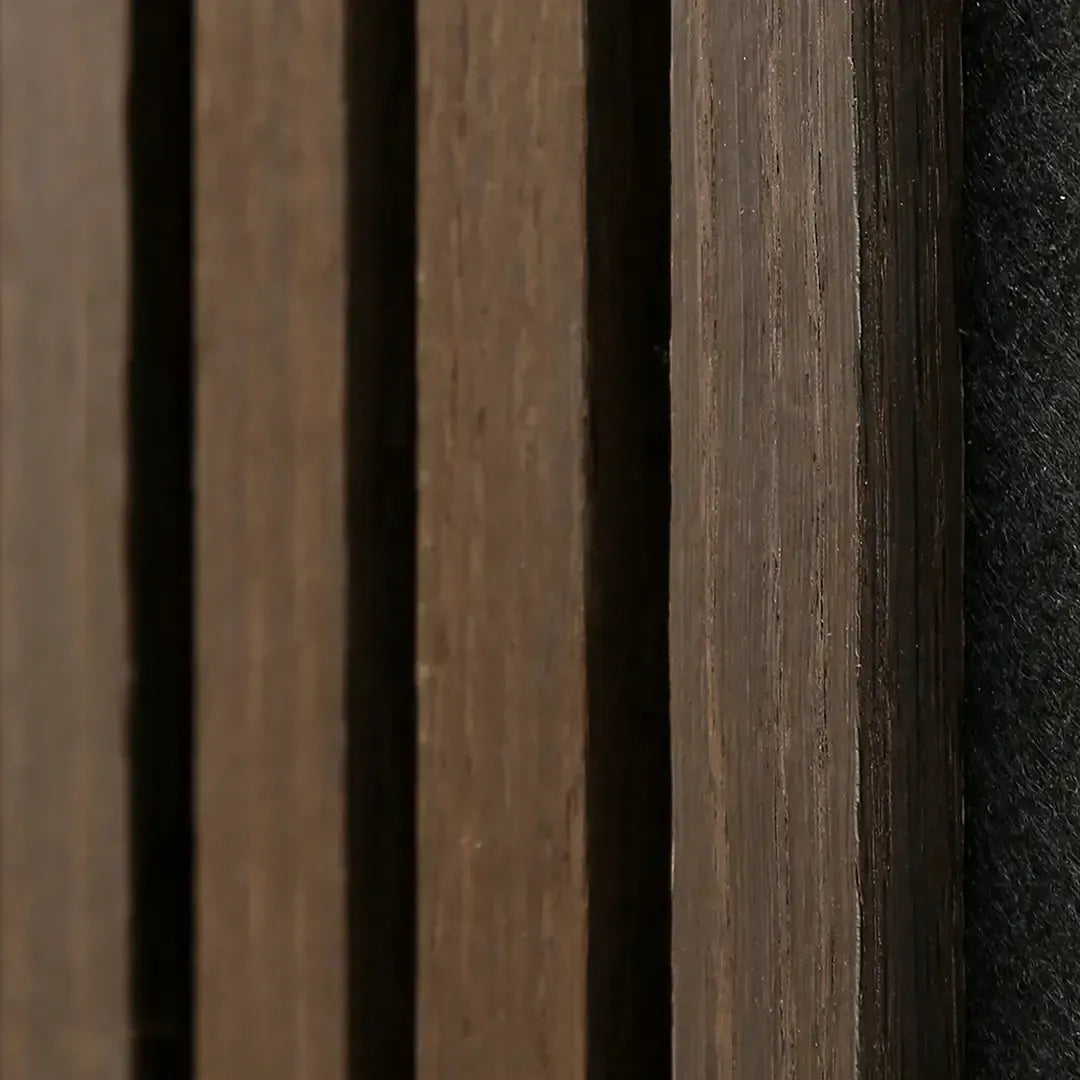
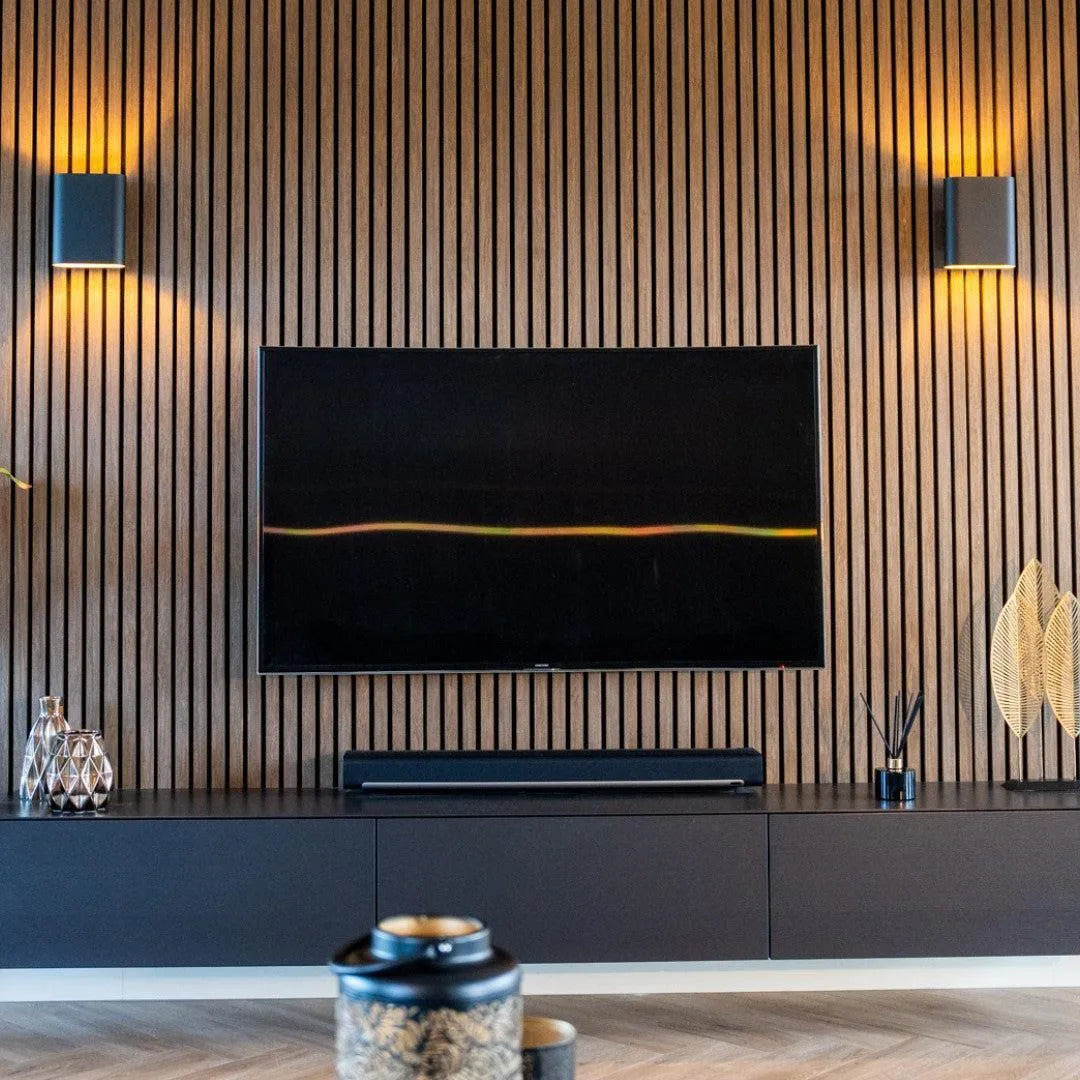
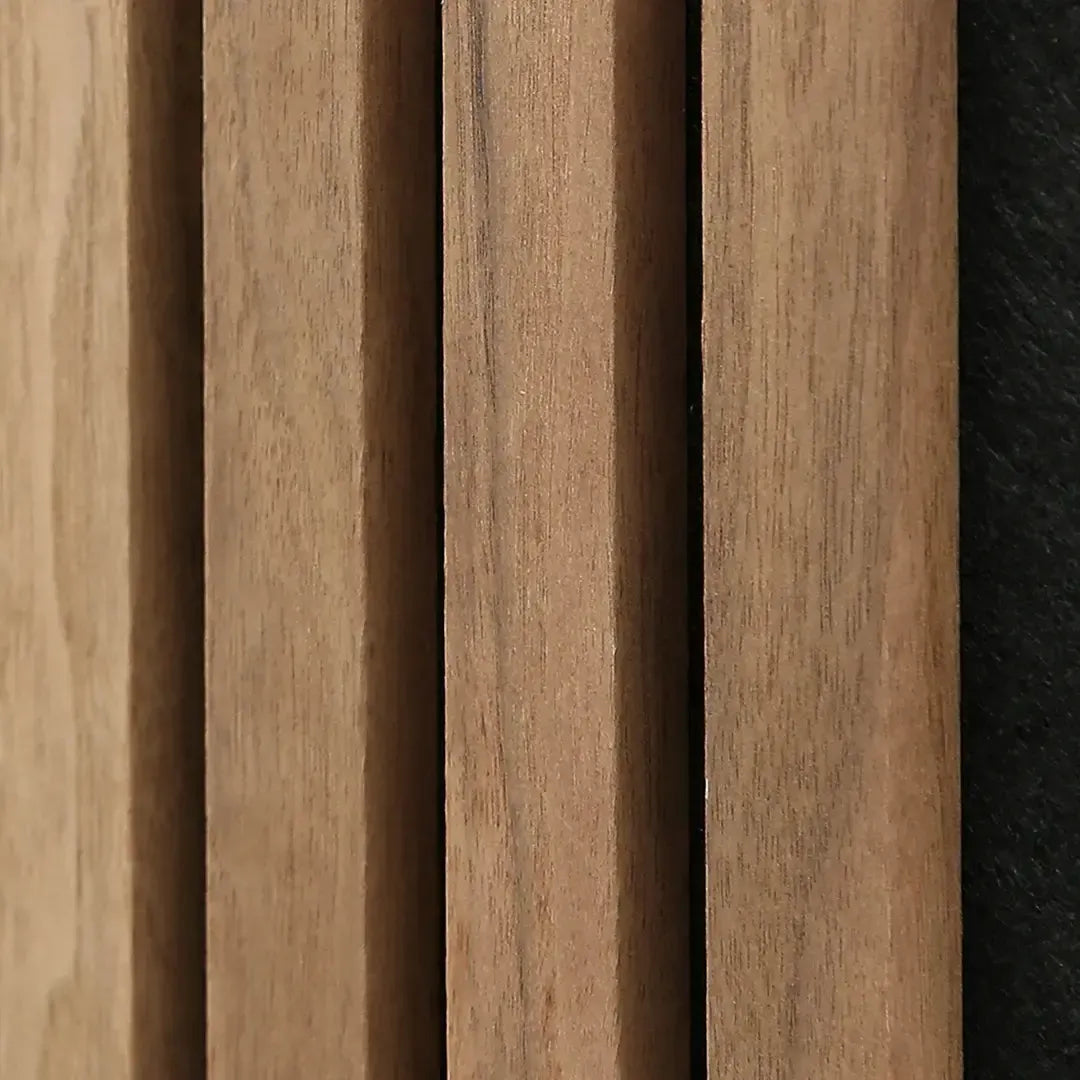
AKU Wood Panel's Oak exterior wall panel carries a 3D wood-grain finish built for outdoor exposure, and it mounts directly over most existing mobile home siding using the matching trim system rather than requiring a full tear-off. That matters on a manufactured home, where stripping siding down to the sheathing adds labor cost and leaves the wall cavity exposed to weather mid-project.
The panel pairs with corner trim and finishing trim pieces sold at 94.5 inches per length, which cover a standard mobile home wall run with fewer seams than shorter siding boards typically require. Fewer seams means fewer points where water can work its way behind the cladding over a wet winter. Verdict: Buy — this is the safe pick for anyone retrofitting an exterior wall panel system onto a manufactured home in 2026 without touching the frame.
2. AKU Wood Panel Exterior Wall Panel – Birch — the lighter-toned wildcard
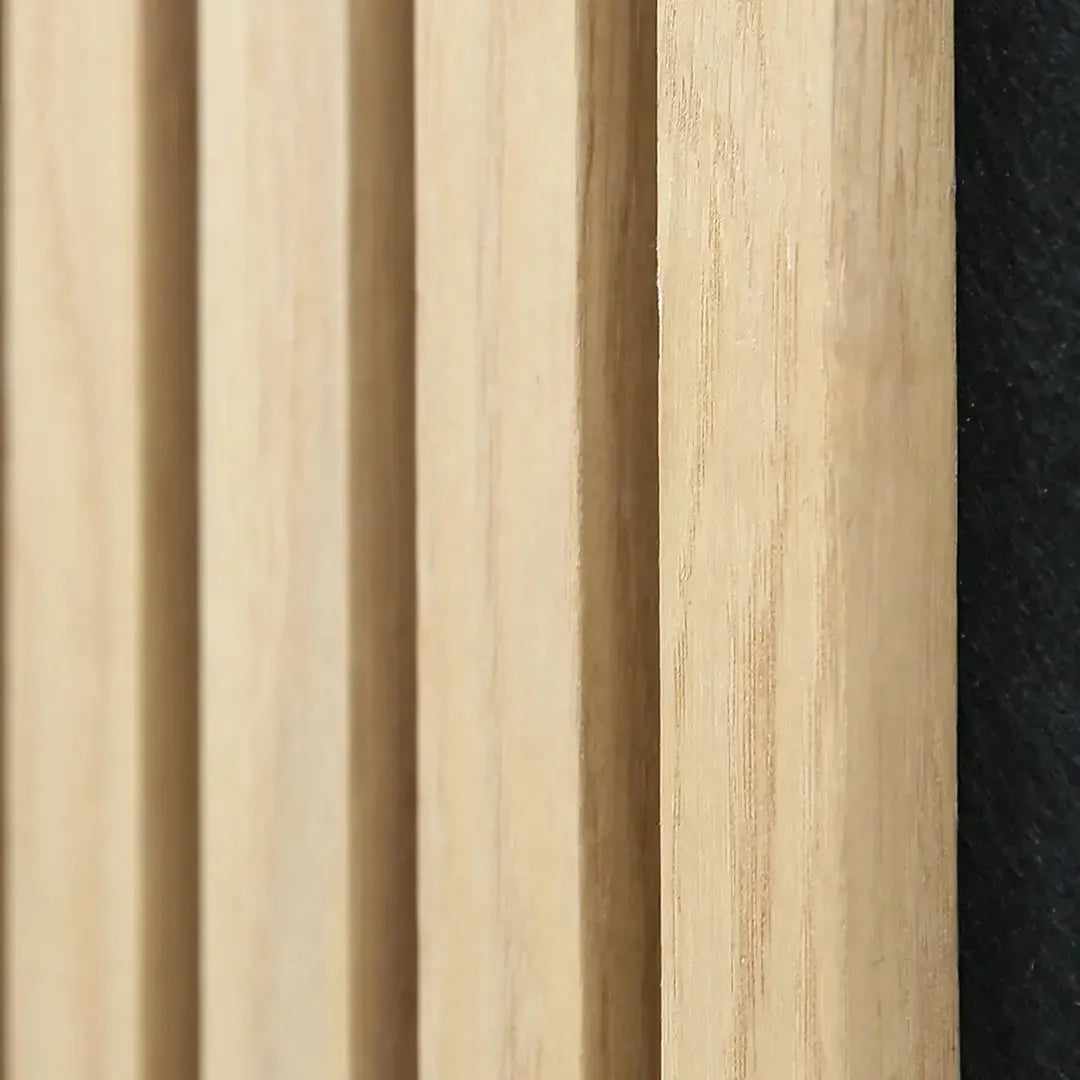
Same 3D wood-grain construction as the Oak panel, in a lighter birch tone that reads more Scandinavian than rustic on a manufactured home facade. Mounting method, trim compatibility, and exposure rating stay identical to the Oak version, so this comes down to a style call, not a performance one.
Pick the Birch exterior wall panel when the roofline, trim color, and landscaping skew light, and reach for Oak when the facade needs more visual weight against a dark roof. Verdict: Consider — same product, different finish, so let the rest of the exterior decide.
3. Vinyl siding panels — the mobile home default since the 1980s
Vinyl remains the most common siding on manufactured housing because it's light and cheap to install, and most retrofit crews can hang it in a day or two. The tradeoff shows up over time: vinyl gets brittle in cold climates and cracks along the locking channel during freeze-thaw cycles, and faded sections can't be spot-repaired without a visible color mismatch, since the pigment weathers unevenly across a wall.
For a mobile home going up for sale in the next year or two, vinyl still makes sense on cost alone. For a home kept past 2030, the crack-and-fade cycle usually forces a second re-side before a wood-panel or composite system would need any attention at all. Verdict: Hold — fine for a short holding period, not for a long-term exterior.
4. Fiber cement panels — the heavy-duty option that rarely fits
Fiber cement holds paint and resists fire better than most siding categories, but it's dense — significantly heavier per square foot than vinyl or wood-composite panels. Most single-wide and double-wide mobile home frames weren't engineered to carry that added load without extra wall bracing, which turns a siding job into a structural retrofit before the first panel ever goes up.
Skip fiber cement unless a structural engineer has already signed off on the frame, or the home sits on a permanent foundation with site-built-grade wall construction. Verdict: Skip for standard manufactured home frames.
5. Aluminum siding — the legacy metal option
Aluminum was standard on mobile homes for decades before vinyl took over, and old aluminum siding is still common on homes built before the 1990s. It dents under hail and impact, transmits rain noise far more than vinyl or wood panels, and adds close to zero insulation value on its own.
There's no scenario in 2026 where aluminum beats a wood-grain composite panel, or even vinyl, on a retrofit budget. Verdict: Skip.
6. Engineered wood composite panels — the modern low-maintenance composite
Engineered wood composite panels resist rot and insect damage without the weight penalty that rules out fiber cement, and most composite lines carry a factory finish that doesn't need repainting on the schedule site-built cedar siding does. Coverage and trim compatibility vary by manufacturer, so measure the wall before ordering rather than estimating from a spec sheet.
Verdict: Consider — a solid middle ground when a wood-grain composite line ships with mobile-home-appropriate trim, and the closest category match to what AKU Wood Panel sells in its own exterior wall panel range.
Comparison table
| Option | Weight vs. frame | Weather resistance | Maintenance | Verdict |
|---|---|---|---|---|
| AKU Wood Panel Oak | Light, no bracing needed | High, sealed 3D finish | Low | Buy |
| AKU Wood Panel Birch | Light, no bracing needed | High, sealed 3D finish | Low | Consider |
| Vinyl siding | Light | Cracks in freeze-thaw | Low-Medium | Hold |
| Fiber cement | Heavy, needs bracing | High | Medium | Skip |
| Aluminum | Light-Medium | Dents, noisy in rain | Medium | Skip |
| Engineered composite | Light-Medium | High | Low | Consider |
Where to buy exterior siding panels for a mobile home
Order panels and trim from one batch. Wood-grain and composite panels vary slightly in tone between production runs, and a mobile home wall has fewer seams to hide a mismatch than a large site-built facade would.
Add 10-15% overage to whatever square footage the wall measures. Window and door cutouts eat more material than the math suggests, and running short mid-install on a manufactured home means a delay while a second batch ships.
Confirm fasteners before the crew shows up. AKU Wood Panel sells exterior panel screws sized for its own trim and panel system, and using the wrong fastener length is the single most common reason exterior panels loosen within the first year on a manufactured home.


FAQ
What's the best exterior siding panel for a mobile home in 2026?
AKU Wood Panel's Oak exterior wall panel is the best exterior siding panel for a mobile home in 2026 because it mounts over existing siding without added structural bracing. It pairs with a matching trim system sold at 94.5 inches per length, cutting down on seams across a standard wall run.
Is vinyl siding better than wood panel siding for mobile homes?
Vinyl siding costs less upfront but cracks along the locking channel during freeze-thaw cycles and fades unevenly over time. Wood-grain panels like AKU Wood Panel's Oak and Birch exterior wall panels cost more initially but avoid that crack-and-fade cycle on a home kept past a few years.
How much does it cost to reside a mobile home with exterior wall panels?
Total cost scales with wall square footage and panel choice, so there's no single number that applies to every home. Trim pieces run $25.95 to $34.95 per 94.5-inch length, and adding 10-15% material overage for window and door cutouts is standard practice.
Can you install exterior wall panels over existing mobile home siding?
Yes, AKU Wood Panel's exterior wall panels mount directly over most existing mobile home siding using the matching trim system, avoiding a full tear-off to bare sheathing. That keeps the wall cavity protected from weather during the install instead of exposed for days.
Do exterior wall panels need special screws on a manufactured home?
Yes, using the correct fastener length matters more on a mobile home than a site-built house because the wall assembly is thinner. AKU Wood Panel sells exterior panel screws sized for its own trim and panel system to prevent early loosening.
Is fiber cement siding a good fit for mobile homes?
Fiber cement is heavier per square foot than vinyl or wood-composite panels, and most single-wide or double-wide frames weren't engineered to carry that load without added bracing. It's generally a skip for manufactured homes unless a structural engineer has reviewed the frame.
What's the difference between AKU Wood Panel's Oak and Birch exterior panels?
The difference is finish tone only — Oak reads darker and more rustic, Birch reads lighter and more Scandinavian. Mounting method, trim compatibility, and weather rating are identical between the two.
How long does exterior wood-grain panel siding last on a mobile home compared to vinyl?
Wood-grain composite panels are built with a sealed exterior finish meant to resist the freeze-thaw cracking that limits vinyl's lifespan on a manufactured home. Exact lifespan depends on climate and installation quality, so check warranty terms before comparing numbers.
One last thing
Corner trim isn't optional trim candy — it's the seam that keeps water out at every 90-degree turn on a mobile home, and running out of it mid-install is the most common reason a manufactured-home exterior job stalls for a week waiting on a reorder in 2026. Order corner trim in the same batch as the panels, not as an afterthought once the crew hits the first corner.


 Better performance and aesthetic appeal
 In Stock