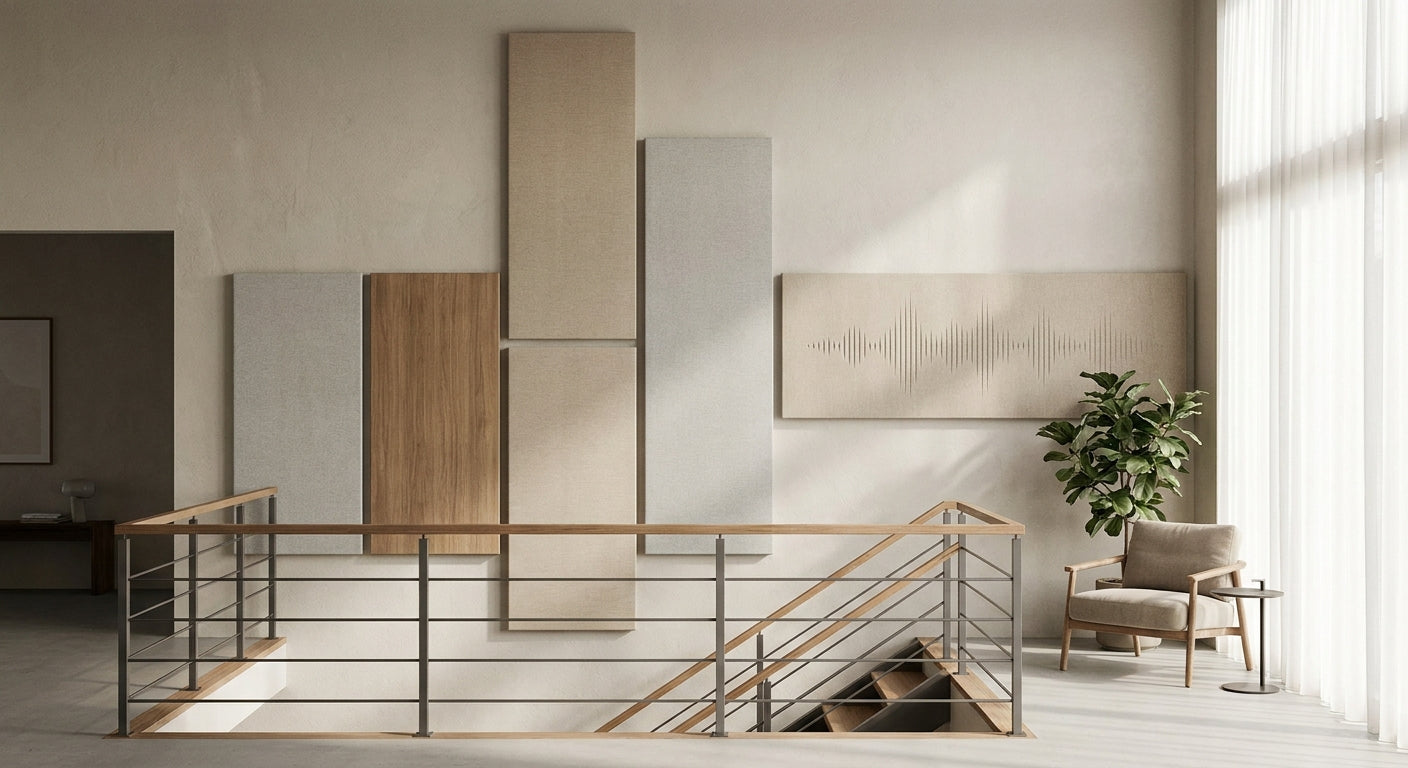
Open staircases turn ordinary echo into a two-story problem, and slat wood panels with felt backing are the fastest fix that also looks finished. This guide ranks the acoustic panels worth buying for stairwells in 2026, plus what to skip.
TL;DR: For acoustic panels reducing echo in open staircases, the AKU Woodpanel Acoustic Slat Wall Panel in Natural Oak with Gray Felt is the top pick for most homes because the felt backing does the sound-absorbing work while the oak veneer covers drywall or block that's otherwise bouncing sound between floors. The Black Oak Acoustic Slat Wall Panel is the call for dark, modern stairwells, and the Walnut Acoustic Slat Wall Panel is the premium option for a formal entry. Plain foam panels are a Skip for stairwells because they don't survive foot traffic or look right in a shared entry space. Verdict: felt-backed wood slat panels beat foam and fabric panels for this application in 2026.
Why This Matters
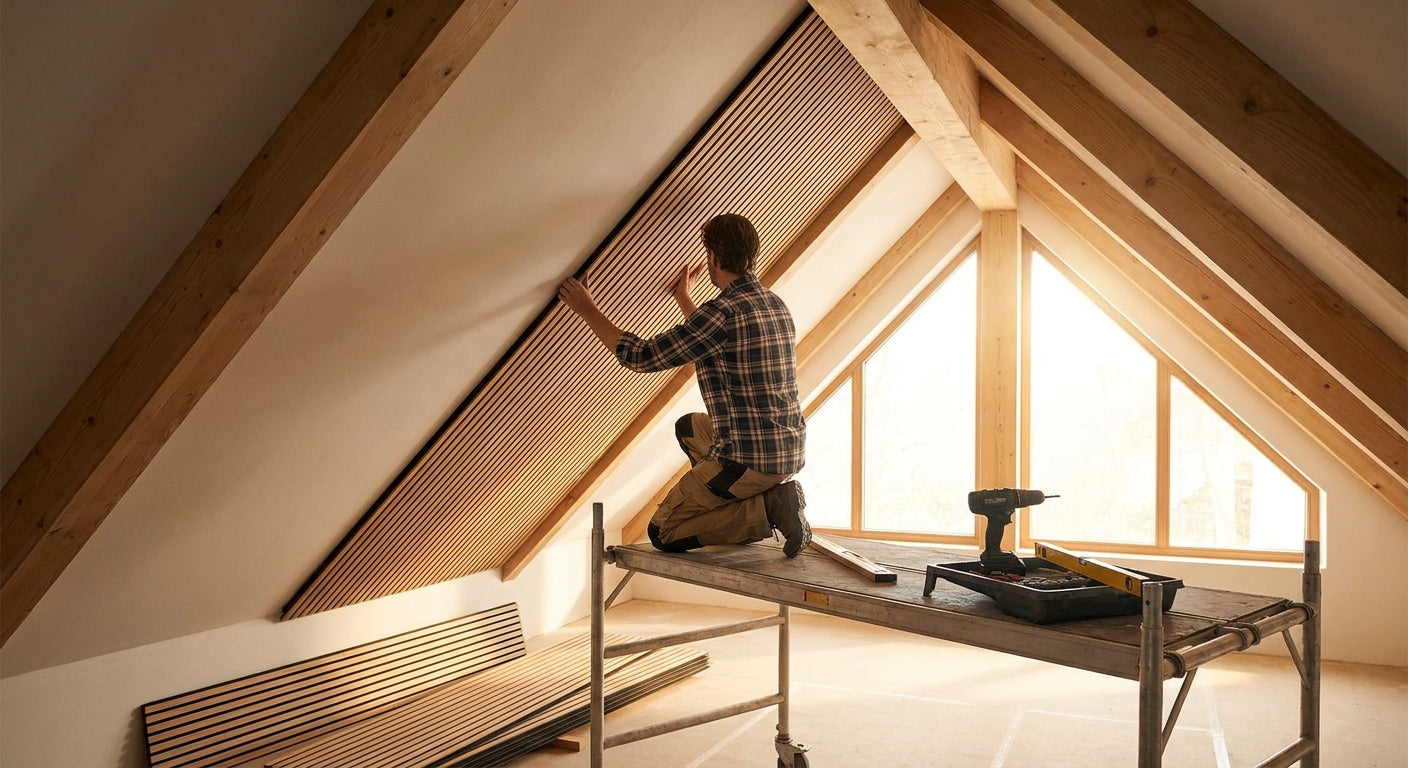
Staircases are acoustic nightmares by design. Hard treads, drywall, and an open two-story volume give sound nowhere to go except back and forth between parallel surfaces, which is why a simple "hello" from the front door turns into a rattle that carries to the second floor. A dedicated guide to echoey stairwells breaks down why open stair volumes behave differently than a closed room, but the short version: you need absorption on a vertical surface, not just a rug at the bottom.
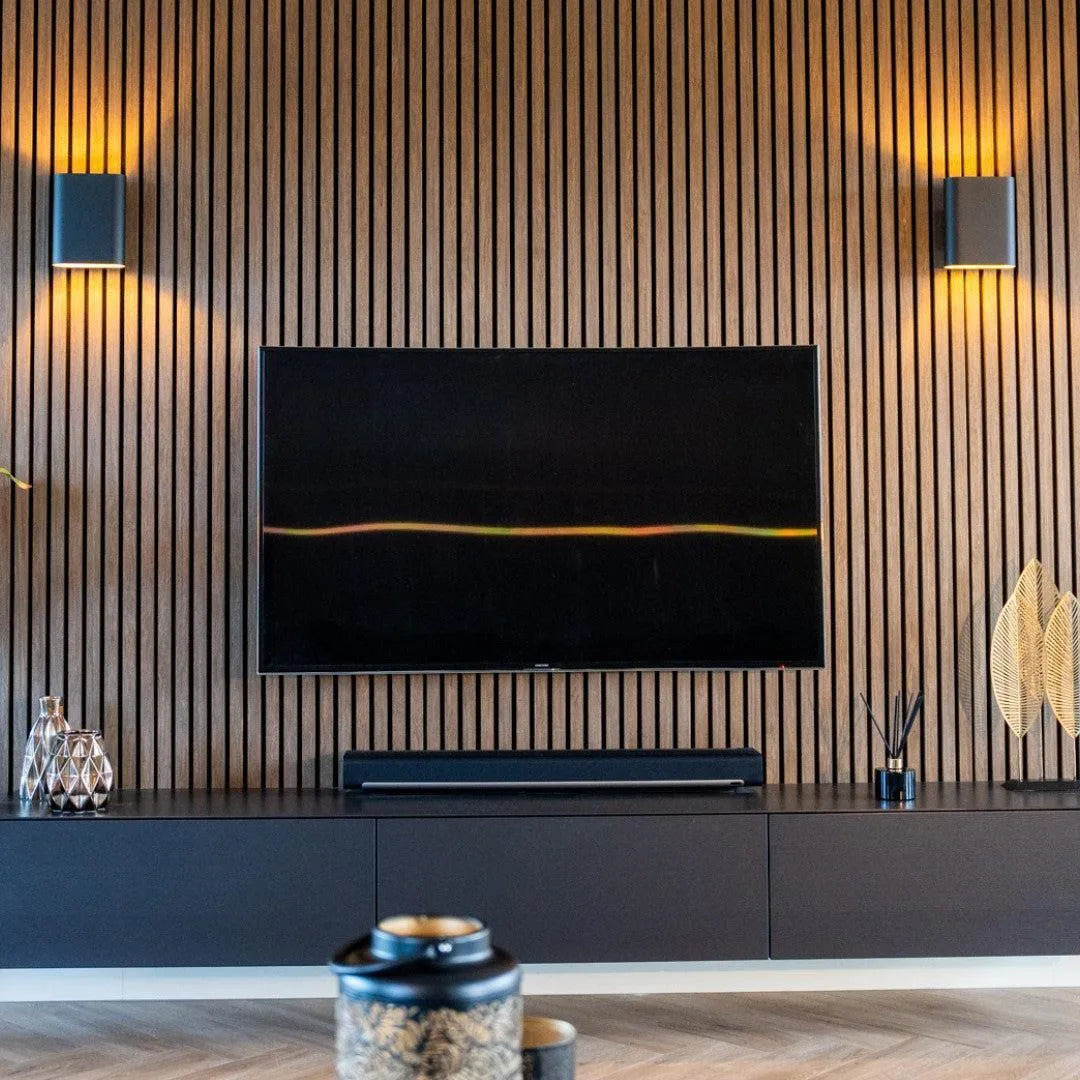
Foam wedges work in a recording booth. They do not work in an entryway that guests see every time they walk in, and they don't hold up against a coat sleeve brushing past them for years. Wood slat panels with a felt or acoustic fleece backing solve both problems at once — they absorb mid-to-high frequency reflections and they look like a finished wall, not a treatment.
How We Ranked These
Each pick below is judged on four things that matter specifically for stairwells: whether the panel has a felt or acoustic backing (not just decorative slats), how the finish reads in a high-traffic, high-visibility space, ease of DIY installation on drywall or between studs, and price relative to coverage. Panels that are decorative-only with no backing lost points here even if they look good, because a stairwell needs actual absorption, not just visual texture. Verdicts reflect 2026 pricing and availability as listed on manufacturer sites.
The Ranked List
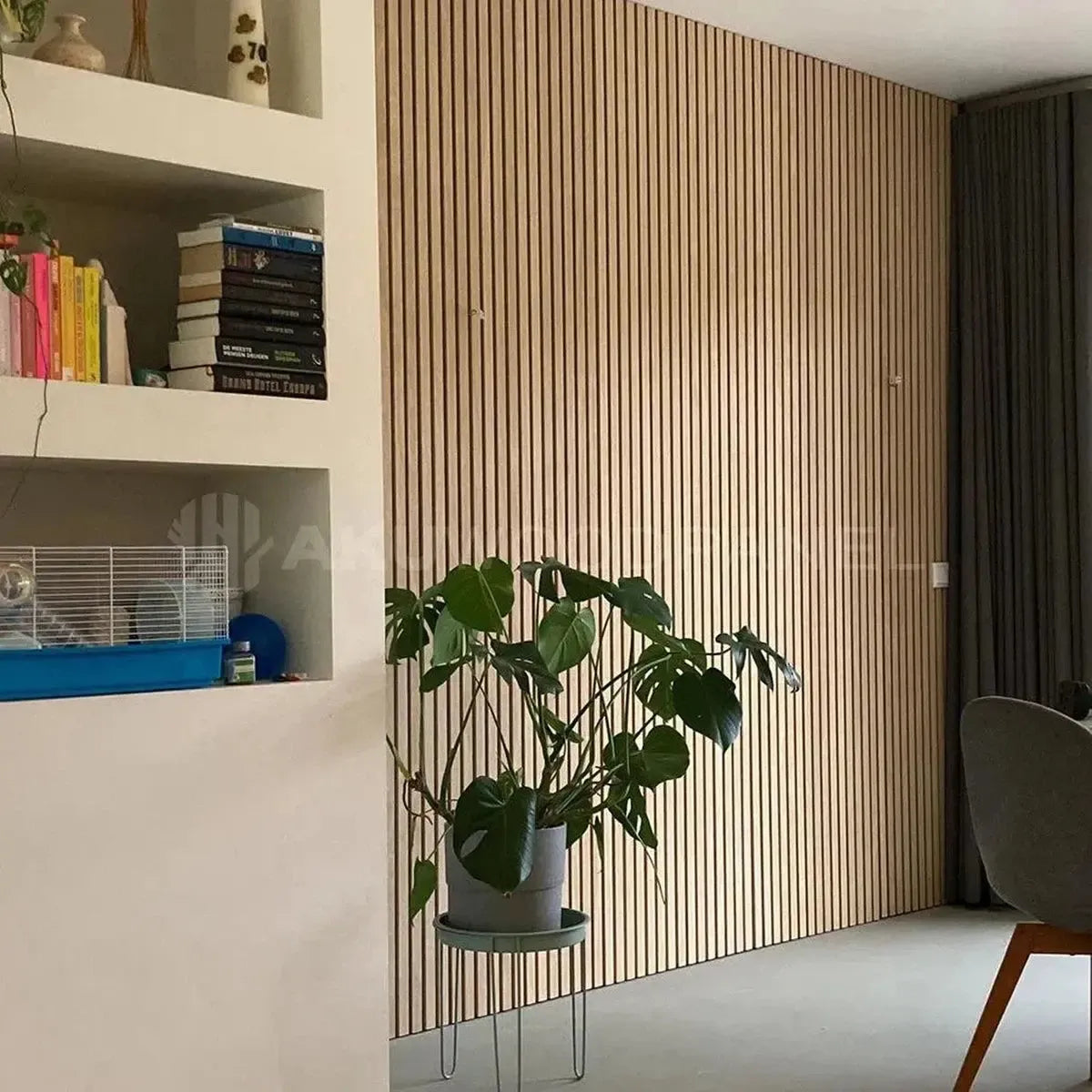
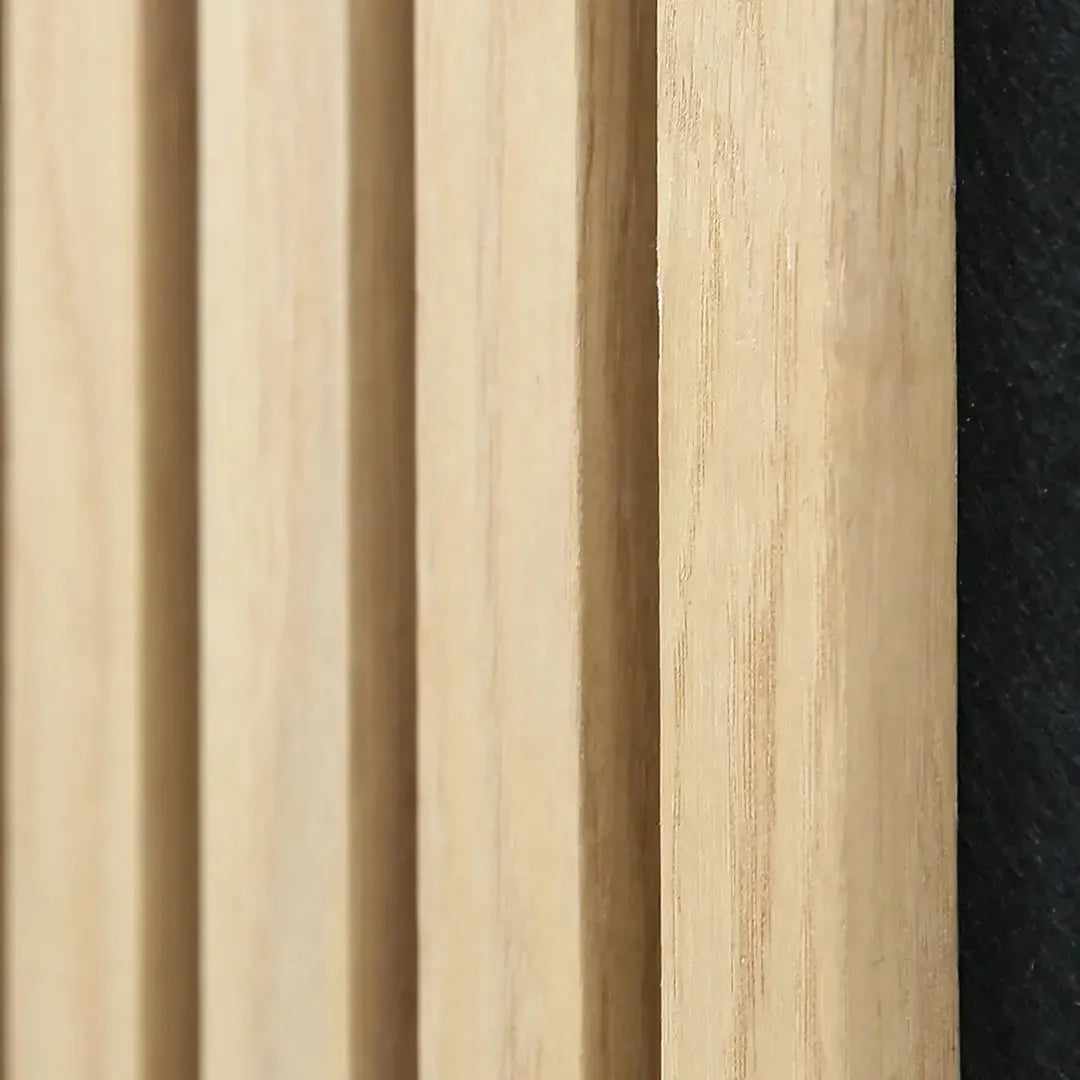
1. AKU Woodpanel Acoustic Slat Wall Panel, Natural Oak with Gray Felt — the safe pick
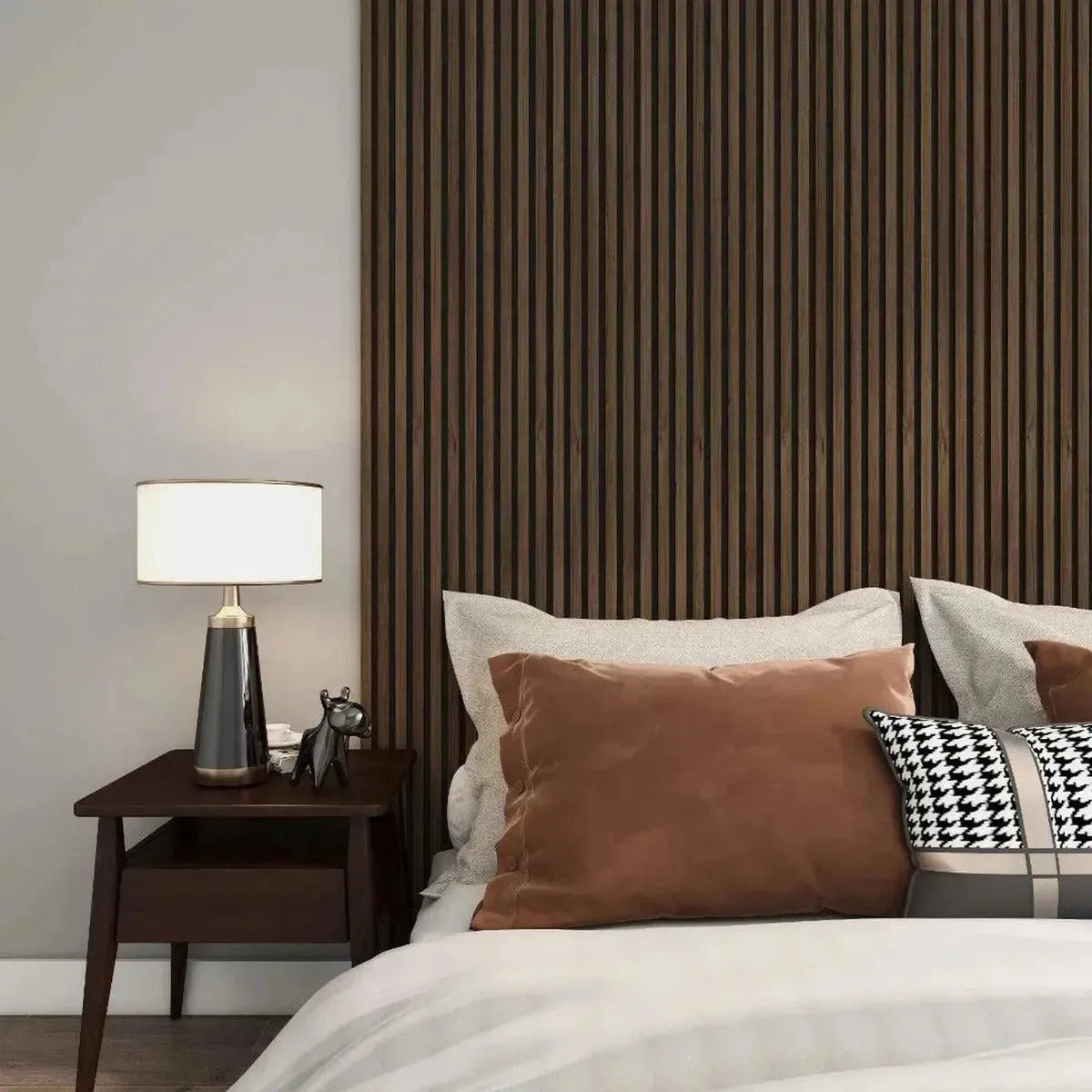
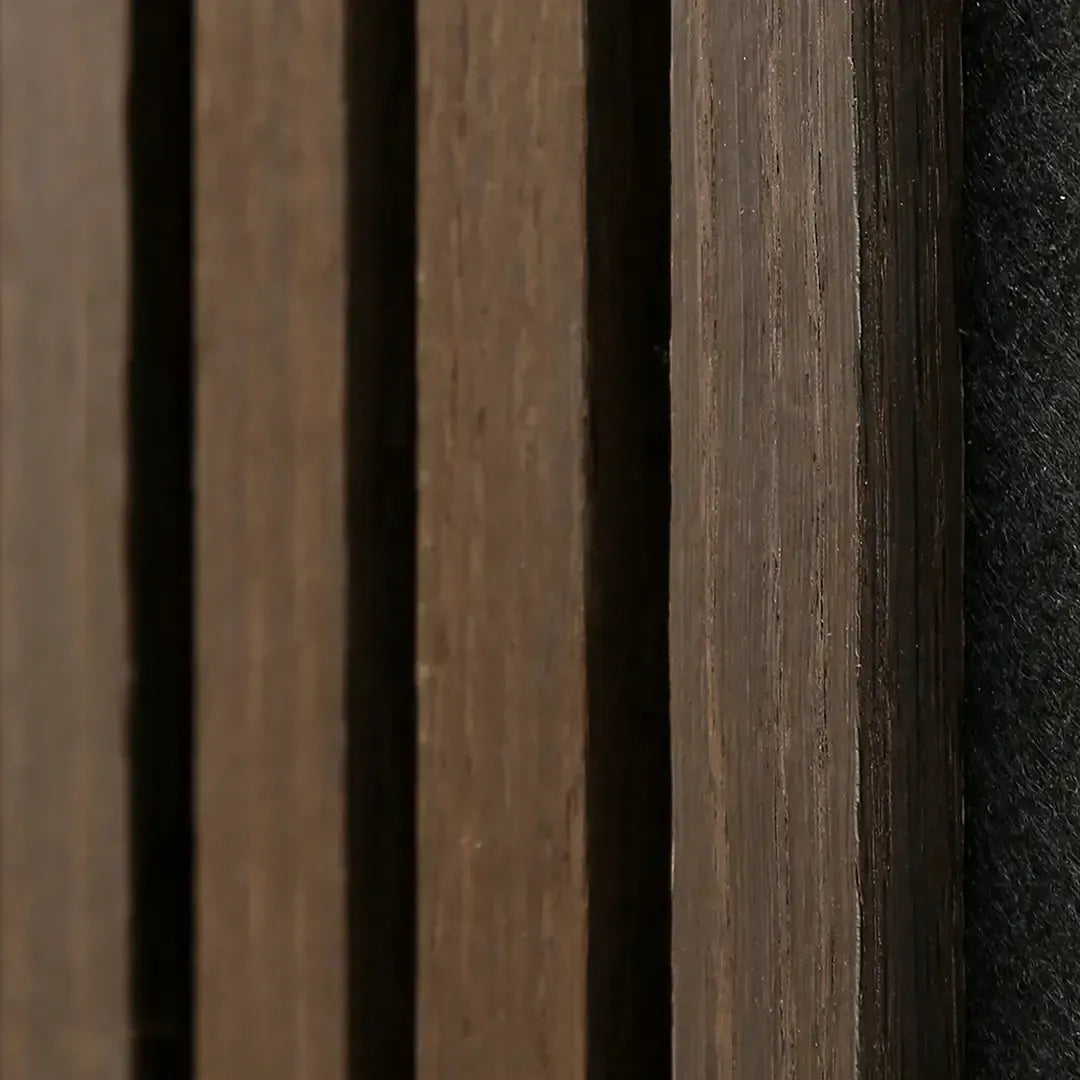
This is the panel most homeowners land on because natural oak reads warm without going rustic, and the gray felt backing is neutral enough to not fight with existing trim. It installs directly onto drywall with construction adhesive or a track system, which matters on a staircase wall where you're often working at height or on a slight incline. Buy — it's the default for a reason: felt backing plus a finish that works in almost any stairwell. See the Natural Oak with Gray Felt panel.
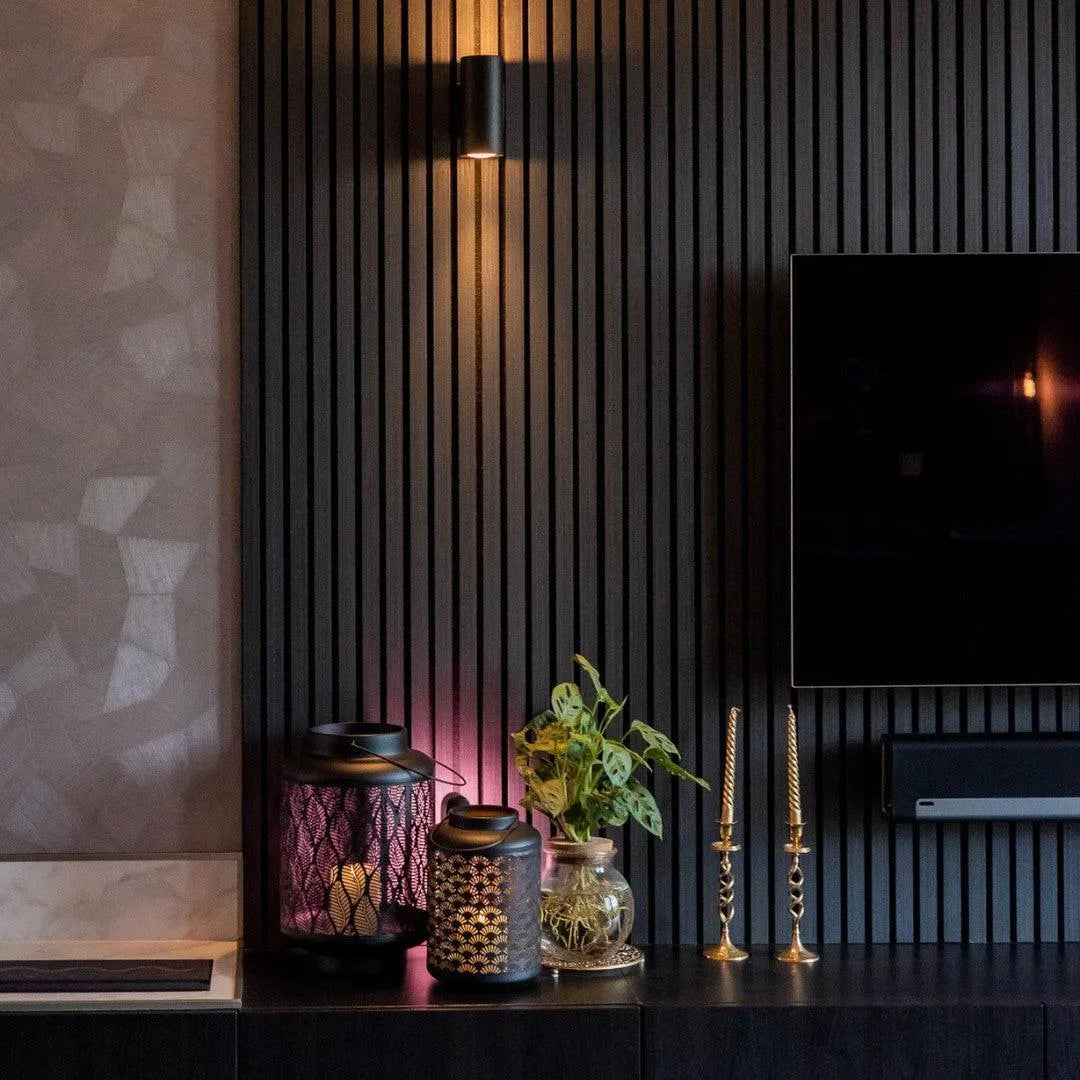
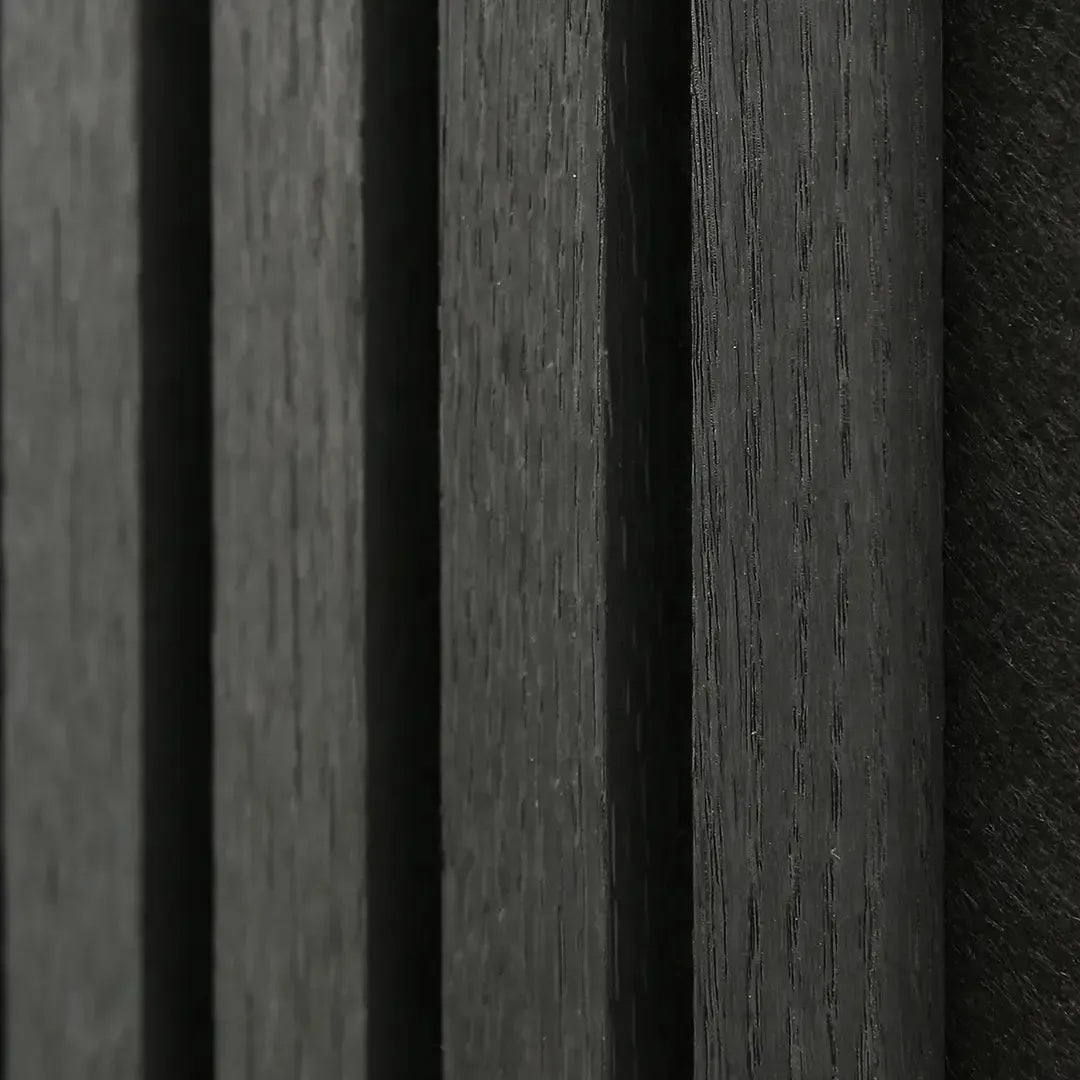
2. Black Oak Acoustic Slat Wall Panel — the dark stairwell pick
Black oak works when the stairwell already leans moody — black railings, dark treads, low natural light. The felt-backed slats absorb the same way as the lighter finishes, but the visual effect is different: black slats on a wall recede rather than draw attention, which is useful in a narrow stairwell where you don't want more visual clutter. Buy for dark or contemporary stair designs, Skip if your entry is already light and bright — it'll read heavy. Check the Black Oak Acoustic Slat Wall Panel.
3. Walnut Acoustic Slat Wall Panel — the premium pick
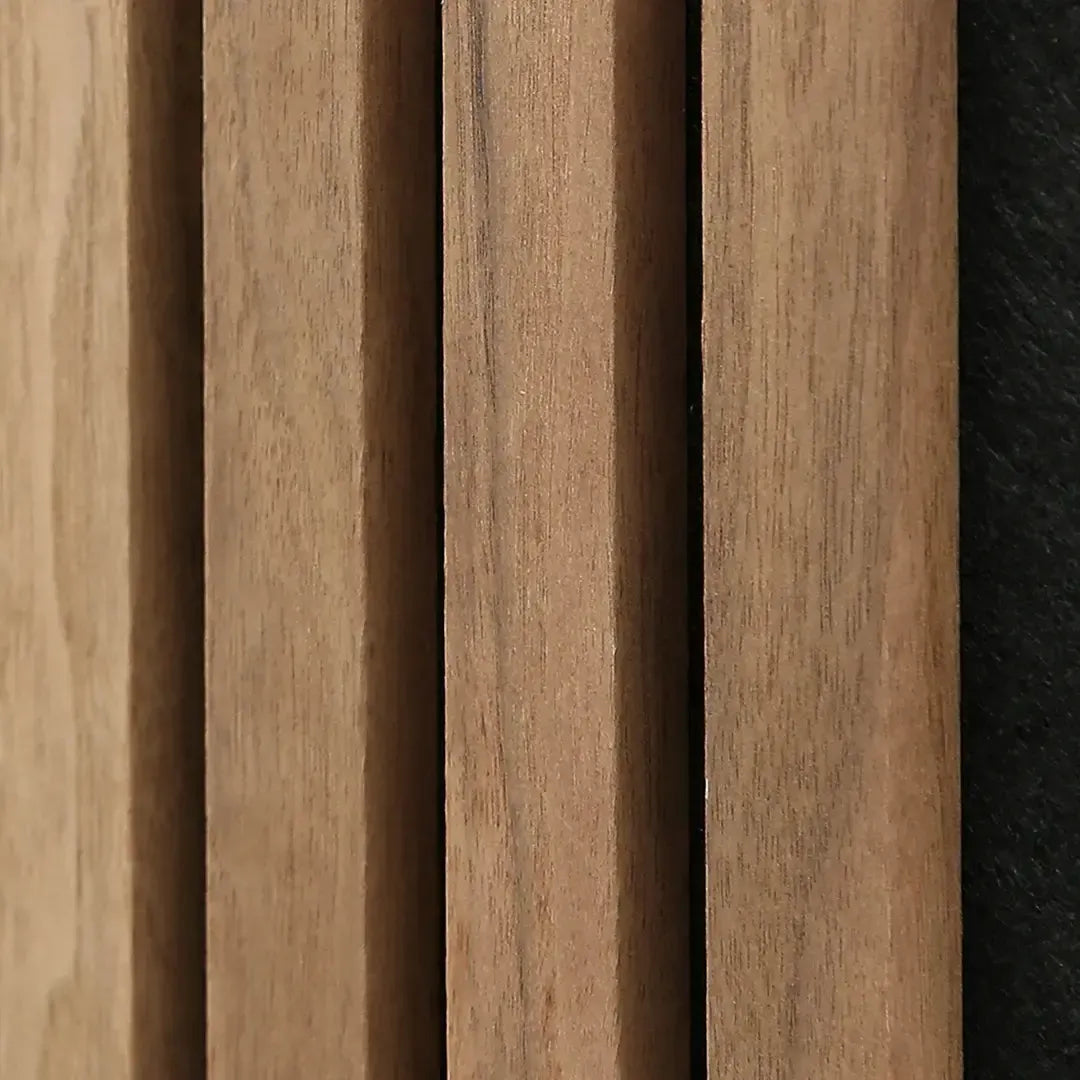
Walnut costs more than oak across most wood panel lines, and it shows in the grain depth and color variation. For a formal entryway or a stairwell that doubles as a first impression for guests, that upgrade is worth it. Acoustically it performs the same as the oak and smoked oak felt-backed versions — the wood species doesn't change the absorption, the felt backing does. Buy if budget allows and the stairwell is a focal point; Consider oak instead if this is a secondary or basement stair. View the Walnut Acoustic Slat Wall Panel.
4. Hexagon Acoustic Panel, Natural Oak — the accent pick
Hexagon panels aren't the main event on a full stairwell wall — they're better suited to a landing or a half-wall where a full slat run would look busy. They carry the same felt-backed construction as the slat line, so they still contribute real absorption, just over a smaller surface area. Consider for a landing accent wall paired with slat panels on the main stair wall; Skip if you're trying to cover a full two-story wall with hexagons alone, since coverage gets expensive fast at that scale.
5. Smoked Oak Acoustic Slat Panel with Gray Felt — the moody middle ground
Smoked oak sits between natural oak and black oak in tone, and it's a common pick for stairwells that connect a light upstairs to a darker downstairs living area. The gray felt backing matches the black oak version, so absorption performance is identical across the smoked, natural, and black oak felt SKUs. Buy if you want a transitional tone that won't clash with either floor's palette.
6. Generic acoustic foam wedge panels — the one to skip
Foam wedges show up in every "reduce echo" search result because they're cheap and easy to mount. In a stairwell they're the wrong tool: foam degrades under UV and foot-traffic dust faster than a wood veneer surface, and the wedge texture reads as a recording studio, not an entry. Skip for any stairwell that guests or family use daily — save foam for isolated rooms with no foot traffic.
Comparison At a Glance
| Panel | Backing | Best For | Verdict |
|---|---|---|---|
| Natural Oak with Gray Felt | Felt | Most stairwells | Buy |
| Black Oak | Felt | Dark, modern stairs | Buy |
| Walnut | Felt | Formal, high-visibility entries | Buy |
| Hexagon Natural Oak | Felt | Landings, accent walls | Consider |
| Smoked Oak with Gray Felt | Felt | Transitional two-tone stairwells | Buy |
| Foam wedge panels | None (open cell) | Isolated non-traffic rooms only | Skip |
Where to Buy
- Order a sample first. Felt-backed panels vary slightly in tone and felt shade batch to batch — a sample against your actual stair wall lighting beats a screen photo every time.
- Buy from the manufacturer, not a reseller marketplace, if you need matching end pieces or trim later. Batch-matched finishes are hard to source secondhand once a run sells out.
- Measure the full run before ordering, not just one flight — stairwells often have two or three distinct wall segments (lower flight, landing, upper flight) that need separate panel counts.
FAQ
What's the best acoustic panel for reducing echo in an open staircase? Felt-backed wood slat panels, like the AKU Woodpanel Natural Oak with Gray Felt line, are the best fit for 2026 because they combine real sound absorption with a finish durable enough for daily foot traffic and visible entry spaces.
Is a felt-backed slat panel better than foam for a stairwell? Yes, for a stairwell specifically — foam absorbs slightly more raw sound energy per square foot in lab conditions, but it doesn't hold up visually or physically in a shared, high-traffic space the way a wood veneer panel does.
How much wall coverage do I need to notice a difference? Most homeowners see a noticeable drop in echo after covering one full wall of the stairwell run, particularly the wall opposite the largest open volume — partial coverage on just the landing usually isn't enough on its own.
Do slat panels work on drywall, or do I need furring strips? Slat panels mount directly to drywall with construction adhesive or a track system in most residential installs; furring strips are only needed if you're going over an uneven or masonry surface.
Does panel color affect acoustic performance? No — natural oak, black oak, smoked oak, and walnut with the same felt backing absorb sound identically; color is a design choice, not an acoustic one.
Can I mix hexagon and slat panels in the same stairwell? Yes, and it's a common combination — slat panels on the main stair wall for coverage, hexagon panels on a landing or half-wall as an accent, both contributing felt-backed absorption.
What's a reasonable budget range for a full stairwell treatment in 2026? Cost scales with wall square footage more than panel choice — check current per-panel pricing on the product pages above and multiply by your measured coverage, since a two-story run needs meaningfully more material than a single flight.
Will these panels fix an echo problem completely? They reduce reverberation significantly but won't eliminate it entirely in a hard-surfaced stairwell — pairing panels with a stair runner or rug on the treads compounds the effect.
One Last Thing
The detail most people miss: install the panels on the wall the sound bounces off of, not the wall closest to where you're standing. In most stairwells that's the long wall opposite the stair rail, not the short wall at the top or bottom landing — get that placement wrong and you'll cover a wall and still hear the same echo.
 Better performance and aesthetic appeal
 In Stock