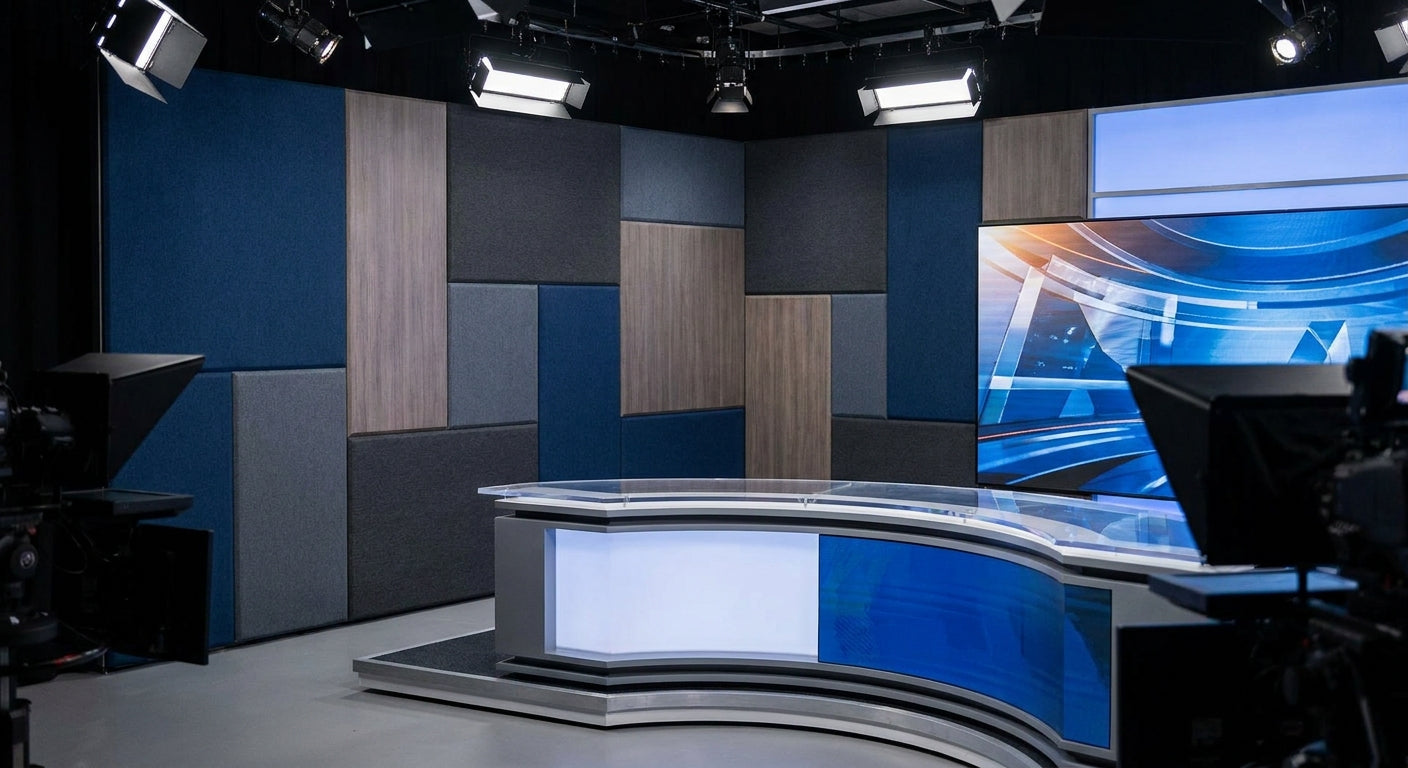
Broadcast studios and news sets need walls that look sharp on camera and control echo without sound-proofing the room into a dead box. This guide breaks down what actually matters when picking acoustic panels broadcast studio news set builders should specify, plus which finishes hold up under studio lighting and daily strikes.
TL;DR
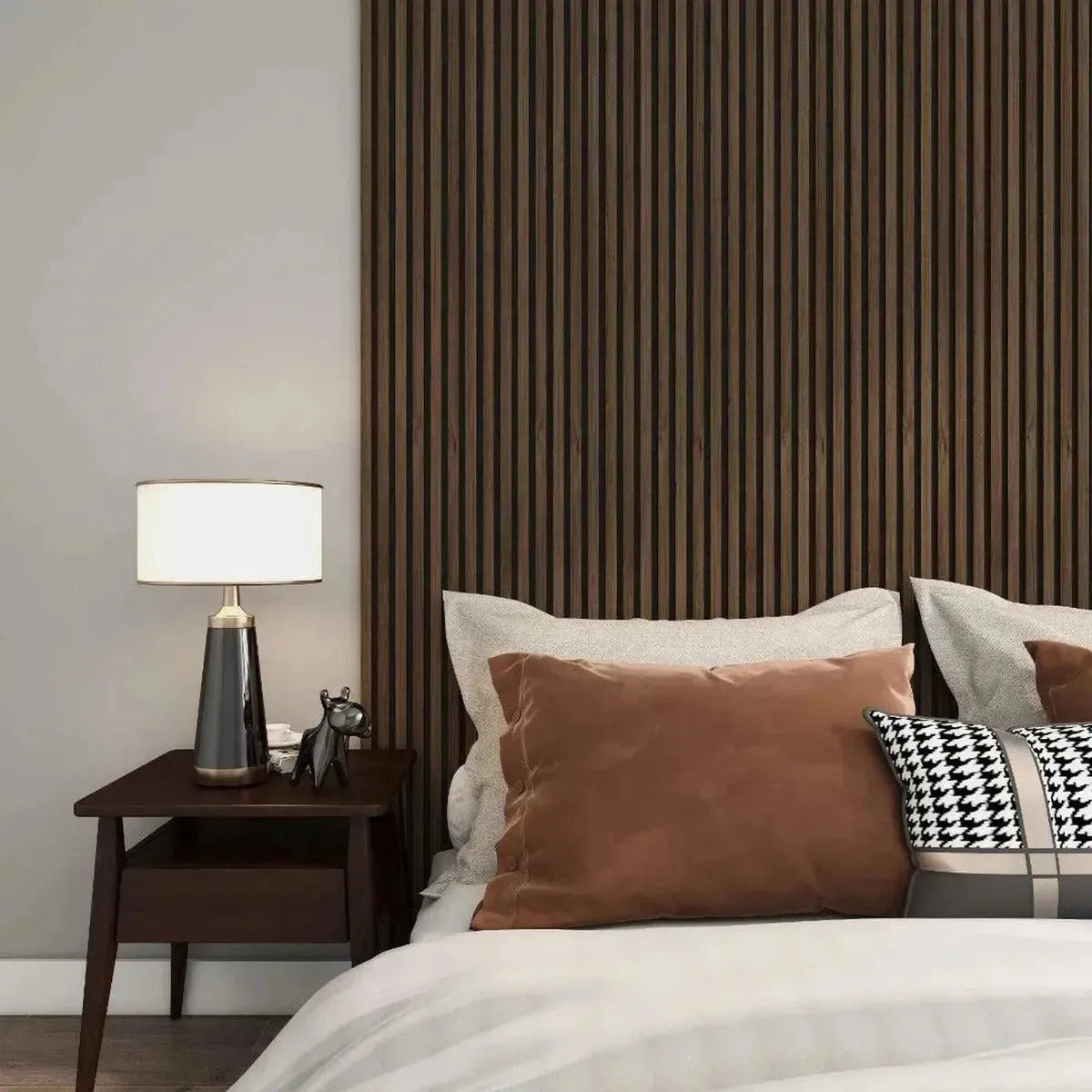
For a broadcast studio or news set in 2026, AKU Woodpanel's Acoustic Slat Wall Panel in Black Oak is the safe pick — real wood veneer over acoustic felt gives you camera contrast and mid-range absorption without flattening the room's natural sound. If you want texture behind an interview chair, the Hexagon Acoustic Panel Black is the wildcard worth testing. Skip printed foam tiles entirely — they read cheap under LED lighting and don't hold acoustic performance over time. Order a sample box before committing to a full wall.
Why this matters
A news set or podcast studio wall does two jobs at once: it has to look intentional on camera and it has to tame slap-back echo from hard floors, glass, and equipment racks. Most acoustic panel guides are written for home theaters or bedrooms, where the only audience is the homeowner. Broadcast walls are judged by a camera lens and a microphone at the same time, which changes what good looks like. A panel that sounds fine in a living room can still throw glare into a 5600K LED panel or read flat and gray on a 4K feed. That's the gap this guide fills for 2026 studio builds.
Who this is for
This is for local TV news directors refreshing an anchor desk backdrop, YouTube and podcast studio owners building a permanent set, corporate video teams outfitting an in-house recording room, and AV integrators speccing walls for a client's broadcast suite. If you're choosing between a plain painted wall and something that actually performs under studio lights and a shotgun mic, keep reading.
What to look for in acoustic panels for a broadcast studio or news set
Real wood veneer, not printed laminate
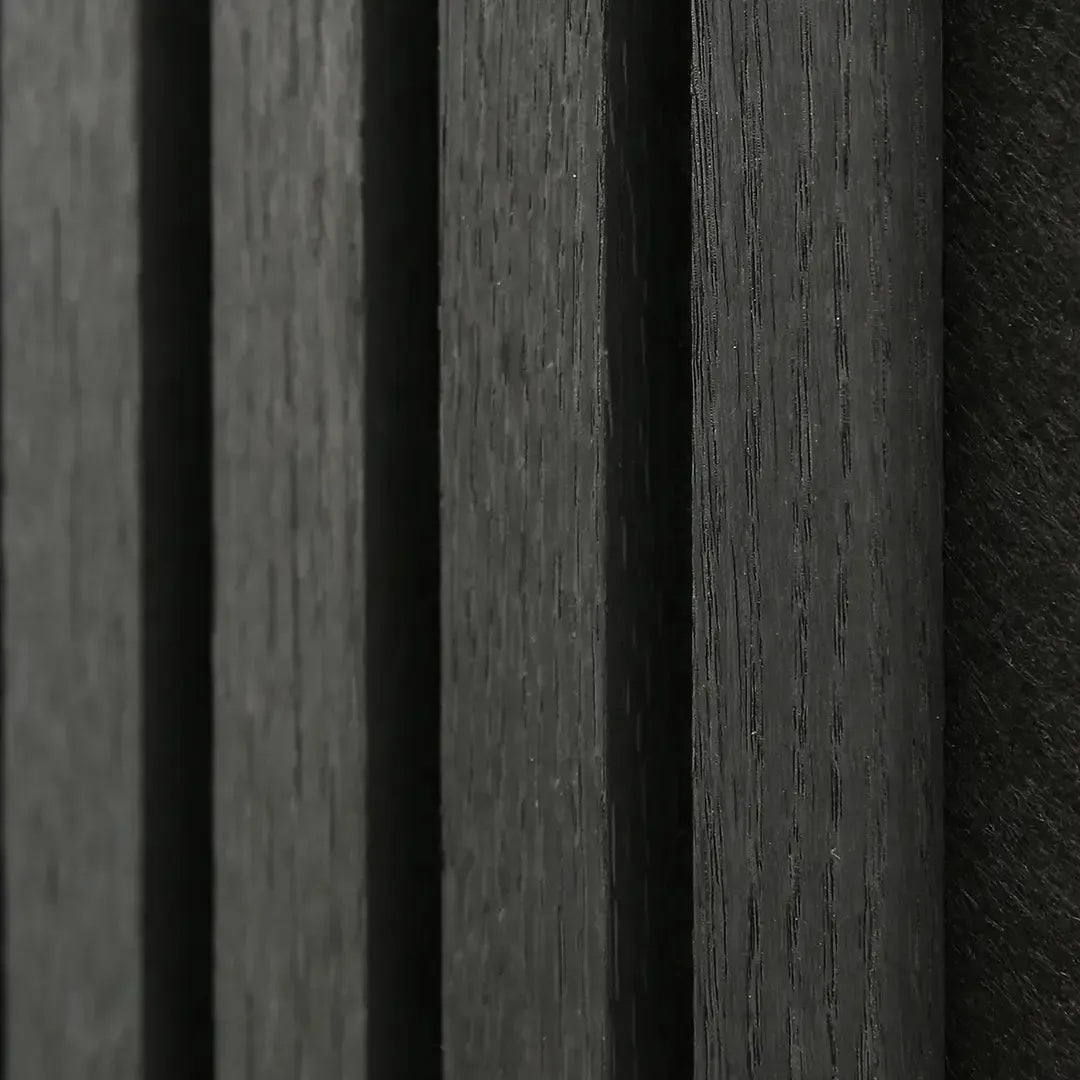
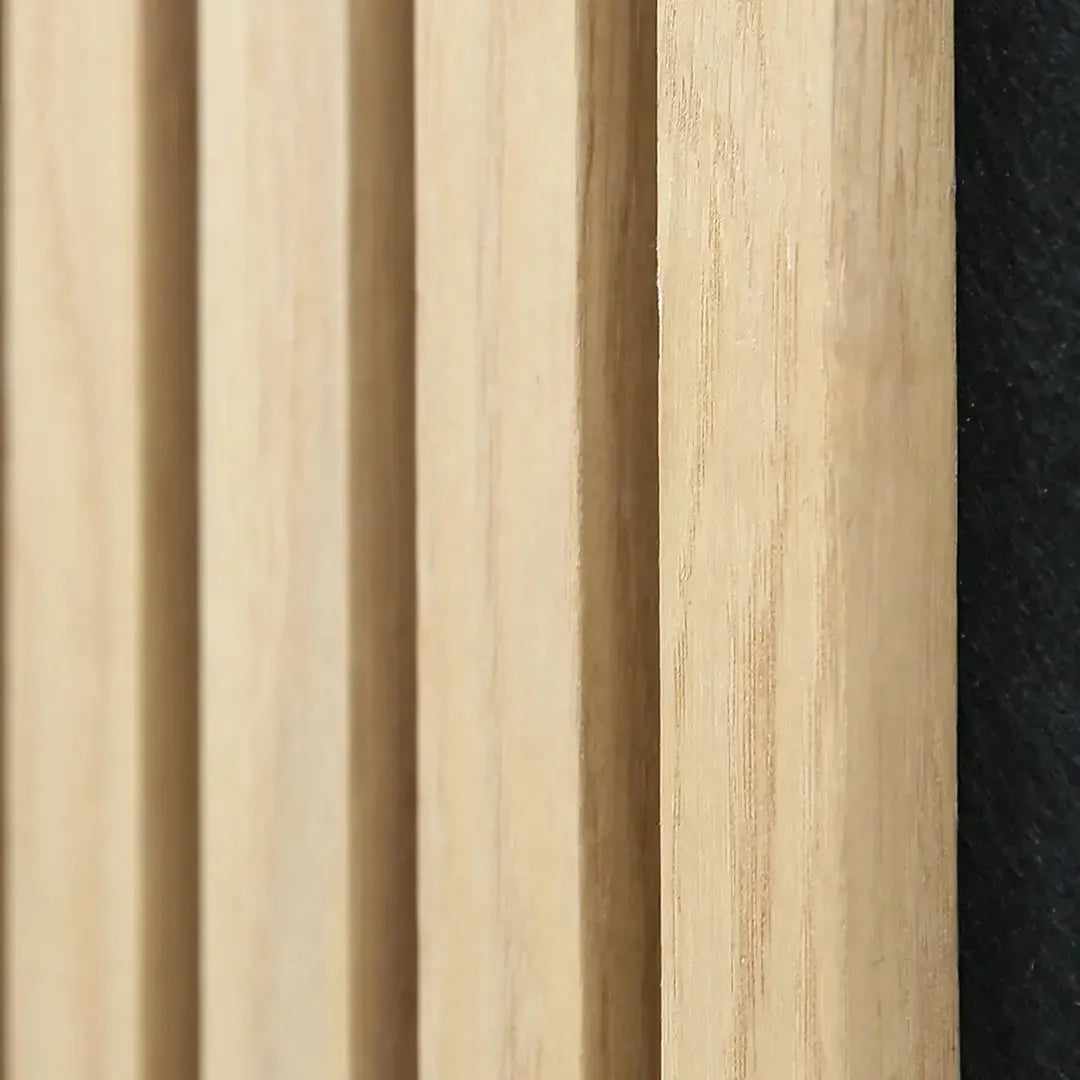
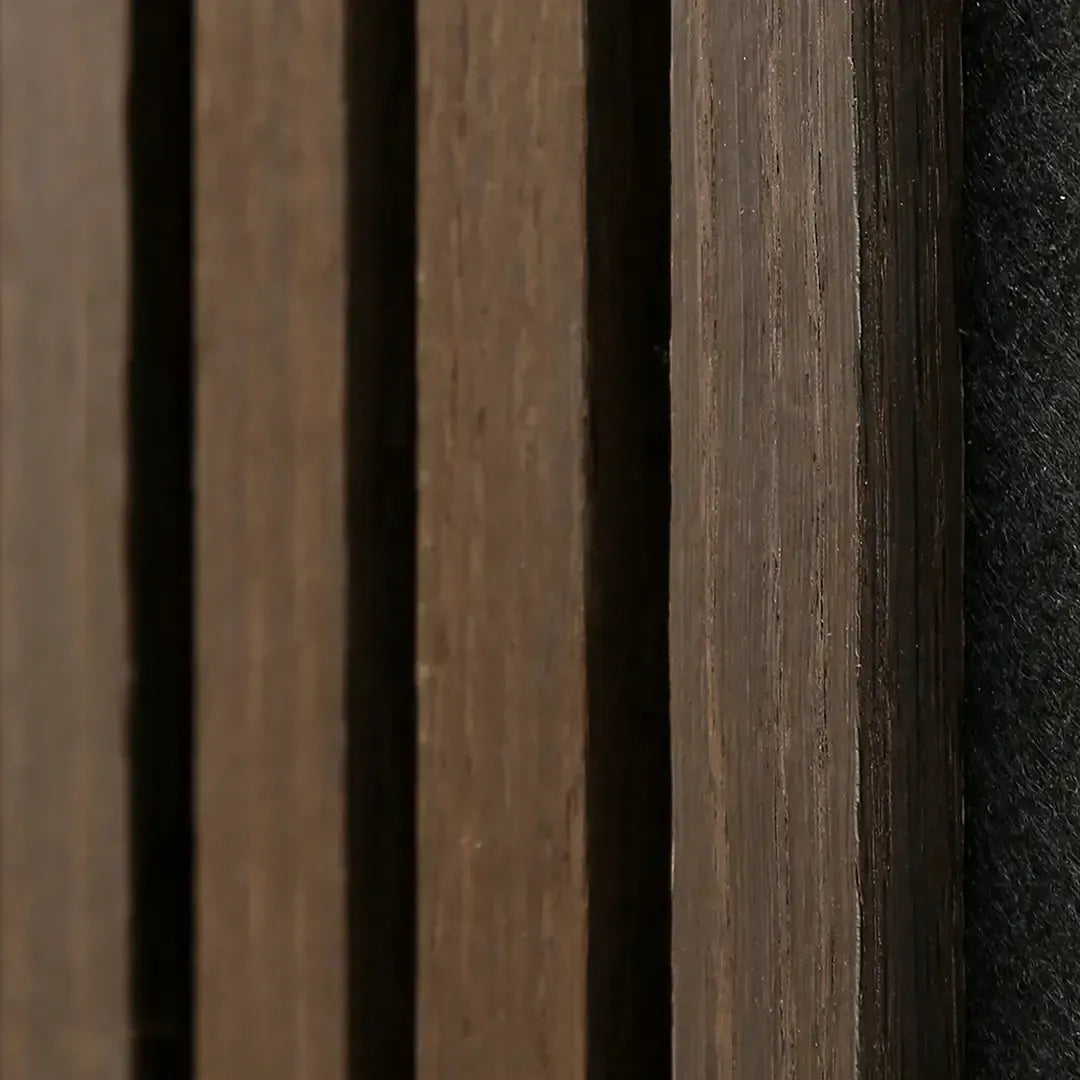
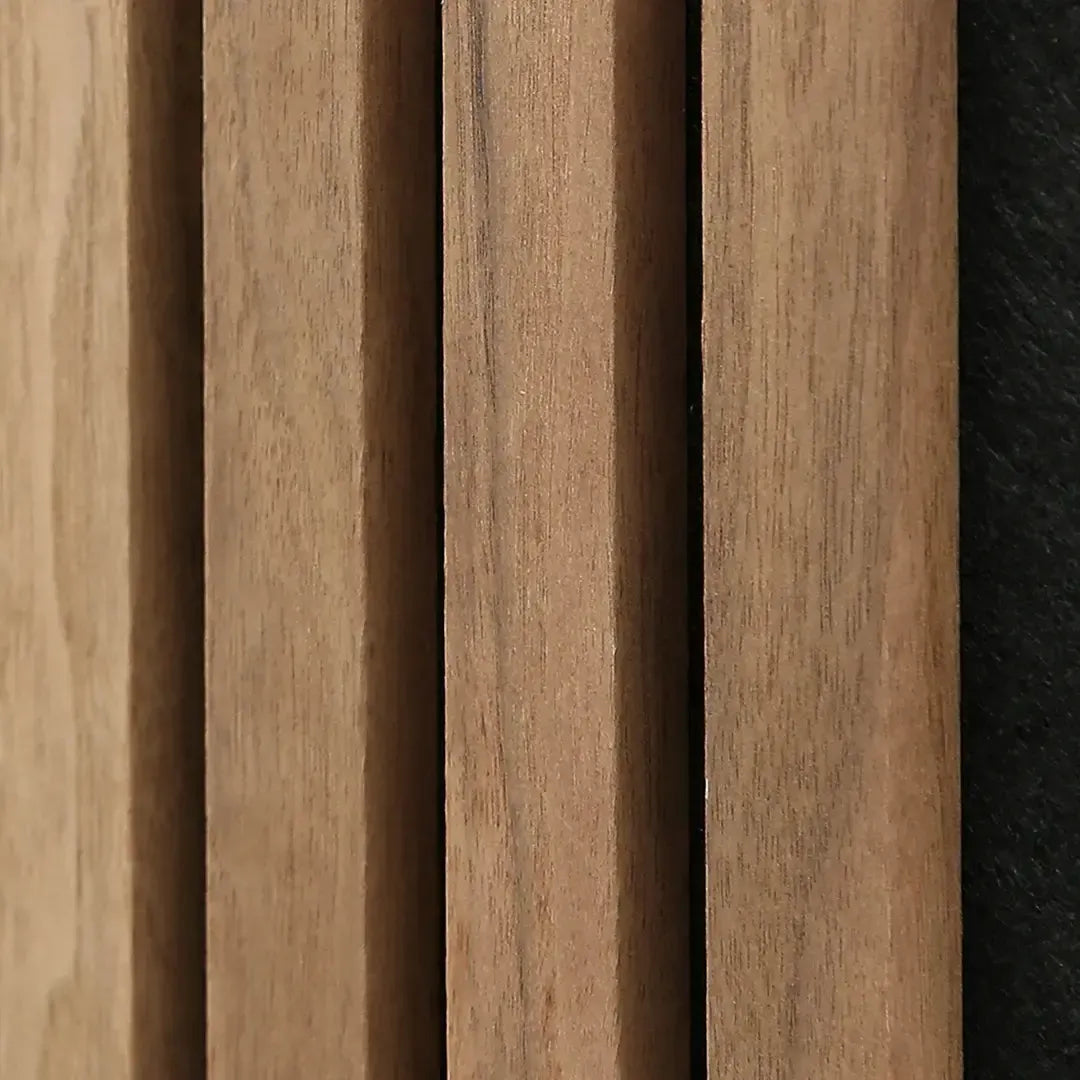
Cameras expose printed wood-grain laminate instantly — the repeat pattern and flat sheen show up under studio lighting in a way viewers don't consciously notice but do register as a cheap set. Real veneer has grain variation that reads as premium on 4K and HD alike, and it won't peel after a year of set changes.
Balanced absorption, not a dead room
A studio wall stripped of all reflection sounds unnatural on mic — hosts sound like they're talking into a pillow. Slat panels with a felt backing absorb mid and high frequencies where voice clarity and hiss live, while leaving enough of the low end intact that the room doesn't feel sonically dead. Full-coverage foam kills too much and creates a flat, lifeless voice track.
Matte finish that won't bounce studio lighting
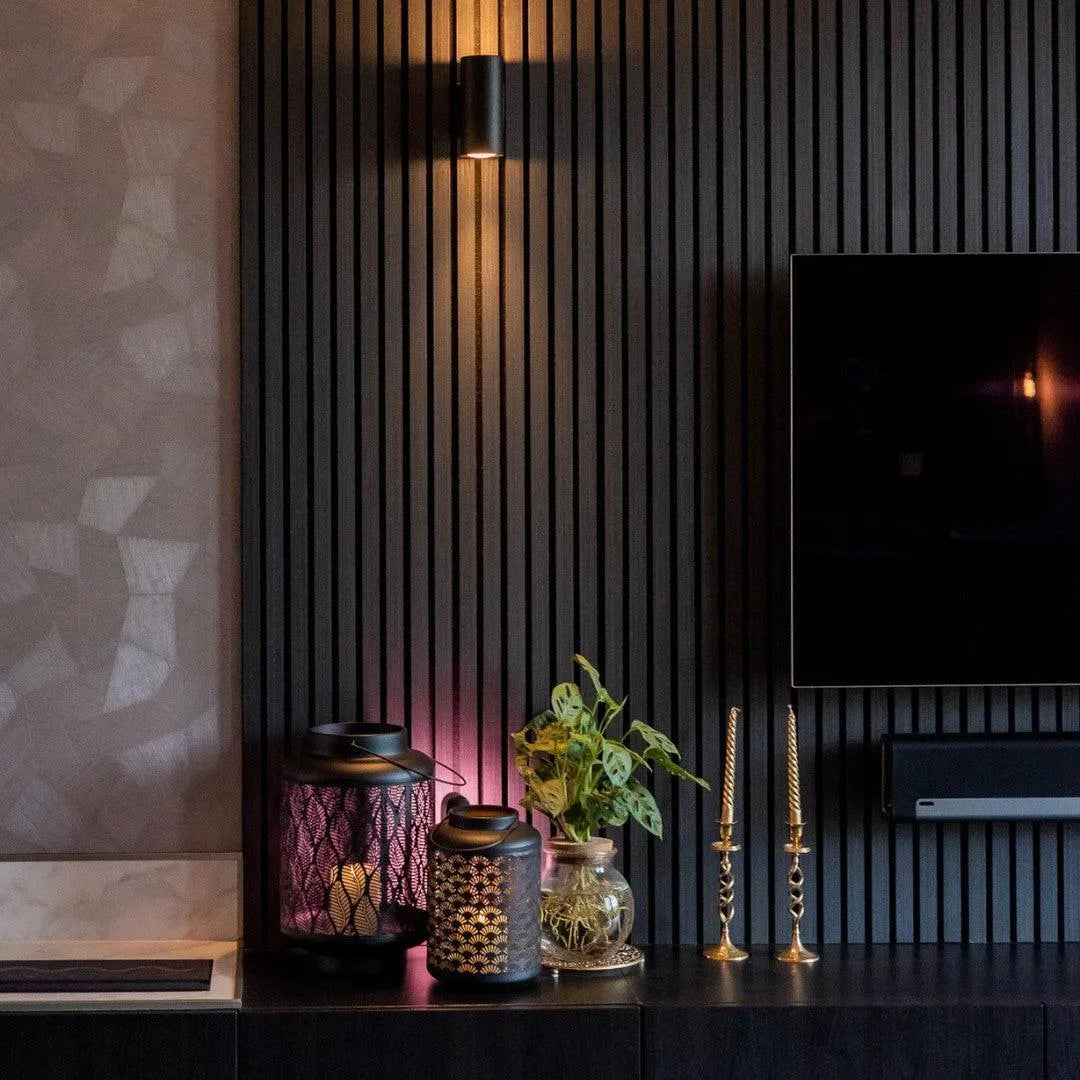
Glossy or lacquered surfaces throw hotspots straight back into the lens, especially with three-point lighting setups common on news sets. A matte wood finish diffuses light instead of reflecting it, which is why matte oak and walnut finishes dominate broadcast-adjacent studio builds in 2026.
Modularity for changing set builds
News sets and podcast studios get refreshed more often than a living room wall. Panels that come in individual slats or tiles let you swap a damaged section, extend the wall for a new camera angle, or reconfigure around new equipment without tearing out the whole install.
Color that supports on-camera contrast
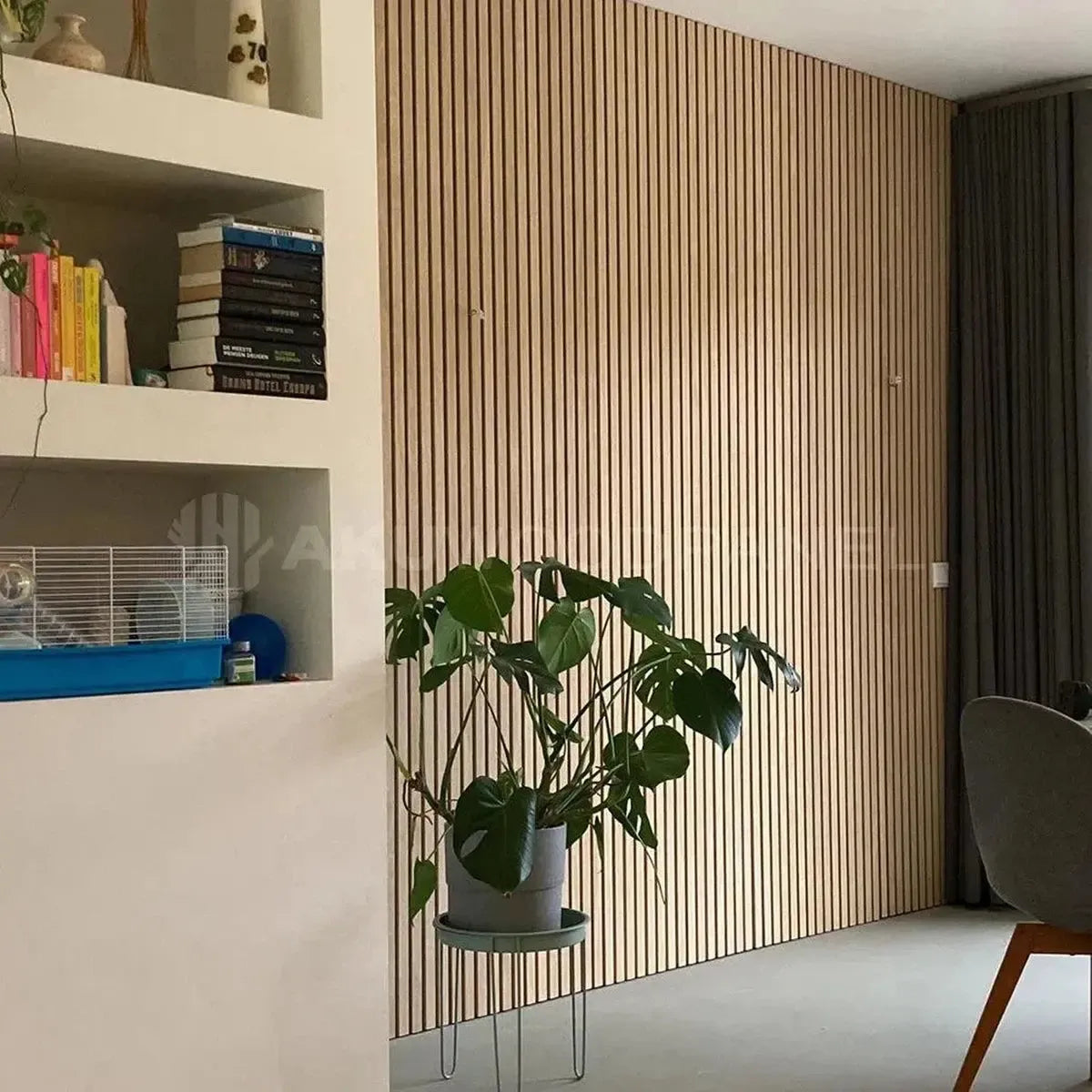
Dark finishes like black oak or smoked oak give anchors and hosts contrast against skin tone and clothing, which matters more on a broadcast wall than in a residential accent wall. Lighter oak tones work for daytime or lifestyle-format sets where a warmer, brighter background fits the brand.
Fast install turnaround
Studio builds run on production deadlines, not renovation timelines. Panel systems that mount with adhesive or a track system install in a day rather than a week, which matters when a set has to be camera-ready before a launch date.
Top picks for broadcast and news set walls
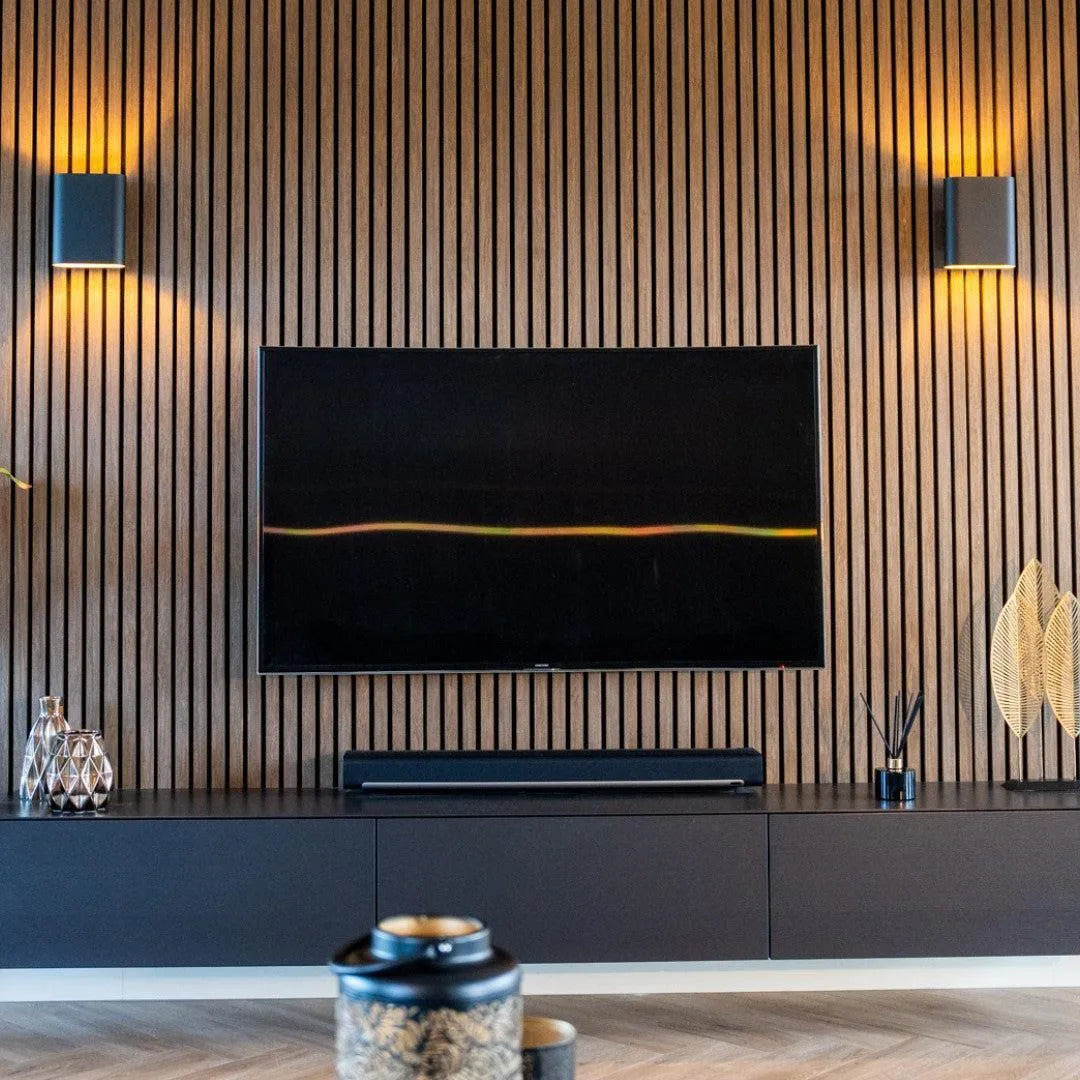
The safe pick — Acoustic Slat Wall Panel in Black Oak Real oak veneer finished black over an acoustic felt backing. It gives anchor desks and interview sets a deep, camera-neutral background that doesn't compete with on-screen graphics or lower-thirds. This is the finish most local news refreshes default to in 2026 because it works under both warm and cool lighting rigs. Verdict: Buy.
The warmer alternative — Acoustic Slat Wall Panel in Smoked Oak with Gray Felt Smoked oak reads warmer than black oak on camera without losing contrast, and the gray felt backing keeps the acoustic performance consistent across the panel run. Good fit for lifestyle or morning-show formats where the set needs to feel approachable rather than corporate. Verdict: Buy.
The wildcard — Hexagon Acoustic Panel in Black Geometric hexagon tiles instead of horizontal slats. Behind an interview chair or as a B-roll backdrop, the pattern adds visual texture that a flat slat wall doesn't, and it still carries the same felt-backed absorption. It reads more content-creator studio than network news desk, so match it to the format. Verdict: Consider.
The low-risk step — Full Sample Box, Slat Wall Panel Before committing to a full wall run, get physical finish samples under your actual studio lighting rig. Color temperature and camera white balance shift how a finish looks in person versus on a spec sheet, and a sample box removes that guesswork before a full order ships. Verdict: Buy.
What to avoid
- Printed foam acoustic tiles — they absorb sound reasonably well but look flat and synthetic on camera, and the pattern repeat is visible on wide shots.
- High-gloss lacquered wood panels — they look striking in a showroom but throw specular hotspots into studio lighting rigs, creating distracting glare on camera.
- All-white or very light feature walls behind the main talent position — bright backgrounds blow out easily under three-point lighting and compete with lower-third graphics for viewer attention.
Verdict comparison
| Pick | Best for | Finish tone | Verdict |
|---|---|---|---|
| Acoustic Slat Wall Panel, Black Oak | Anchor desks, corporate sets | Deep black, matte | Buy |
| Acoustic Slat Wall Panel, Smoked Oak with Gray Felt | Lifestyle, morning shows | Warm smoked, matte | Buy |
| Hexagon Acoustic Panel, Black | Interview backdrops, creator studios | Black, textured | Consider |
| Full Sample Box | Pre-purchase testing | N/A | Buy |
FAQ
What's the best acoustic panel finish for a news set? Black oak or smoked oak slat panels with a felt backing are the most common choice for 2026 broadcast builds because they give camera contrast without a glossy surface that bounces studio lighting.
Do acoustic wood panels actually reduce echo on a set? Yes — the felt backing behind the wood veneer absorbs mid and high frequencies where voice clarity lives, cutting slap-back echo from hard floors and glass without deadening the room entirely.
Is a fully absorptive wall better than a partially absorptive one for broadcast? No. A wall that absorbs everything makes voices sound flat and unnatural on mic; a balanced slat-and-felt system leaves enough natural reflection for the room to sound alive.
How much wall coverage does a typical news set need? Coverage depends on the room, but most studio builds treat the section directly behind the anchor or host position first, since that's what both camera and mic pick up most directly.
Can I mix slat and hexagon panels on the same set wall? Yes — many 2026 studio builds pair a slat wall behind the main talking position with a hexagon or textured section as a secondary backdrop for cutaway shots.
Should I order samples before a full studio wall order? Yes — lighting rigs and camera white balance shift how a finish reads in person, so testing a sample box under your actual set lights before ordering avoids a costly mismatch.
Are printed wood-grain panels good enough for a broadcast wall? No — printed laminate shows repeat patterns and flat sheen under HD and 4K cameras, which real wood veneer avoids.
What color works best for anchor contrast on camera? Dark finishes like black oak give the strongest contrast against skin tone and wardrobe, which is why they dominate news desk backgrounds in 2026.
One last thing
Most studio builds over-invest in absorption and under-invest in how the wall reads under lighting — a wall that measures well acoustically but glares under a key light will still need a re-shoot. Test the finish under your actual rig before the wall goes up, not after.
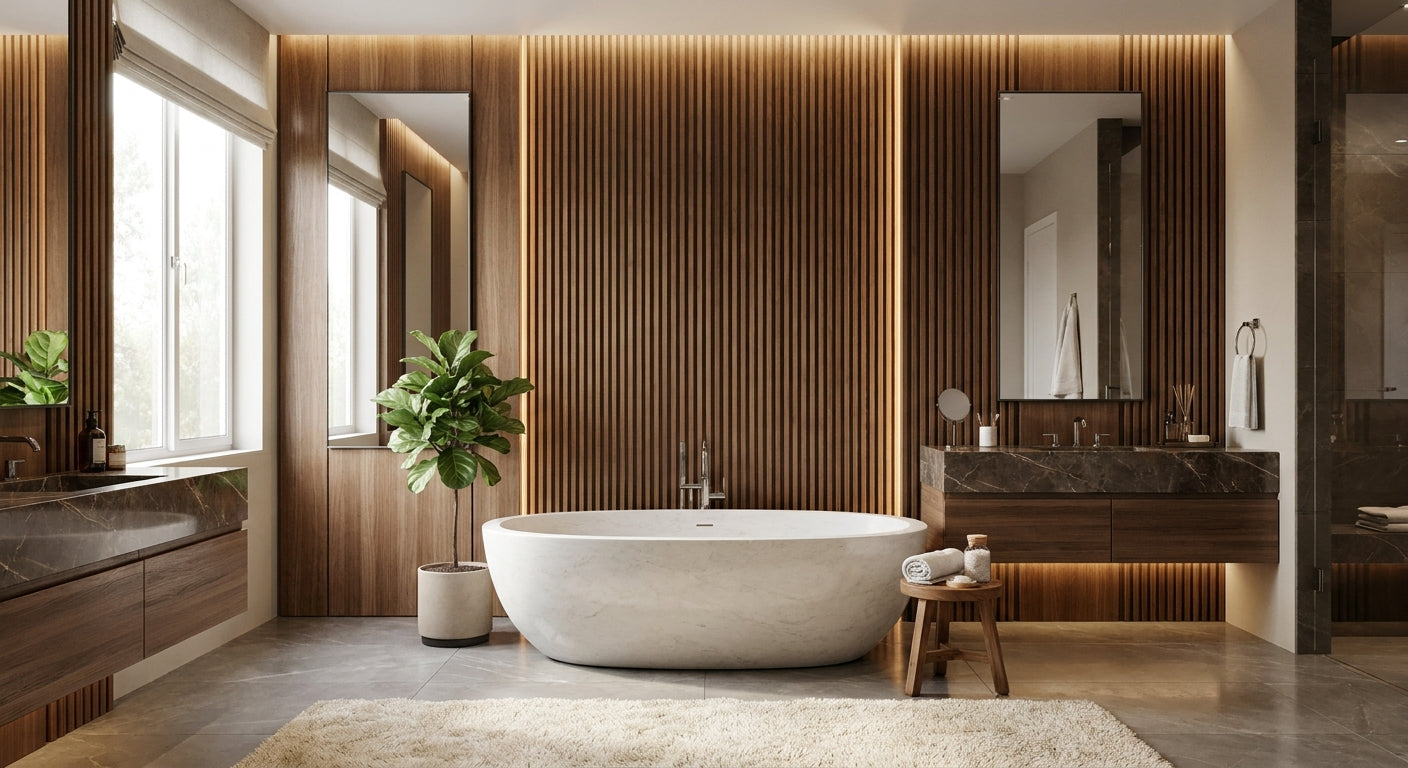
 Better performance and aesthetic appeal
 In Stock