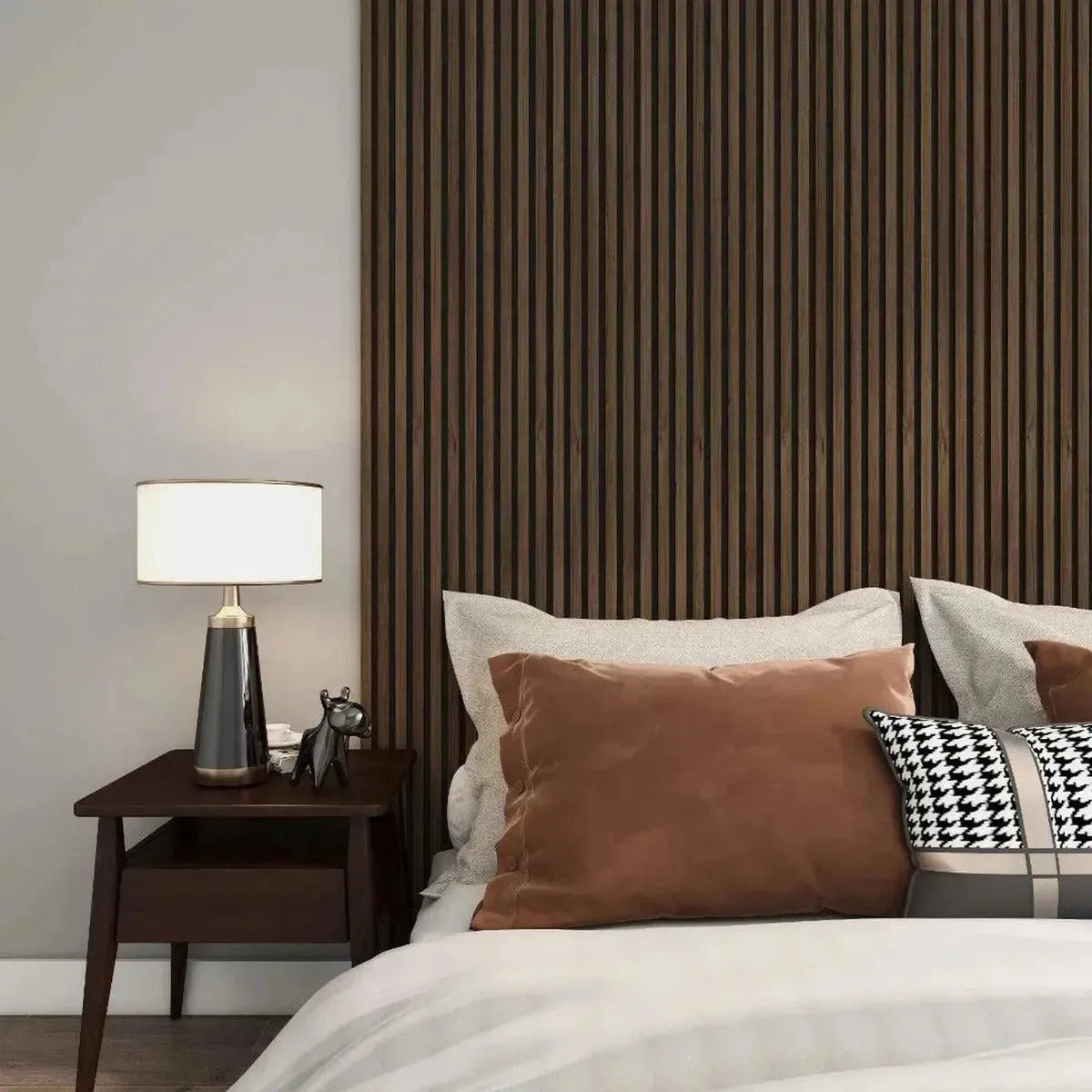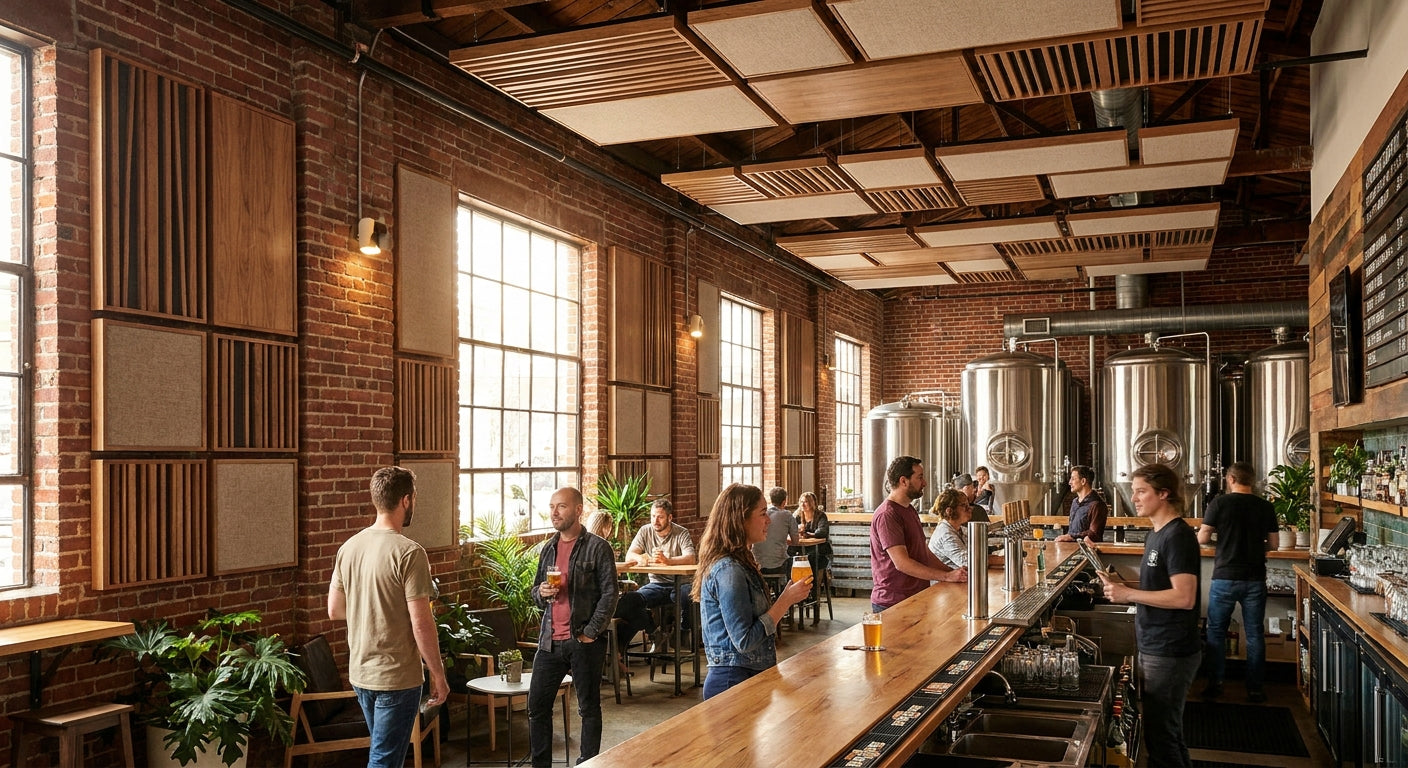
Breweries and taprooms are loud by design — concrete floors, steel fermenters, high ceilings, and a room full of people shouting over pours. Acoustic panels for brewery spaces fix the echo without covering up the industrial character customers actually come for.
- Acoustic panels for brewery taprooms need felt-backed slat panels, not decorative-only wood, to cut echo off concrete and steel.
- Black Oak Acoustic Slat Wall Panel at $177.95 is the buy for dark industrial taprooms with heavy foot traffic.
- Smoked Oak with Gray Felt at $169.95 adds a second absorption layer for rooms above 75 decibels during pours.
- Hexagon panels rated at NRC 0.75 work as accent walls behind the bar, not full-room treatment.
- Skip pure veneer panels with no felt backing — they look right but do almost nothing for echo in 2026-built taprooms.
Why this matters
A brewery taproom with bare drywall and a polished concrete slab reflects sound instead of absorbing it, and every pour, pour spout, and conversation stacks on top of the last one until nobody can hear the bartender. Restaurants and bars solved this years ago with acoustic wood panels on back walls and booths — Akustiq USA sells the same slat and hexagon panel systems taproom owners are now specifying for new build-outs and 2026 renovations. The fix isn't foam. Foam doesn't survive a commercial kitchen environment or match a taproom's finish, and it reads cheap next to reclaimed wood bar tops and steel tanks.
Who this is for
This guide is for brewery owners, taproom operators, and contractors finishing out a tasting room, bar, or brewpub who need acoustic wood panels that hold up to condensation, high foot traffic, and constant noise — not homeowners doing a living room accent wall.
What to look for in acoustic panels for brewery interiors
Sound absorption that actually matters at bar noise levels
A taproom at full capacity runs well above normal conversation volume, so a panel needs a felt or acoustic backing layer, not just wood grain on drywall. Hexagon acoustic panels rated at NRC 0.75 absorb three-quarters of the sound energy that hits them — that's the number to check before buying anything marketed as "acoustic" for a brewery.
Finish that survives spills, condensation, and cleaning
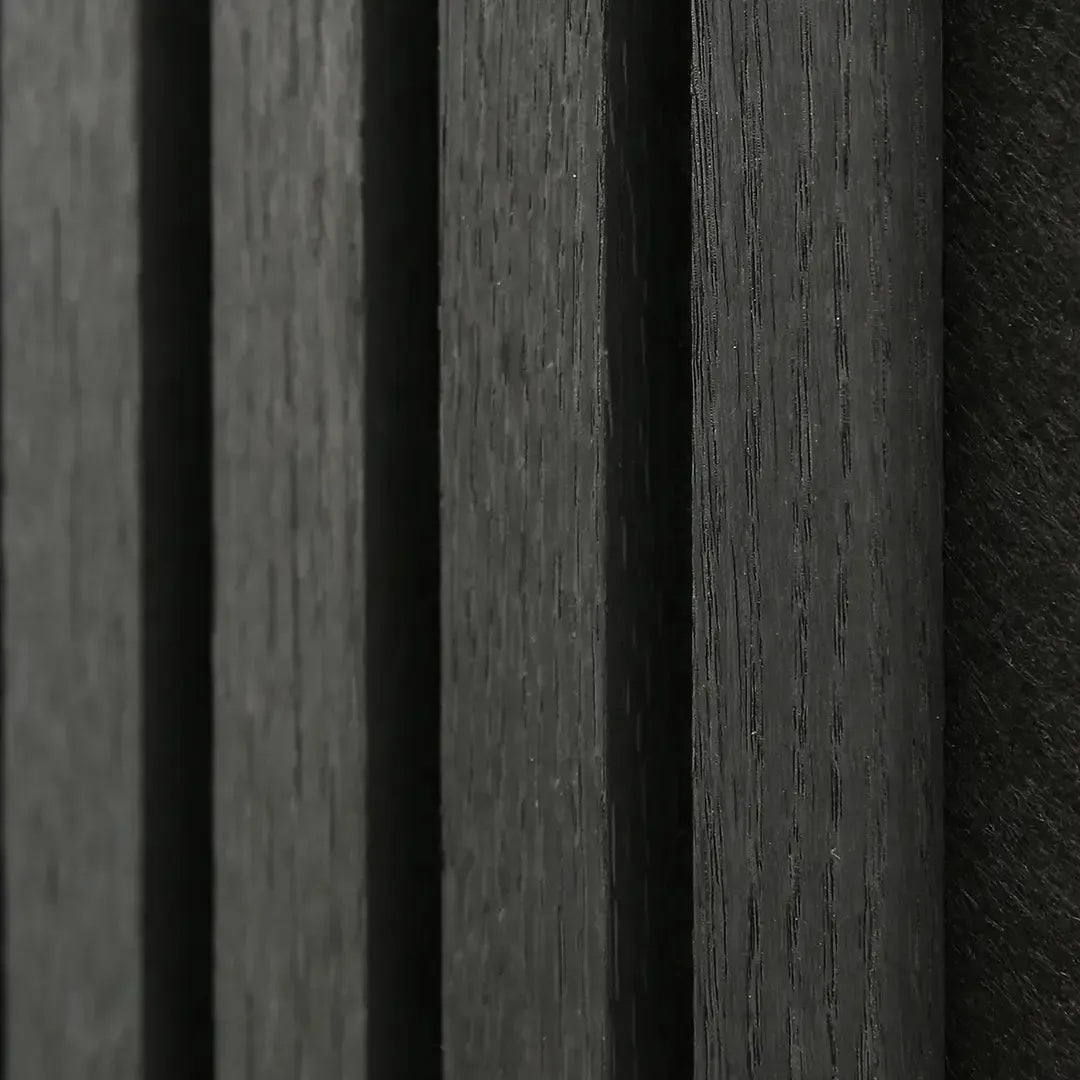
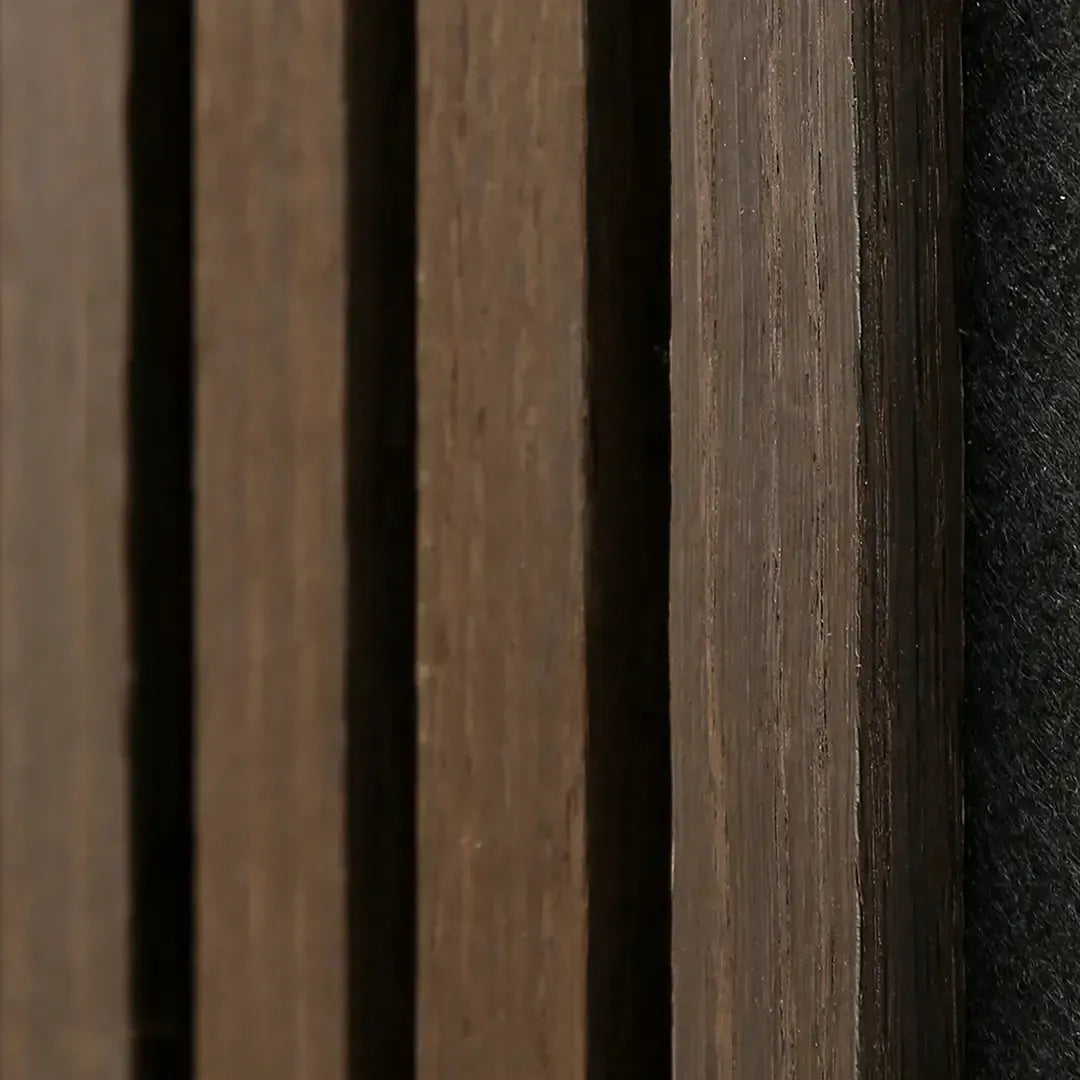
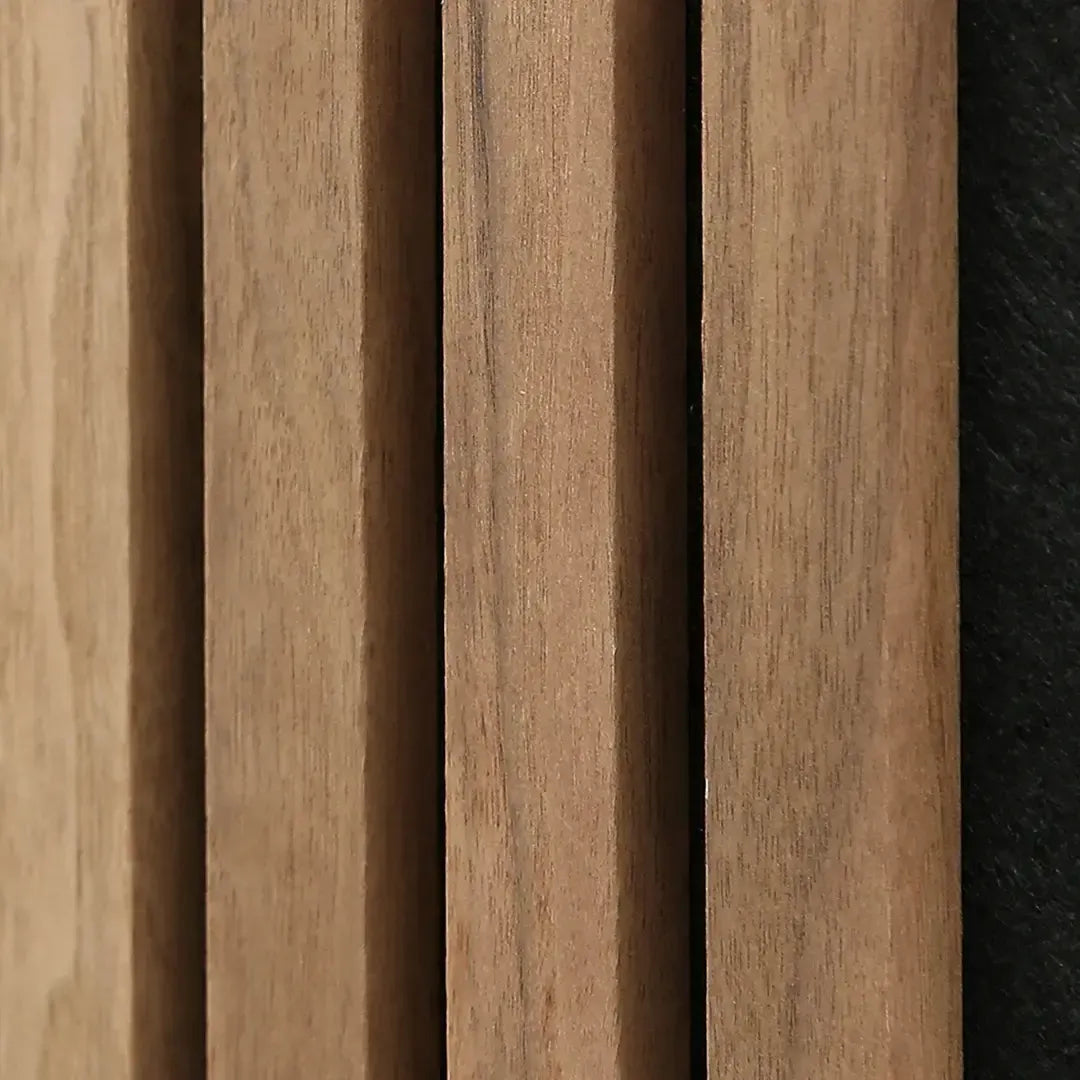
Fermentation tanks throw off heat and humidity, and taprooms get wiped down constantly. A premium 3-sided wood veneer finish resists the wear that a thin laminate can't, which matters more in a brewery than in a bedroom feature wall.
Durability under daily foot traffic and bar-height contact
Bar walls and back-of-bar panels take contact from stools, trays, and staff moving fast during a rush. Panels built for commercial bar fit-outs need to hold their edges and finish through years of that contact, not just look good on install day.
Fire and code compliance for a licensed hospitality space
A taproom is a commercial hospitality space subject to local fire code, and panel choice needs to account for that before installation, not after an inspection flags it.
Aesthetic fit with an industrial-craft brand
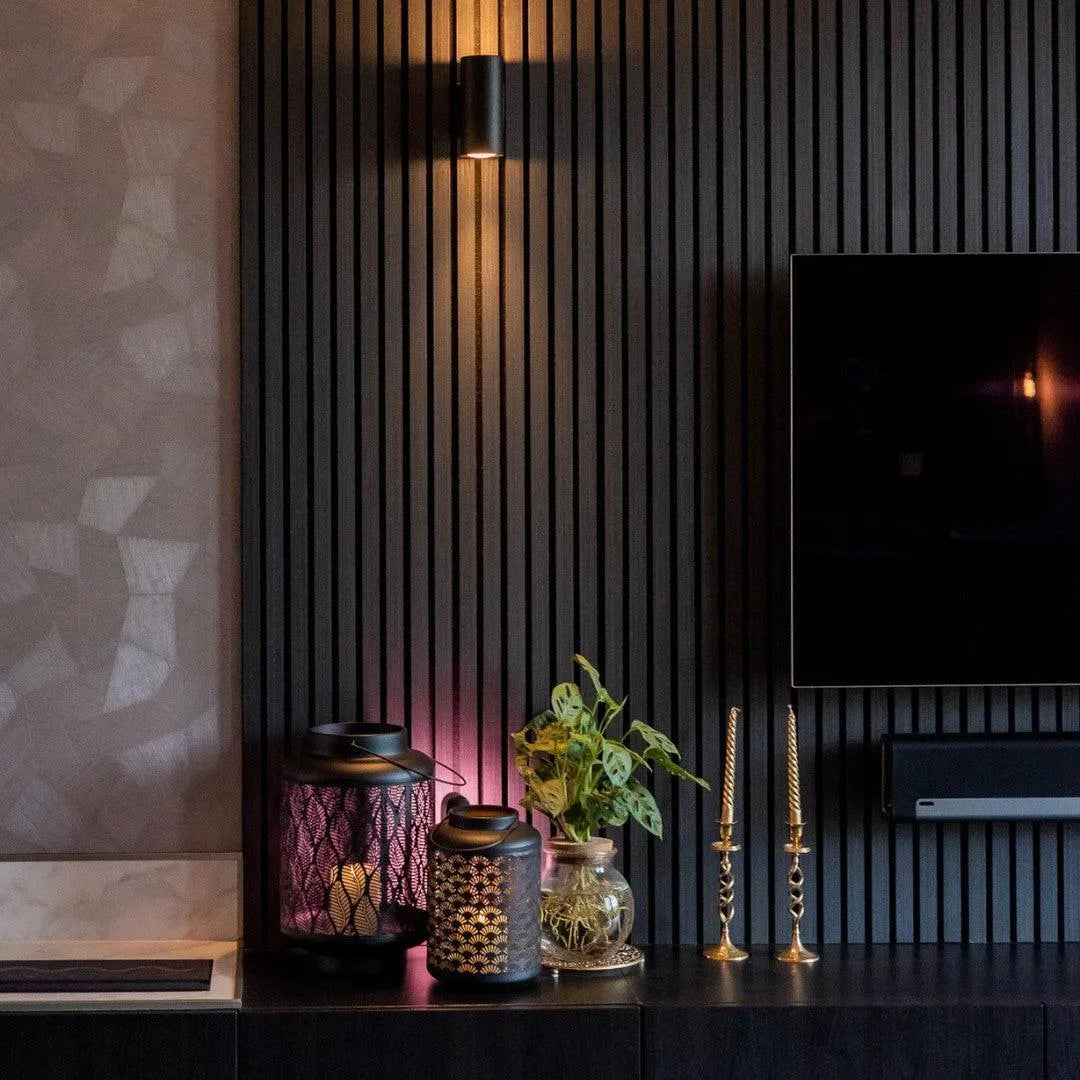
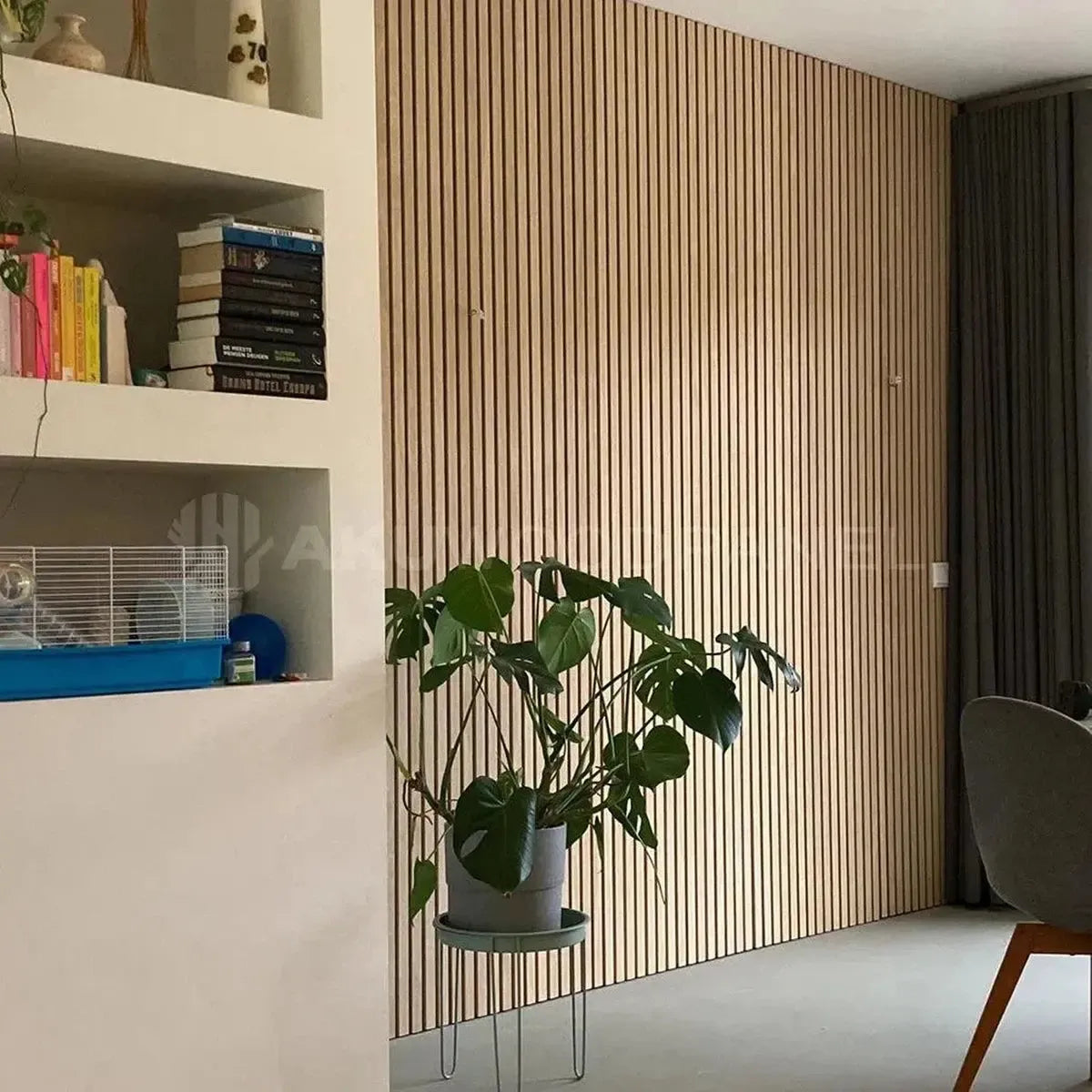
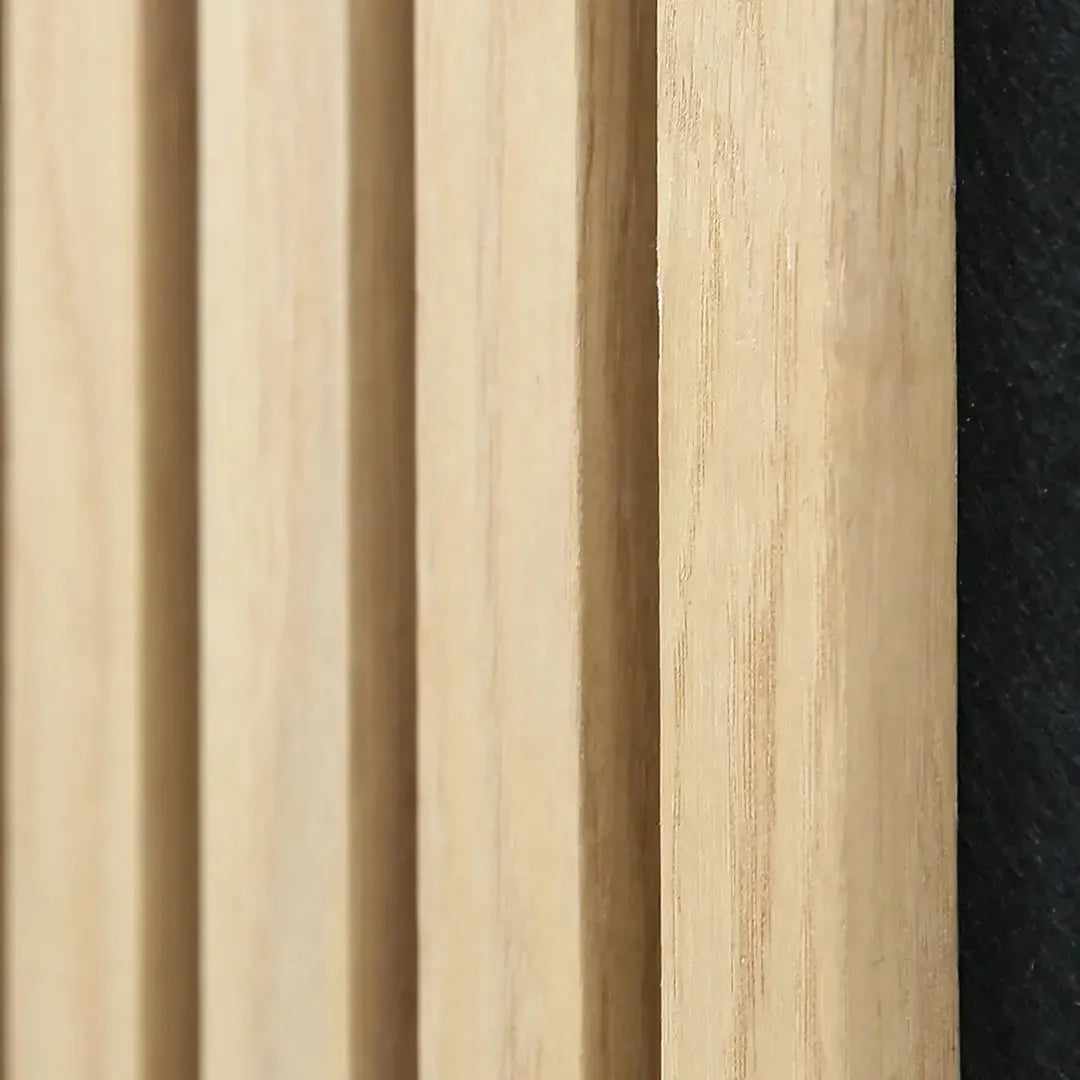
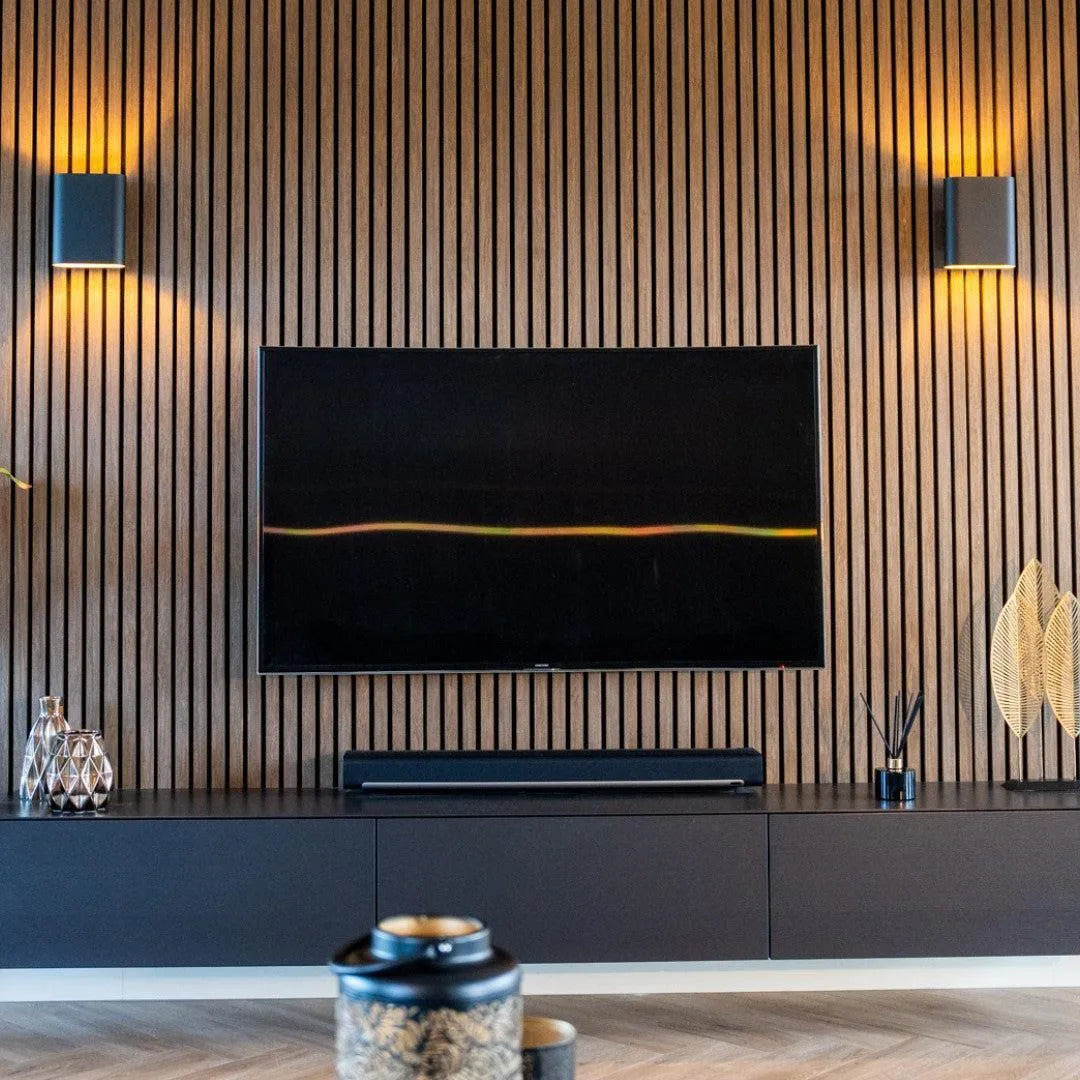
Most breweries lean into exposed steel, reclaimed wood, and dark tones — a panel in natural oak can look out of place next to black tanks and concrete, while black oak or smoked oak tones read as intentional.
Installation speed for a build-out on a deadline
Taproom openings run on tight timelines tied to permits and brewing schedules. Panels that click together without specialty tools save days on a build-out compared to custom millwork.


Top picks for brewery and taproom walls
The industrial-dark pick: Acoustic Slat Wall Panel in Black Oak. Priced at $177.95, it's the panel most taprooms end up choosing because it matches black steel tanks and dark bar fronts without looking like an afterthought. It's built on the same premium 3-sided wood veneer used across the acoustic slat line, so the grain reads as real wood, not print. Verdict: Buy for main taproom walls and back-of-bar cladding.
The loud-taproom pick: Acoustic Slat Wall Panel in Smoked Oak with Gray Felt. At $169.95, this one carries a gray felt layer behind the smoked oak veneer, giving it a second absorption surface for rooms where the crowd noise runs loudest — right behind the pour station or along a shared wall with a brewhouse. Verdict: Buy for high-noise zones near the bar.
The tasting-room accent pick: Hexagon Acoustic Panel in Walnut with Gray Felt. Rated at NRC 0.75 and priced at $165.95 for a 4-panel box, this is built for smaller feature areas — a private tasting nook, a hostess stand, a wall behind a barrel display — rather than a full taproom wall. Verdict: Consider as a supplemental accent, not primary treatment.
The premium warm pick: Acoustic Slat Wall Panel in Walnut. At $182.95, walnut's deeper tone works in taprooms going for a warmer craft-cocktail feel rather than straight industrial. It's the highest-priced slat option in the lineup, so it earns a place in front-of-house areas customers see first. Verdict: Consider for tasting rooms and private event spaces.
What to avoid
- Decorative-only veneer with no felt or acoustic backing — it looks the part on a spec sheet but does close to nothing for echo control once a taproom fills up on a Friday night in 2026.
- Panels sourced for residential bedrooms — many wood panel lines are built for low-traffic rooms and won't hold up to bar-height contact, spills, and daily cleaning in a commercial space.
- Full-room hexagon coverage as a primary fix — hexagon panels at NRC 0.75 work well as accents but weren't built to treat an entire high-ceiling taproom on their own; pair them with slat panels for the bulk of wall area.
Verdict comparison table
| Panel | Price | Best use in a taproom | Verdict |
|---|---|---|---|
| Black Oak Acoustic Slat Wall Panel | $177.95 | Main taproom walls, dark aesthetic | Buy |
| Smoked Oak with Gray Felt Slat Panel | $169.95 | High-noise zones near the bar | Buy |
| Walnut Hexagon Acoustic Panel (Gray Felt) | $165.95 | Accent wall, tasting nook | Consider |
| Walnut Acoustic Slat Wall Panel | $182.95 | Front-of-house, warm tone | Consider |
FAQ
What are the best acoustic panels for brewery taprooms in 2026?
Felt-backed acoustic slat wall panels in dark finishes like black oak or smoked oak are the best acoustic panels for brewery taprooms in 2026 because they absorb sound at bar noise levels and hold up to commercial traffic. Hexagon panels rated NRC 0.75 work well as accents but aren't built for full-room coverage.
Do acoustic wood panels actually reduce noise in a taproom?
Yes, panels with a felt or acoustic backing layer absorb sound energy instead of reflecting it off concrete and steel surfaces common in breweries. Panels without a backing layer are largely decorative and won't meaningfully cut echo.
How much do acoustic panels for a brewery cost?
Individual acoustic slat wall panels run from $169.95 to $182.95 depending on finish, and hexagon accent panels run around $165.95 per 4-panel box. Total project cost depends on square footage covered.
Is wood veneer durable enough for a commercial bar wall?
Premium 3-sided wood veneer panels are built to hold finish and edge quality through daily contact and cleaning better than thin laminate options. They're a common choice for commercial bar fit-outs where walls take regular contact from stools and trays.
What NRC rating should brewery acoustic panels have?
Look for panels rated around NRC 0.75, which absorbs roughly three-quarters of the sound energy hitting the surface. That's the rating found on hexagon acoustic panels in the walnut and oak finishes.
Should a taproom use slat panels or hexagon panels?
Slat panels with felt backing are the primary treatment for full taproom walls because they cover more area and handle noise at scale. Hexagon panels work best as accent treatment on smaller feature walls behind a bar or tasting station.
Can acoustic panels handle the humidity in a brewery?
Panels finished with premium wood veneer are built to resist wear from condensation and cleaning better than raw MDF or unfinished wood. Placement away from direct tank runoff or steam still matters for longevity.
One last thing
The panels that look best in brewery photos on social media — bright natural oak, no felt backing — are usually the ones doing the least for the actual noise problem; the smoked oak and black oak felt-backed panels get chosen far less for photos and far more for the room actually going quiet during a Saturday rush in 2026.
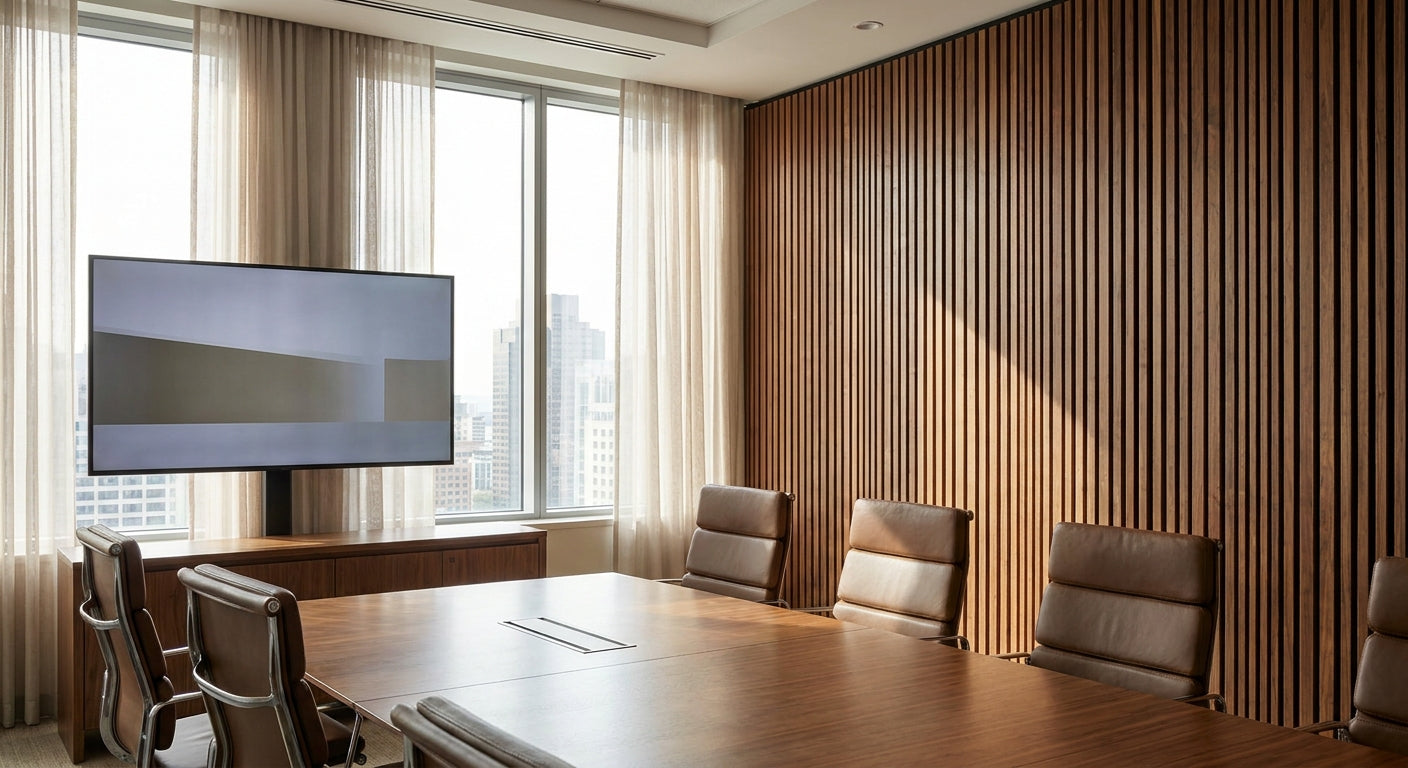
 Better performance and aesthetic appeal
 In Stock