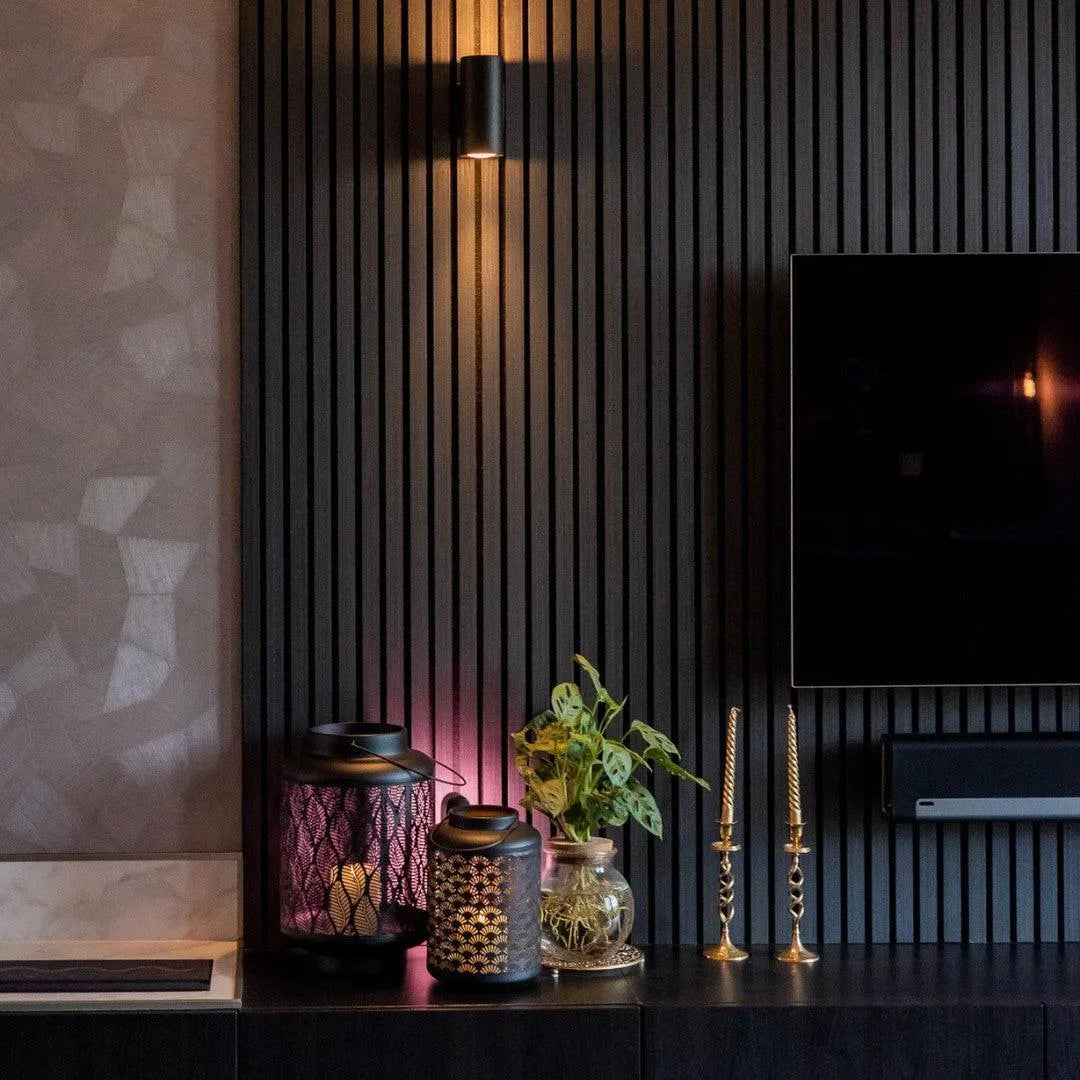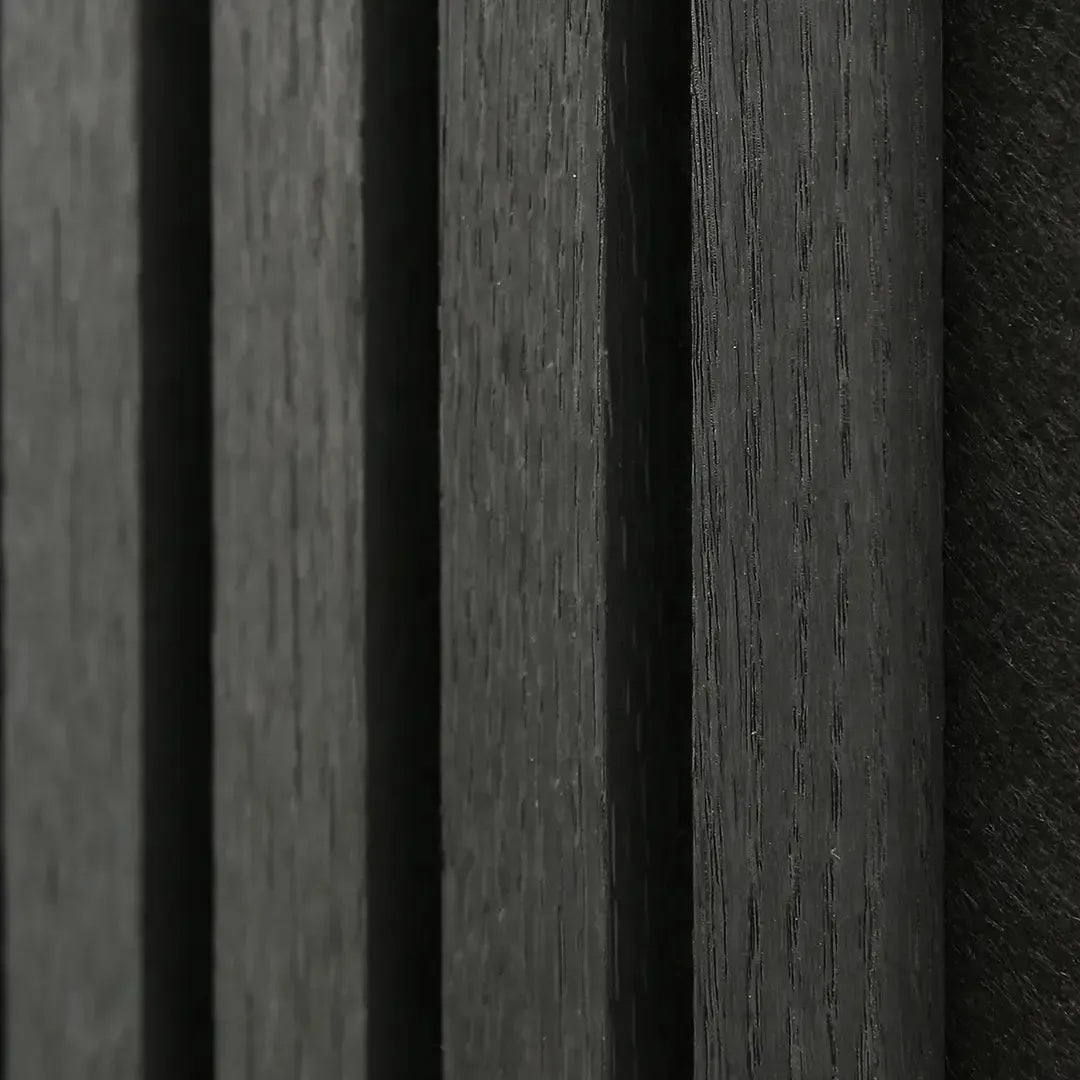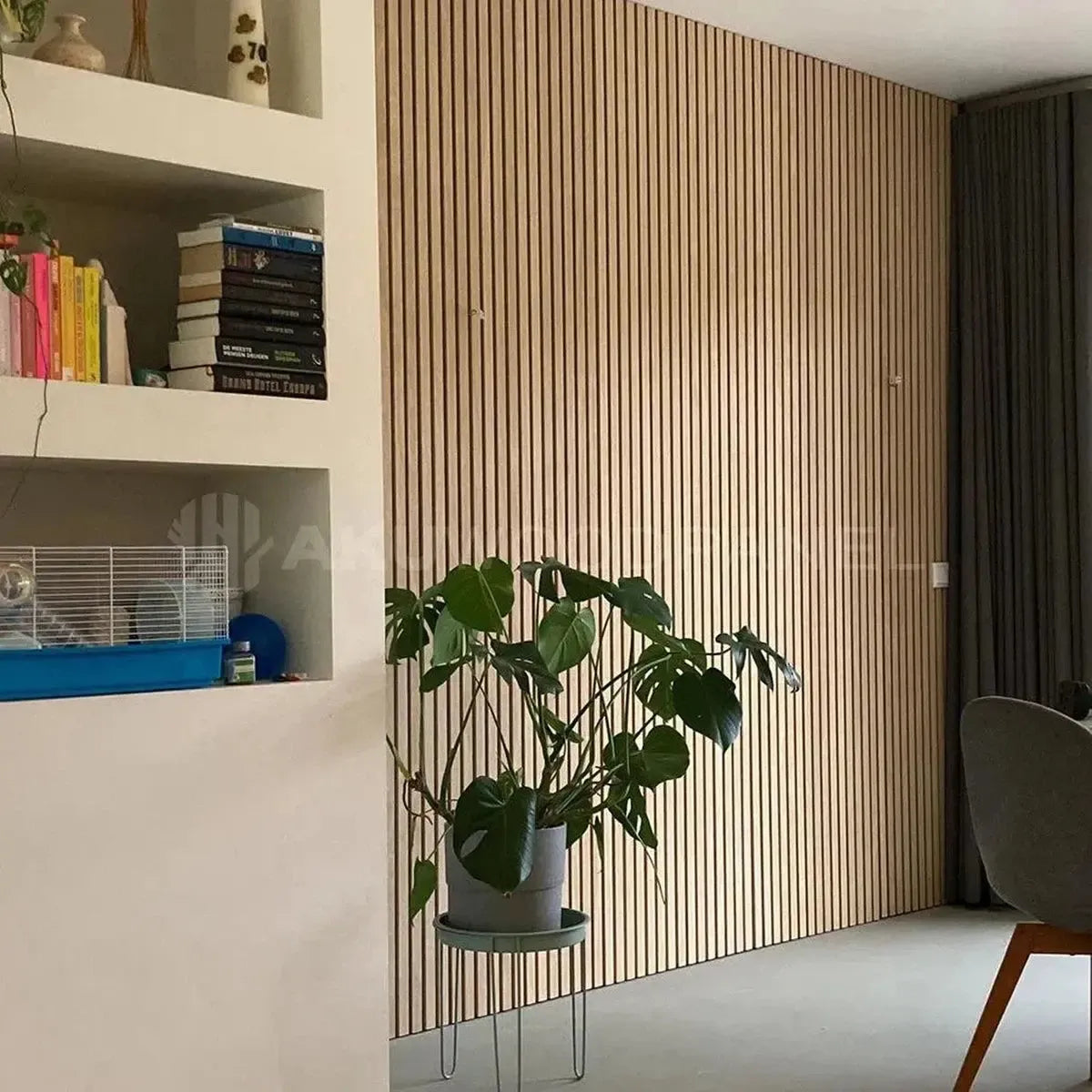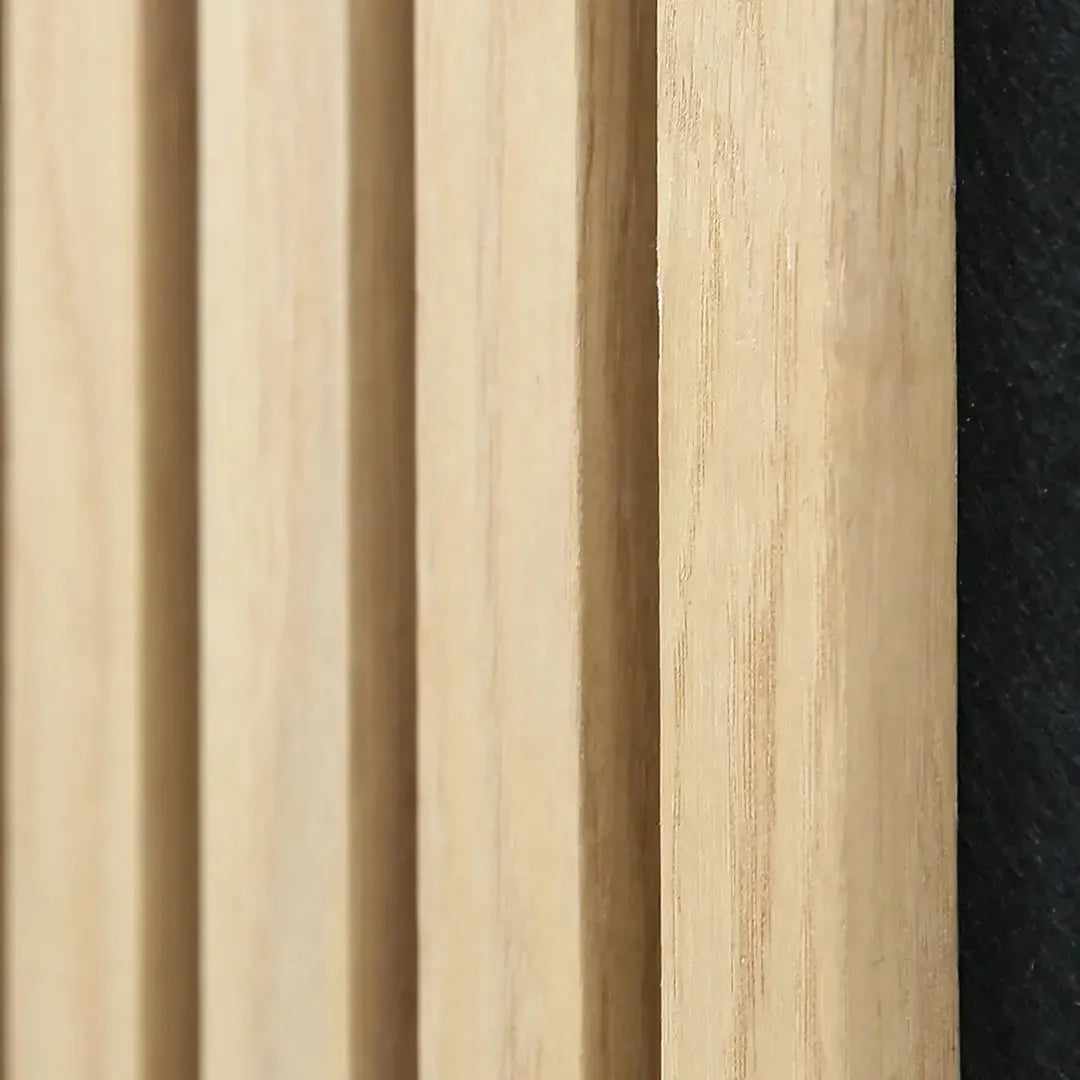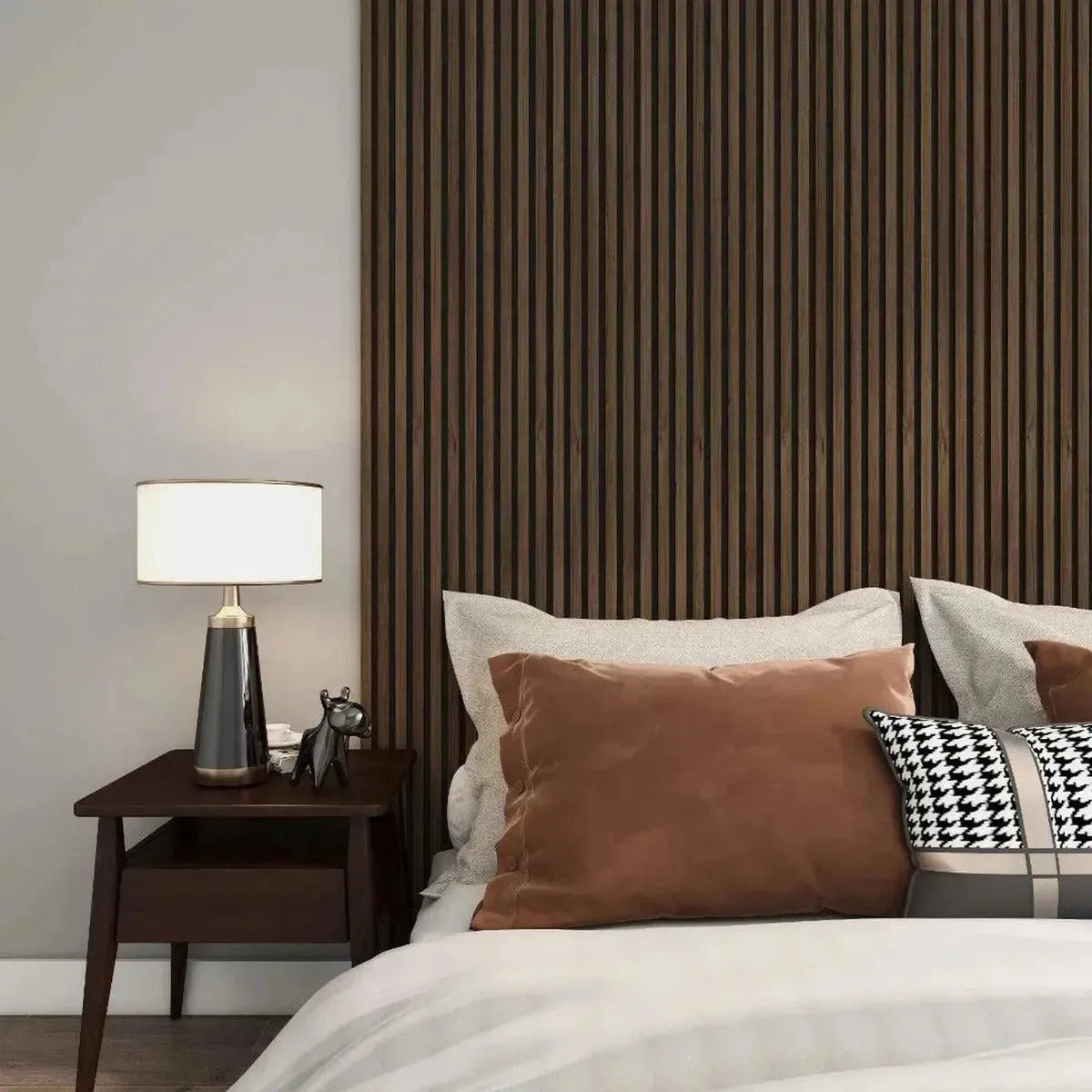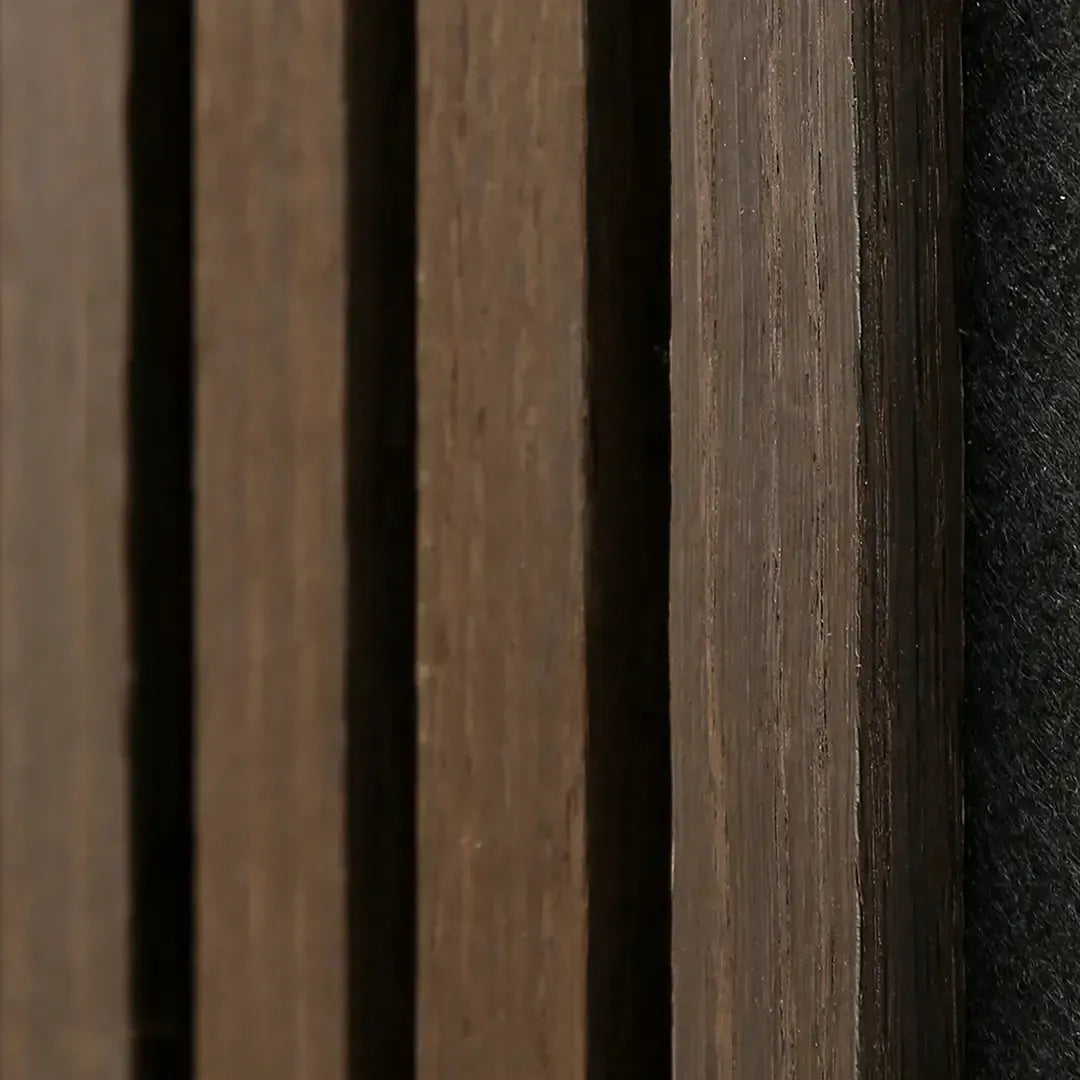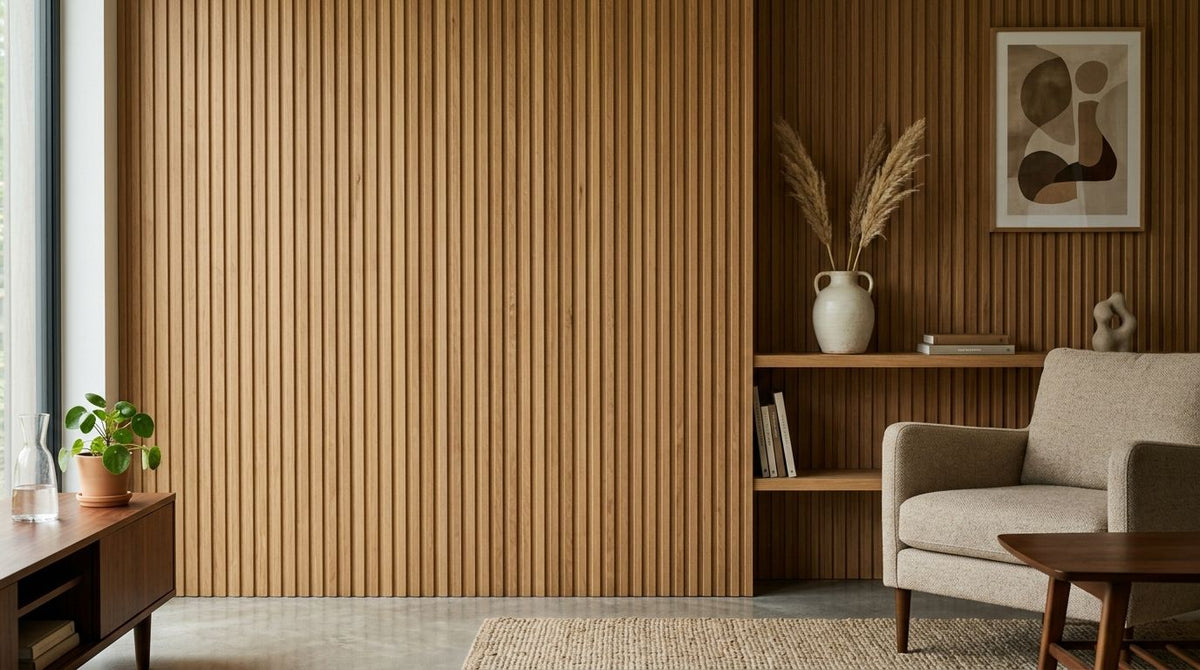
Best overall in 2026: Fluted Wall Panel Natural Oak. Best for curved features: Fluted Wall Panel Walnut Modern Flexible Design. Best for a rustic look: Fluted Wall Panel Rustic Oak Modern Flexible Design. These 3 Akustiq USA fluted wall panels cover the clearest choices for homeowners, designers, and contractors.
- Akustiq USA Natural Oak is the best overall fluted wall panel for adaptable residential and commercial interiors in 2026.
- Choose Walnut Modern Flexible Design for curved features and a darker, higher-contrast finish.
- Choose Rustic Oak Modern Flexible Design when visible grain character is central to the room.
- Compare finish, flexibility, wall condition, edge details, and lighting before ordering fluted wall panels.
Why this matters
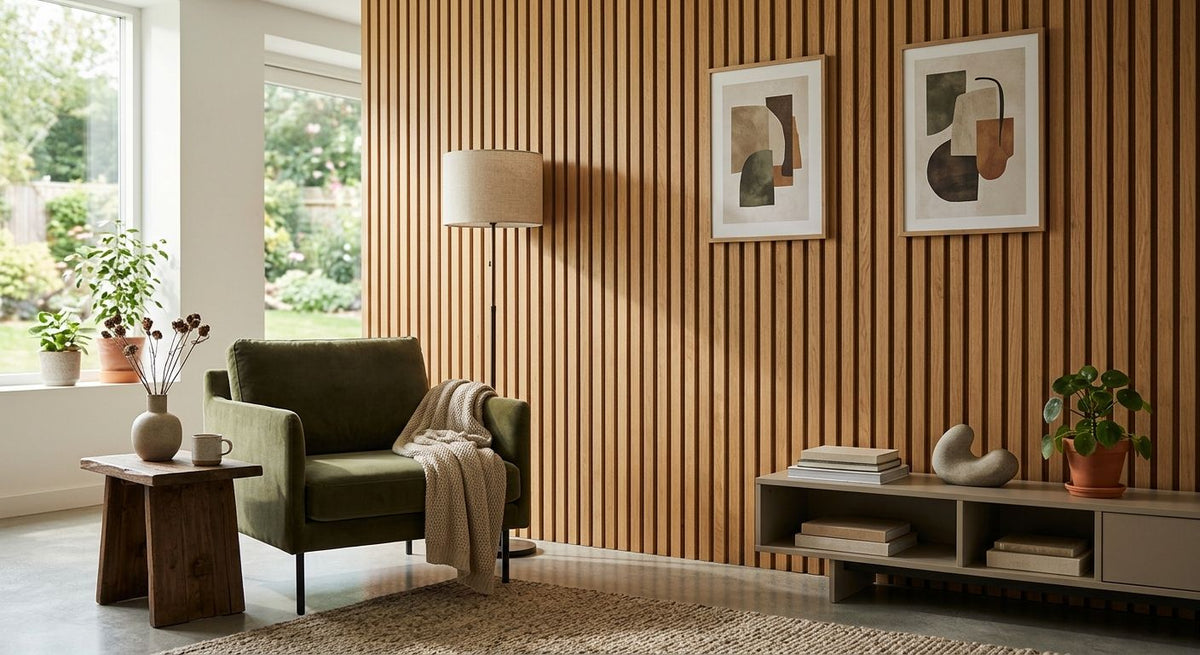
Fluted wall panels create repeated grooves that add depth and shadow to a flat surface. The effect changes as daylight moves across the wall, making finish choice, groove direction, and lighting more important than they are with ordinary paint.
The 2026 shortlist has 3 finish choices and 2 products explicitly described as Modern Flexible Design. That creates a simple decision: Natural Oak for broad versatility, Walnut for darker curved features, and Rustic Oak for spaces that need more visual character.
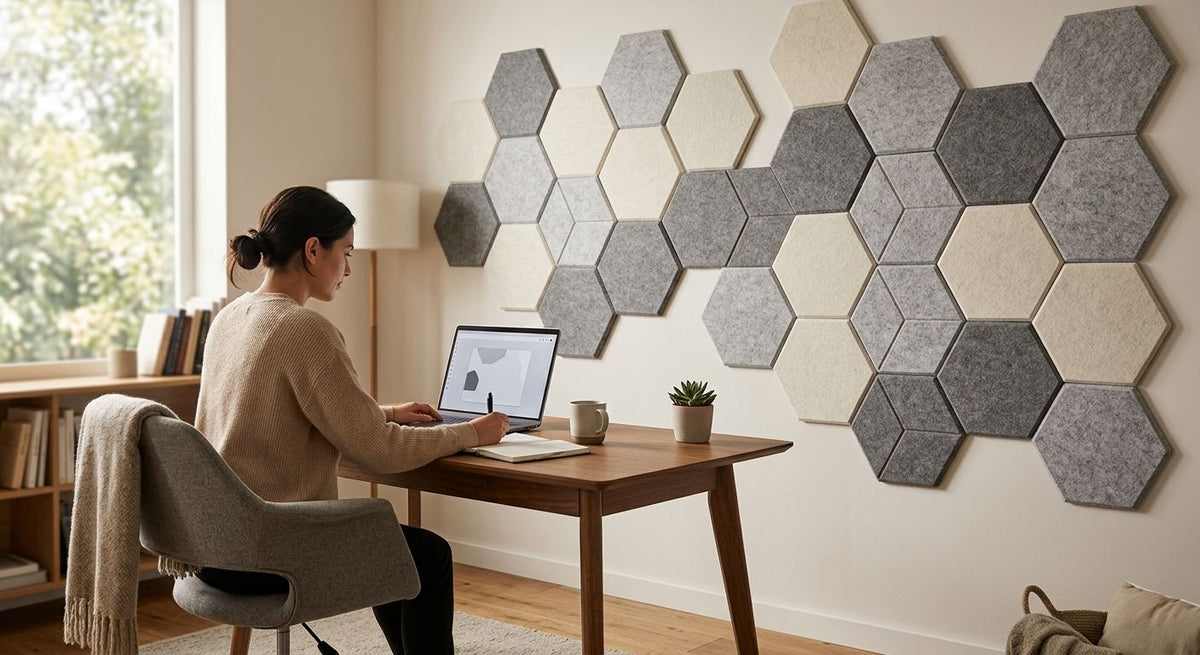
Akustiq USA manufactures and supplies acoustic wood panels for construction and interior applications, but decorative fluting should not be treated as proof of acoustic performance. If sound control is part of the project, require an explicit acoustic specification for the exact panel rather than assuming every grooved panel absorbs sound.
What makes the best fluted wall panels
- Finish compatibility: The panel should coordinate with your flooring, doors, cabinetry, furniture, and metal finishes rather than acting as an isolated sample.
- Suitable panel format: Flat walls and curved features present different requirements. A product identified as flexible is the relevant starting point for curves, columns, and rounded joinery.
- Clear grain direction: The grain and flutes should support the intended orientation. Vertical lines emphasize height; horizontal lines emphasize width.
- Manageable edge details: Outside corners, exposed ends, outlets, switches, and transitions determine whether the completed wall looks planned or unfinished.
- Lighting response: Grooves create shadows. Test how the finish reads in daylight, overhead lighting, and evening accent lighting before committing to a full wall.
- Documented installation requirements: Confirm the approved cutting, fastening, surface-preparation, and finishing methods for the exact panel.
These criteria matter equally in a home renovation and a commercial fit-out. A finish can look right in a sample yet fail the room if the edges, lighting, or wall shape were ignored during planning.
Fluted wall panels at a glance
| Panel | Best for | Standout feature | Key limitation |
|---|---|---|---|
| Fluted Wall Panel Natural Oak | Bright, adaptable interiors | Natural oak appearance | Creates less contrast in an already pale room |
| Fluted Wall Panel Walnut Modern Flexible Design | Curved features and darker schemes | Flexible design | Can make a dim room feel visually heavier |
| Fluted Wall Panel Rustic Oak Modern Flexible Design | Rustic and industrial interiors | Character-led oak appearance | Harder to pair with strict minimalist styling |
1. Fluted Wall Panel Natural Oak: best overall
Fluted Wall Panel Natural Oak is the safest default when you want texture without making the panel finish dominate the entire room. Its natural oak appearance suits living rooms, bedrooms, hallways, offices, reception spaces, and retail interiors where future furniture or paint changes remain possible.
The finish is especially useful when the room already contains light or medium wood tones. You still need to compare the panel against the existing materials in the actual room because screens and showroom lighting do not reproduce every color accurately.
Fluted Wall Panel Natural Oak pros:
- Adaptable finish for residential and commercial interiors
- Coordinates naturally with many neutral color schemes
- Adds visible texture without relying on a dark accent color
- Works as either a full-wall treatment or a defined feature area
Fluted Wall Panel Natural Oak cons:
- Produces less contrast against white, cream, or pale beige walls
- Natural oak tones can clash with unrelated red or gray wood finishes
- The product name does not identify a flexible design, so curved applications require separate confirmation
Best for: Buyers who want one fluted wall panel finish that can survive later changes to paint, furniture, and lighting.
Akustiq USA Natural Oak is the best overall fluted wall panel for buyers who value finish versatility over dramatic contrast. Verdict: Buy.
2. Fluted Wall Panel Walnut: best for curved features
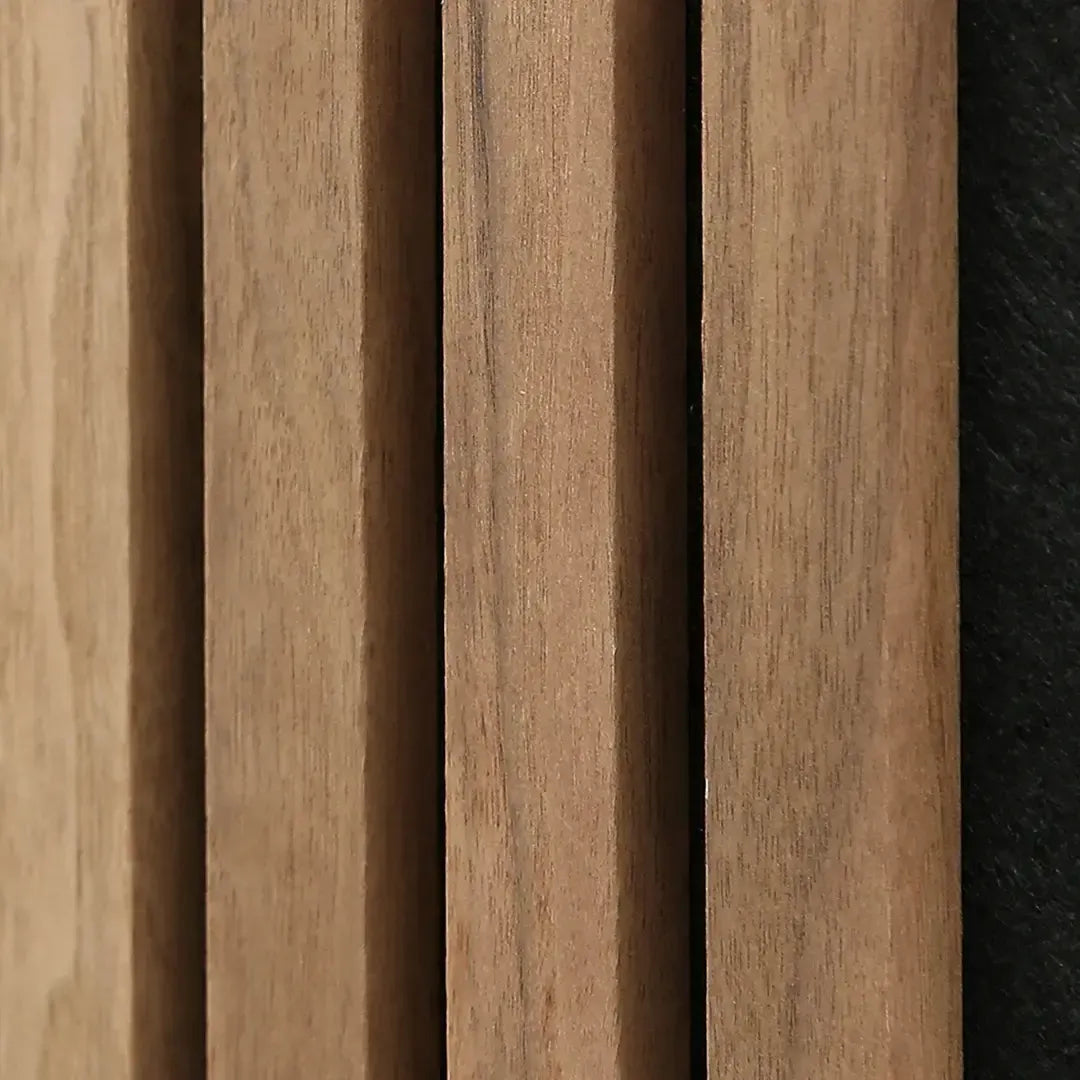
Fluted Wall Panel Walnut Modern Flexible Design is the more focused choice for rounded walls, columns, reception desks, kitchen islands, and other features that are not completely flat. The product name explicitly identifies a flexible design, which makes it more relevant than a standard rigid format when the substrate changes direction.
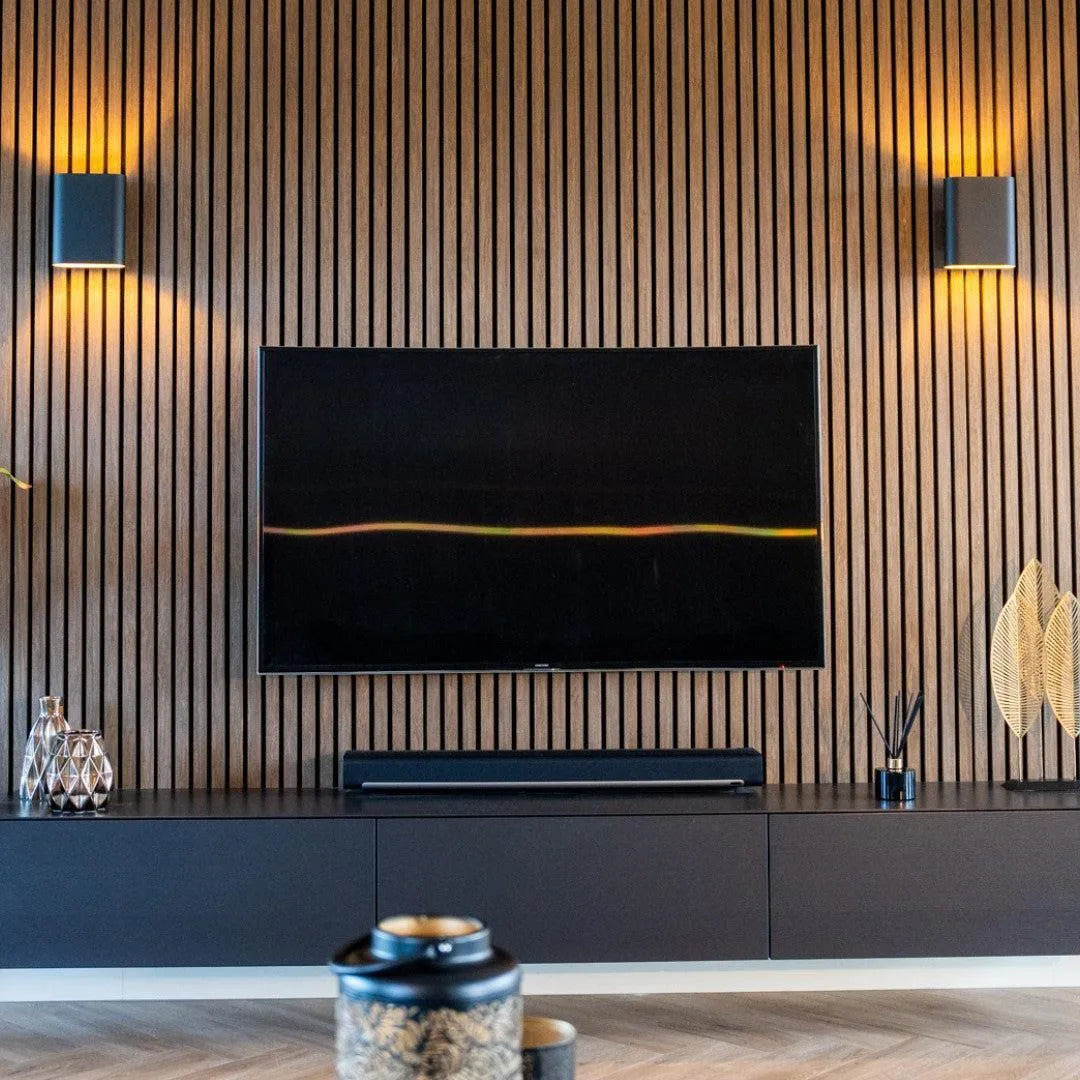
Walnut also creates stronger visual contrast than a natural oak appearance. That contrast can define a television wall, office backdrop, bar front, or built-in feature, but it requires enough surrounding light to keep the room balanced.
Fluted Wall Panel Walnut pros:
- Explicitly described as a Modern Flexible Design
- Darker wood appearance creates defined groove shadows
- Suits black hardware, dark furniture, and contrast-led interiors
- Gives curved joinery the same finish language as nearby walls
Fluted Wall Panel Walnut cons:
- Darker finishes can visually reduce brightness in a small or dim room
- Walnut may conflict with pale, low-contrast Scandinavian schemes
- Flexible does not mean every curve is suitable; confirm the required shape against the product instructions
Best for: Curved architectural details and interiors designed around strong, dark wood contrast.
Akustiq USA Walnut is the best fluted wall panel here for curved features and darker design schemes. Verdict: Buy for curves; Hold for poorly lit rooms.
3. Fluted Wall Panel Rustic Oak: best for visible character
Fluted Wall Panel Rustic Oak Modern Flexible Design serves a different visual goal. Instead of acting as a quiet neutral, the rustic oak appearance becomes a deliberate part of the room's identity.
That makes it a logical fit for farmhouse, industrial, workshop-inspired, and material-rich interiors. It can also soften spaces built around exposed brick, concrete, dark metal, or other hard surfaces, although every material should still be compared together before installation.
Fluted Wall Panel Rustic Oak pros:
- Rustic oak appearance gives the wall a more character-led finish
- Explicitly described as a Modern Flexible Design
- Fits interiors that already use raw, textured, or aged-looking materials
- Creates a clear alternative to uniform minimalist surfaces
Fluted Wall Panel Rustic Oak cons:
- More style-specific than Natural Oak
- Can compete with patterned flooring, busy stone, or heavily figured furniture
- Not the right default for a restrained, low-contrast room
Best for: Farmhouse, industrial, and rustic interiors where visible wood character is part of the design brief.
Akustiq USA Rustic Oak is the best fluted wall panel for character-led spaces, not neutral renovations. Verdict: Buy for rustic schemes; Skip for strict minimalism.
How the fluted wall panels were ranked
The ranking follows 5 decision checks: finish versatility, suitability for curves, compatibility with existing materials, lighting response, and edge planning. Natural Oak ranks first because it fits the widest range of rooms without requiring a strongly defined style.
Walnut ranks second because its flexible-design label and darker appearance solve a more specific problem. Rustic Oak ranks third because it is the most style-dependent choice, although it wins clearly when the goal is a rustic or industrial finish.
This is a use-case ranking, not a claim that one finish has better construction than another. No performance specification was supplied that supports a durability, moisture, fire, or acoustic comparison between the 3 fluted products.
Which fluted wall panel should you choose in 2026?
Choose Fluted Wall Panel Natural Oak when you are undecided. It is the default 2026 recommendation for a living room, hallway, bedroom, office, reception area, or retail wall because the finish leaves more room for future design changes.
Choose Fluted Wall Panel Walnut Modern Flexible Design when the surface curves or the interior needs a dark focal point. Confirm the curve, substrate, cutting method, and installation process before ordering the complete project quantity.
Choose Fluted Wall Panel Rustic Oak Modern Flexible Design when the wall must contribute visible texture and character. It works best when the flooring, furniture, lighting, and surrounding materials already support that direction.
Use this 3-step decision rule:
- Pick Natural Oak if flexibility and a strongly rustic appearance are not required.
- Pick Walnut if the feature curves or the design depends on dark contrast.
- Pick Rustic Oak if visible wood character matters more than broad versatility.
That decision tree prevents the most common selection mistake: choosing a finish in isolation and trying to force the rest of the room to work around it later.
Plan the wall before ordering
Start with a measured elevation of the complete wall. Record its width and height, then mark doors, windows, outlets, switches, vents, corners, and any built-in furniture that interrupts the panel field.
Divide the plan into 3 material groups:
- Main field panels: The uninterrupted area that carries the repeated fluted pattern
- Cut pieces: Sections around openings, corners, and changes in wall height
- Finishing details: Exposed edges, returns, transitions, and junctions with other materials
Next, decide where the pattern starts. Centering the layout can leave matching cuts at both sides, while starting from one edge can leave a narrow final strip. Neither approach is automatically correct; the visible focal point and room geometry determine the better layout.
Check the substrate before installation. Loose paint, damaged drywall, uneven plaster, moisture problems, and protruding fasteners should be resolved before decorative panels cover the surface. Follow the exact panel instructions for adhesive, mechanical fastening, cutting tools, and surface preparation.
Lighting belongs in the plan as well. Vertical flutes create repeated shadows, so wall washers, downlights, windows, and lamps can change the finish throughout the day. Review the proposed finish under daytime and evening conditions instead of approving it from one close-up image.
For a 2026 commercial project, document the selected product, finish, orientation, edge treatment, substrate, and installation method in the specification. If the project requires acoustic, fire, moisture, or impact performance, obtain documentation for the exact panel rather than applying a category-wide assumption.
FAQ
What are the best fluted wall panels in 2026?
Fluted Wall Panel Natural Oak is the best overall choice in 2026, Walnut Modern Flexible Design is best for curved features, and Rustic Oak Modern Flexible Design is best for character-led interiors. Your wall shape and surrounding finishes should decide the final selection.
Is walnut better than natural oak for fluted wall panels?
Walnut is better for dark contrast and curved features, while Natural Oak is better for broad versatility. Choose Walnut for a deliberate focal point and Natural Oak when the room may change over time.
Can fluted wall panels cover a curved wall?
Use a product explicitly described as a flexible design when planning a curved wall. Confirm that the exact curve, substrate, and installation method comply with the product instructions before ordering.
Are fluted wall panels acoustic?
Fluted wall panels are not automatically acoustic. Require an acoustic specification for the exact product if echo control or sound absorption is part of the project.
How much do fluted wall panels cost?
The project total depends on panel coverage, finish, wall size, cut waste, edge details, and installation. Check the current product information, then calculate the complete wall rather than comparing individual panels alone.
Can you use fluted wall panels in a bathroom?
Use fluted wall panels in a bathroom only when the exact product documentation permits the expected moisture exposure. Do not assume a wood-look surface is suitable for a shower or another direct-water area.
Should fluted wall panels run vertically or horizontally?
Vertical flutes emphasize wall height, while horizontal flutes emphasize width. Choose the orientation before calculating cuts because rotating the pattern changes the layout and finishing details.
How do you cut fluted wall panels around outlets?
Mark the opening from a measured wall elevation and follow the cutting instructions for the exact panel. Isolate electrical power before working around outlets and use the specified tool to protect the visible finish.
One last thing
Do not approve a fluted finish from a phone screen alone. Place the finish against the actual flooring, wall color, cabinetry, and metalwork, then view it from at least 3 positions under both daylight and evening lighting.
For 2026 projects, this simple room-level check is more useful than comparing isolated product images. Flutes react to light, and the finish that looks quiet from the front can become much more pronounced when viewed from the side.
 Better performance and aesthetic appeal
 In Stock